When we first established our local team in Vietnam, we quickly realized that the manufacturing landscape here is vibrant but fragmented. We often encounter "factories" that look impressive on a website but turn out to be a small trading office in Ho Chi Minh City with no actual machinery. For our US clients, the risk of engaging a middleman disguised as a manufacturer is high, leading to inflated costs and communication delays. Through years of sourcing custom parts and managing supply chains, we have developed a rigorous vetting process to ensure that the welding workshops we partner with are legitimate, capable, and financially stable.
Verifying Vietnamese welding factories requires a multi-channel approach involving government database checks, third-party on-site audits by agencies like SGS, and digital validation through live video tours. These steps confirm legal status, production capacity, and strict adherence to international quality standards like ISO 9001.
Navigating the verification process can feel overwhelming, but breaking it down into specific channels makes it manageable. By combining digital due diligence with physical verification, you can filter out traders and secure a partner capable of meeting your technical specifications.
Can I Check a Vietnamese Company's Business Registration Online?
Our sourcing specialists in Vietnam use local government databases daily to perform initial background checks on potential partners. We have found that a factory's legal paperwork often reveals more about their actual operations than their marketing brochures do. It is the first line of defense against scams.
You can verify a Vietnamese company's legal status through the National Business Registration Portal. This government database confirms their tax code, registered business lines, and active status, helping you distinguish between genuine manufacturers and trading intermediaries before placing orders.
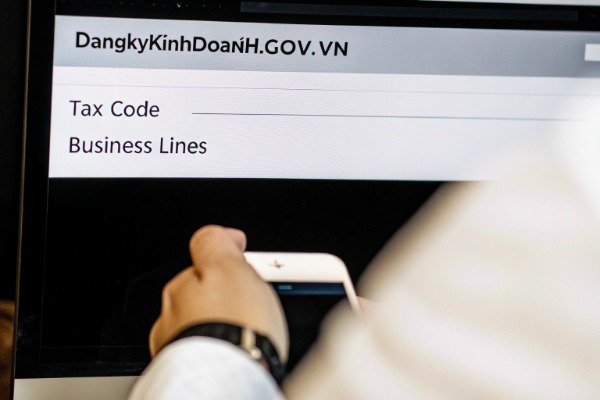
Navigating the National Business Registration Portal
The most reliable source of truth is the National Business Registration Portal (dangkykinhdoanh.gov.vn). While the interface can be navigated in English, the specific business line descriptions are often in Vietnamese. Here, you are looking for the company's "Tax Code" (Mã số thuế) and their registered business activities.
When we evaluate a potential supplier, we look specifically at the "Business Lines" section. A genuine factory must have manufacturing-related codes registered. If a company only lists "Wholesale of metals" or "Commercial brokerage," they are likely a trading company, not a manufacturer.
Decoding Business Names and Codes
In Vietnam, the company name itself can sometimes be a clue, but it is not definitive. You need to dig into the specific industry codes (VSIC codes). Below is a breakdown of what we look for to differentiate a manufacturer from a trader:
industry codes (VSIC codes) 1
Table 1: Manufacturing vs. Trading Indicators in Registration
| Merkmal | Genuine Manufacturer Indicators | Trading Company Indicators |
|---|---|---|
| Business Activity Keywords | Machining; Mechanical processing; Treatment and coating of metals; Manufacture of structural metal products. | Wholesale of machinery; Commercial brokerage; Retail of hardware; Trade promotion. |
| Registered Capital | Typically higher (>$200,000 USD equivalent) to cover machinery and plant assets. | Often lower (<$50,000 USD), as they require less physical infrastructure. |
| Headquarters Address | Located in Industrial Zones (IZ), Industrial Parks (IP), or specific manufacturing clusters (e.g., Binh Duong, Dong Nai). | Located in commercial office buildings, residential areas, or co-working spaces in city centers. |
| VSIC Codes | Code 2511 (Manufacture of structural metal products); Code 2592 (Treatment and coating of metals). | Code 4610 (Wholesale on a fee or contract basis); Code 4663 (Wholesale of construction materials). |
The Limitation of Online Checks
While online verification confirms the company exists legally, it does not prove they can weld your specific parts. We have seen companies with perfect paperwork that outsource 100% of their production to cheaper, unregulated sub-suppliers. The registration proves they are a legal entity, but it does not prove they own the welding robots or have the ISO 3834 certification they claim. Therefore, this step is necessary but not sufficient. It filters out the obvious fakes, leaving you with a shortlist that requires deeper physical verification.
Is It Necessary to Hire a Third-Party Auditor for On-Site Verification?
When we manage projects for our clients, we conduct these audits ourselves using our local engineers, but for a US buyer without a local presence, relying on the factory's word is dangerous. We have seen "factories" borrow equipment or even hang their sign on a neighbor's wall just for a photo op.
Hiring a third-party auditor is essential for high-value welding projects to verify equipment and certifications. Auditors conduct physical inspections of machinery, review Welder Performance Qualification Records (WPQR), and ensure the factory actually employs the skilled labor they claim to have.
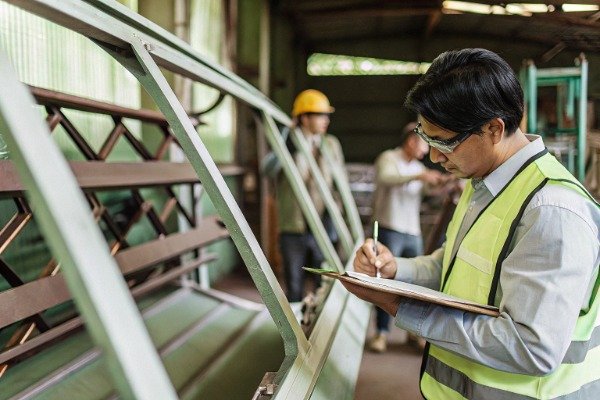
The Scope of a Technical Audit
For welding parts, a general factory audit is insufficient. You need a technical audit that focuses on the specific requirements of metal fabrication. Agencies like SGS, Bureau Veritas, or Intertek have local teams in Vietnam that can perform these inspections.
SGS 2
A proper audit for a welding factory must go beyond checking if the lights are on. It must verify the Quality Management System (QMS) specifically for fusion welding. We always verify if the factory holds ISO 3834 (Quality requirements for fusion welding of metallic materials) in addition to the standard ISO 9001.
Validating Human Capital: The Hidden Indicator
One of the most effective ways to verify a factory's authenticity is to audit their Social Insurance (BHXH) records. In Vietnam, employers must pay social insurance for full-time employees.
- The Trick: A trading company might claim to have 50 workers.
- The Verification: Ask the auditor to check the official social insurance payment list.
- The Reality: If the list only shows 3 people (the director, a sales rep, and an accountant), they are outsourcing production. A real factory will have a long list of laborers, welders, and machine operators on the official payroll.
Checking Welding Procedure Specifications (WPS)
In our engineering reviews, we often find that factories lack specific Welding Procedure Specifications (WPS) for the materials they quote. A third-party auditor should be instructed to ask for the WPS and the supporting Procedure Qualification Record (PQR).
If the factory cannot produce a PQR that matches the material thickness and joint design of your product, they are guessing. This is a critical red flag. The auditor should also verify the Welder Performance Qualification Records (WPQR) to ensure the specific workers on the floor are certified to perform the welds described in the WPS.
Table 2: What to Request in a Third-Party Welding Audit
| Audit Component | What to Verify | Why It Matters |
|---|---|---|
| Equipment Audit | List of welding machines (TIG, MIG, Robot), make, model, and maintenance logs. | Confirms capacity and equipment reliability. Old, unmaintained machines lead to inconsistent bead profiles. |
| Personnel Audit | Social insurance records; Welder certificates (AWS D1.1 or ISO 9606). | Proves the workforce exists and is qualified. Prevents "bait and switch" with unskilled labor. |
| Process Control | WPS and PQR documents; NDT (Non-Destructive Testing) capabilities in-house. | Ensures they have a scientific process for welding, not just "trial and error." |
| Material Storage | Segregation of carbon steel and stainless steel; humidity control for welding rods. | Prevents cross-contamination and hydrogen embrittlement in welds. |
How Effective Are Live Video Calls for Touring the Factory Floor?
In the era of travel restrictions and cost-cutting, we frequently utilize video calls to bridge the gap between our Singapore HQ and facilities in remote Vietnamese provinces. However, we approach these calls with a healthy dose of skepticism. A video call is a directed performance, and the director—the factory owner—decides exactly what you see and, more importantly, what you don't see.
Live video calls are highly effective for initial screening but cannot replace physical inspections. They allow you to verify the facility exists and observe general cleanliness, yet they fail to detect microscopic weld defects or verify material grades.
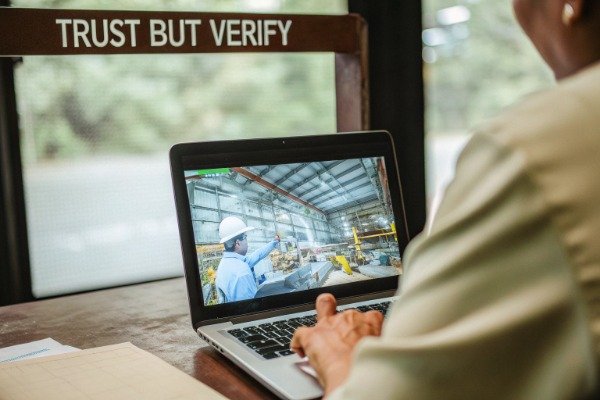
Orchestrating the "Unscripted" Tour
To get the most out of a video call, you must take control of the camera. Do not let the supplier give you a pre-recorded tour or a rehearsed walk-through. When we conduct these virtual audits, we ask the cameraman to stop randomly.
Bill of Lading (B/L) 3
- "Show me the shipping label on that box." This confirms if they are shipping to other international clients or if the box is just a prop.
- "Walk over to the scrap bin." The scrap bin tells the truth about their quality issues. If it's empty, they might have hidden it. If it's full of the same defect, you know their process is failing.
- "Let me see the screen of that CNC machine." Is it actually running a program, or is it in idle mode?
The Limitations of Virtual Verification
While video calls confirm that a building with machines exists, they cannot verify the nuances of quality. You cannot check the penetration depth of a weld through Zoom. You cannot feel the surface finish or check if the steel gauge is within tolerance.
Furthermore, video calls struggle to verify ownership. We have encountered scenarios where a trader walks into a friendly factory, puts on a uniform, and pretends to own the place for a 30-minute call. To counter this, ask the person on the call to go to the office and show you the business license hanging on the wall in real-time.
Table 3: Video Call Strategy – The "Trust but Verify" Checklist
| Area of Focus | What to Ask For | What It Reveals |
|---|---|---|
| Production Line | "Please zoom in on the welder's current setup sheet." | Verifies they use documentation at the workstation, not just memory. |
| Inventory | "Show me the raw material tags." | Checks if they source certified steel (e.g., from reputable mills) or cheap generic stock. |
| Qualitätskontrolle | "Show me the calibration sticker on your calipers/gauges." | Verifies that measurement tools are accurate and maintained. |
| Ownership | "Please wave at the security guard and show the company logo at the entrance." | Harder to fake than an interior shot; confirms the location matches the address. |
Can I Ask for References from Other US Clients They Serve?
We understand the instinct to ask for references; in the B2B world, social proof is currency. However, when we operate as a manufacturer and supply chain manager, we are bound by strict confidentiality. Our US clients, particularly those in competitive industries, do not want their competitors to know where they source their custom parts.
Panjiva 4
While asking for references is standard, many manufacturers cannot provide them due to strict Non-Disclosure Agreements (NDAs). Instead, utilizing customs data platforms to verify export history and shipping volumes often yields more reliable proof of their US market experience.
Non-Disclosure Agreements (NDAs) 5
The NDA Barrier
If a factory readily gives you the name, email, and phone number of a US buyer, that is actually a red flag. It suggests they do not respect client confidentiality. Would you want them handing out your contact info to the next prospect?
NDT (Non-Destructive Testing) 6
Legitimate manufacturers often work under NDAs. When a client asks us for references, we usually have to decline specific names but can provide redacted case studies or general industry references (e.g., "We supply to a Tier 1 automotive supplier in Michigan").
AWS D1.1 7
Using Trade Data as a Proxy for References
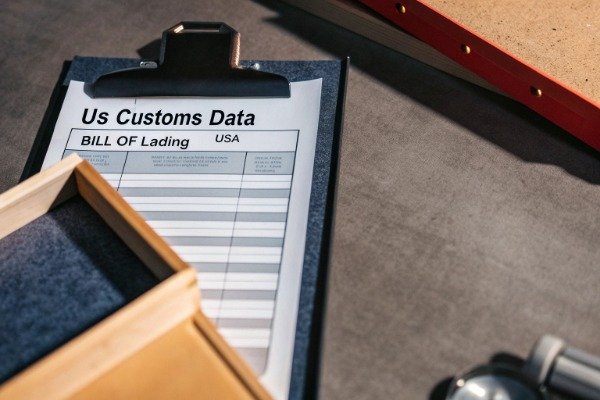
Since direct references are hard to get, we recommend using trade intelligence platforms like Panjiva, ImportGenius, or Veritrade. By searching the factory's name in these databases, you can see their actual US customs records.
- Bill of Lading (B/L) Data: This shows who they shipped to, what they shipped (HS Codes), and the weight of the shipment.
- Frequency: A factory that ships 5 containers a month to the US is far more reliable than one that shipped once three years ago.
- Product Match: Ensure the HS codes in the data match the welding parts you intend to buy. If they claim to weld structural steel but their export history shows "plastic toys," you have caught a lie.
What to Ask If You DO Get a Reference
If a supplier does provide a reference (perhaps a smaller client without an NDA), ensure you ask specific, probing questions. Generic questions get generic answers.
ISO 3834 8
- Don't ask: "Are they a good supplier?"
- Do ask: "How do they handle Non-Conformance Reports (NCRs)? When you had a defect, did they replace it at their cost or argue about it?"
- Do ask: "Have you ever experienced a delay in shipment, and did they notify you in advance?"
This approach shifts the focus from "authenticity" to "reliability," which is the ultimate goal of the verification process.
Bureau Veritas 9
Fazit
Verifying a Vietnamese welding factory is not a single step but a convergence of evidence. By cross-referencing online government registrations, conducting rigorous third-party technical audits, utilizing live video for preliminary checks, and analyzing independent trade data, you can build a complete picture of a supplier's authenticity. At DEWIN, we integrate these checks into our standard operating procedure to ensure our US clients receive parts that are right the first time, every time.
National Business Registration Portal 10
Footnotes
1. Official source for the Vietnam Standard Industrial Classification (VSIC) used to categorize business activities. ↩︎
2. Leading global inspection and certification company mentioned as an example for third-party audits. ↩︎
3. Explains the specific shipping document used to verify export history and volume. ↩︎
4. Supply chain intelligence platform cited as a tool for verifying trade history. ↩︎
5. Educational legal definition explaining the confidentiality contracts that limit reference sharing. ↩︎
6. Provides a general definition and overview of the testing methodologies mentioned in the audit table. ↩︎
7. Authoritative standard code for structural steel welding by the American Welding Society. ↩︎
8. Official ISO standard page defining quality requirements for fusion welding of metallic materials. ↩︎
9. Major international testing, inspection, and certification agency cited in the text. ↩︎
10. Official Vietnamese government database for verifying business legal status and registration details. ↩︎

 English
 Español de México
 Deutsch
 Français
 Русский
 العربية