
At our facilities in Singapore and Vietnam, we constantly navigate the complex landscape of environmental regulations to protect our US clients from liability. We know that a single non-compliant component can result in massive fines or customs seizures, so we treat material verification as the foundation of our production process.
To verify compliance, you must implement a risk-based strategy combining documentation review, third-party laboratory testing, and on-site supply chain audits. Specifically, require Full Material Declarations (FMD), mandate ISO 17025 lab reports for high-risk materials, and verify traceability down to the homogeneous level to satisfy Prop 65, RoHS, and REACH standards.
This guide details the practical steps we take to ensure every custom part meets these rigorous global standards.
What specific documents should I request to prove material compliance?
When we onboard a new raw material vendor for a project, we never rely on a simple verbal "yes" regarding safety standards. We have learned that vague assurances often hide gaps in knowledge or documentation, so we immediately request a specific set of technical files to validate their claims.
You should request Safety Data Sheets (SDS) for chemical composition, Certificates of Analysis (CoA) for batch-specific data, and Full Material Declarations (FMD). Additionally, demand a signed Declaration of Conformity (DoC) referencing specific regulations like RoHS 3 or REACH SVHC to create a legally binding audit trail.

The Hierarchy of Compliance Documentation
Collecting the right paperwork is your first line of defense. However, not all documents carry the same weight. In our sourcing operations, we categorize documents based on the level of detail and legal protection they offer. A simple email confirmation is worthless; you need technical data that breaks down the material at a molecular or granular level.
We often see suppliers confuse a Safety Data Sheet (SDS) with a Certificate of Analysis (CoA). While an SDS provides general hazard information, a CoA gives you the actual test results for that specific batch of material. For strict regulations like RoHS (Restriction of Hazardous Substances) or Prop 65, you need to know exactly what is in the batch you are buying, not just the generic theoretical composition.
Safety Data Sheet (SDS) 1
Full Material Declarations (FMD)
The gold standard we aim for is the Full Material Declaration (FMD). Unlike a simple "Pass/Fail" certificate, an FMD lists 100% of the substances present in the part, usually by CAS number and weight. This is crucial because regulations change. If a new substance is added to the REACH SVHC (Substances of Very High Concern) list next month, you can check your FMDs to see if you are affected without needing to re-test everything.
CAS number 2
Essential Document Checklist
Below is a breakdown of the documents we require from our material suppliers before production begins.
| Dokumententyp | Purpose | When to Request |
|---|---|---|
| Safety Data Sheet (SDS) | Identifies chemical composition and hazards. | Initial supplier onboarding. |
| Certificate of Analysis (CoA) | Proves specific batch test results against specs. | With every shipment/batch. |
| Full Material Declaration (FMD) | Lists 100% of substances and weights. | During product development (PPAP). |
| Declaration of Conformity (DoC) | Legal statement of compliance to specific laws. | Annually or per contract update. |
| Non-Use Warranty | Guarantees restricted substances are not used. | Contract negotiation stage. |
The "Homogeneous Material" Requirement
A common pitfall we help clients avoid is accepting data at the component level rather than the homogeneous material level. Regulations like RoHS apply to each mechanically disjointed material. For example, if you are buying a custom cable, the plastic jacket, the copper wire, and the tin plating must each be compliant individually. A document that tests the whole cable ground up into powder is invalid because the dilution might hide toxic levels of lead in the plating. Always demand data for every distinct material layer.
Should I hire a third-party lab to test for restricted substances?
In our years of managing supply chains across Asia, we have found that supplier-provided reports are sometimes outdated or even forged. While we trust our long-term partners, we always verify critical data points through independent analysis to ensure our US clients sleep soundly at night.
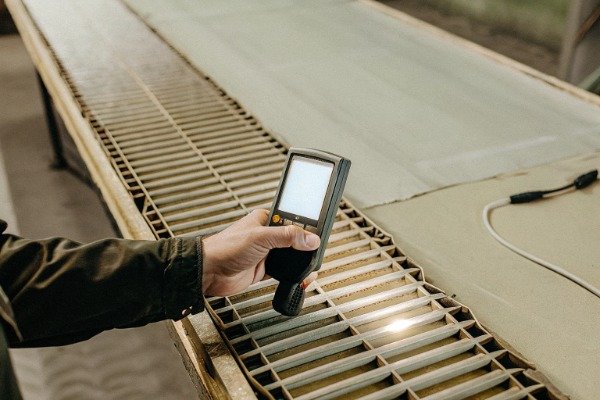
Yes, hiring a third-party lab is essential for high-risk materials or when supplier documentation lacks credibility. You should utilize ISO 17025 accredited facilities to perform wet chemical analysis for precise results, while using handheld XRF analyzers for rapid, non-destructive screening of incoming goods to detect heavy metals.
Balancing Cost and Risk
Testing can be expensive, so you cannot test every single screw that comes off the line. We use a risk-based approach. If we are sourcing a simple stainless steel part, the risk of lead contamination is lower than if we are sourcing soft PVC plastics or brass components, which historically have higher risks of containing phthalates or lead.
For high-risk materials, we mandate third-party testing. We send samples to labs like SGS, Intertek, or TUV. These labs must be ISO 17025 accredited. This accreditation ensures the lab has the technical competence to generate valid results. A report from a non-accredited lab holds very little weight if you ever face a legal challenge regarding Prop 65 or REACH compliance.
ISO 17025 accredited 3
Screening vs. Full Analysis
There are two main ways to test: rapid screening and full chemical analysis. We use both depending on the stage of production.
- XRF Screening (X-Ray Fluorescence): This is a handheld gun that gives results in seconds. We use this at our factory for Incoming Quality Control (IQC). It is excellent for spotting heavy metals like Lead, Cadmium, and Mercury. It is non-destructive and cheap per test.
- Wet Chemical Analysis (ICP-MS / GC-MS): This involves dissolving the sample in acid to measure exact chemical levels. It is slow and destructive but highly accurate. This is necessary for detecting organic compounds like Phthalates (restricted under Prop 65 and REACH) which XRF cannot detect.
Comparison of Testing Methods
Here is how we decide which testing method to apply to a specific project.
| Merkmal | XRF Screening | Wet Chemistry (ICP-MS / GC-MS) |
|---|---|---|
| Speed | Seconds (Real-time) | 5–10 Business Days |
| Kosten | Low (Capital investment only) | High ($100–$300 per sample) |
| Accuracy | Good for screening; margin of error exists. | Extremely precise (Parts Per Billion). |
| Substances | Heavy Metals (Lead, Cadmium, etc.) | All (Metals + Phthalates + Solvents). |
| Destructive? | No | Yes |
| Best Use | Incoming goods inspection (IQC). | Final validation & legal proof. |
The "Golden Sample" Trap
We always ensure that the sample sent to the lab is drawn randomly from the production lot, not hand-picked by the supplier. Suppliers may sometimes prepare a "Golden Sample"—a perfect, compliant item made specifically for testing—while the actual mass production uses cheaper, non-compliant raw materials. To prevent this, our team often visits the factory to select the test samples personally from the bulk inventory.
How do I audit a supplier's supply chain for material traceability?
We frequently visit factories where the management claims full compliance, but a walk through the warehouse reveals a different story. We look for physical evidence that links the raw material in the storage rack directly to the finished product shipping to your dock.
Audit a supplier by mapping their upstream sub-suppliers and verifying physical segregation of compliant and non-compliant materials. Check their ERP system for lot traceability that links finished goods back to specific raw material batches, and ensure they perform incoming quality control (IQC) on their own chemical inputs.

Mapping Beyond Tier 1
The biggest risks often lie with Tier 2 or Tier 3 suppliers. Your direct manufacturer (Tier 1) might be clean, but if they buy cheap plating chemicals or recycled plastic pellets from an unverified source, your product is compromised.
During our audits, we ask to see the "Approved Supplier List" (ASL). We check if they have vetted their own sources. If they buy from "spot markets" or unknown traders to save money, that is a major violation of our protocols. We require our partners to buy only from certified mills or chemical plants that provide consistent quality.
The Physical Audit Checklist
When we walk the floor, we are not just looking at machinery. We are looking at how materials move. Traceability is the key. If a worker picks up a bag of plastic granules, is there a label linking it to a specific CoA? If that label is missing, there is no way to prove that the plastic in the injection molding machine is the safe, compliant plastic you paid for.
We also look for segregation. Factories often make products for different markets. A product for the domestic market might not need to be RoHS compliant. If compliant and non-compliant materials are stored on the same shelf without clear color-coding or barriers, the risk of cross-contamination is incredibly high.
Traceability Audit Points
We use a specific checklist when verifying environmental control in the supply chain.
| Audit Area | What We Look For | Why It Matters |
|---|---|---|
| Incoming QC | Records of XRF scans on raw materials. | proves they verify inputs before use. |
| Storage | Segregated areas for RoHS vs. Non-RoHS. | Prevents accidental mixing of materials. |
| Labeling | Lot numbers on every bin and bag. | Links physical material to paper docs. |
| ERP System | Ability to trace a finished serial # to a raw material lot. | Essential for recalls and root cause analysis. |
| Change Management | Records of approval before changing sub-suppliers. | Prevents unauthorized material swaps. |
Verifying the "First In, First Out" (FIFO) System
We also check if the supplier practices FIFO. Old chemicals can degrade or separate, potentially altering their properties. Furthermore, if a regulation changed six months ago (like a new REACH update), using old stock that has been sitting in the warehouse for two years might result in non-compliance. We verify that they have a system to flag and quarantine expired or obsolete raw materials so they never enter the production stream.
What are the red flags when a manufacturer claims full environmental compliance?
In our dealings with hundreds of factories across China and Vietnam, we have developed a "sixth sense" for when a supplier is bluffing about their capabilities. We often hear confident promises that crumble under the slightest pressure of technical questioning.
Be wary if a manufacturer offers a single blanket certificate for all products or claims compliance without knowing specific thresholds. Other red flags include refusal to disclose sub-tier suppliers, outdated test reports, lack of internal XRF screening equipment, or pricing that suggests the use of cheaper, non-compliant recycled scrap.
The "One Certificate Fits All" Myth
One of the most glaring red flags is when a supplier sends us a single PDF file and says, "Here is our RoHS certificate for all our products." This is impossible. Compliance is specific to each material and each batch. A certificate for a steel bracket cannot cover a rubber grommet. If they do not understand this distinction, they do not understand the regulations.
ICP-MS / GC-MS 5
We also look for test reports that are several years old. Material formulations change. A test report from 2018 does not prove that the plastic used in 2024 is safe. We generally require test reports to be no older than 12 months, or renewed whenever a raw material change occurs.
SGS, Intertek, or TUV 6
Vague Knowledge of Thresholds
We often test a supplier's knowledge by asking specific questions. We might ask, "What is your internal limit for Lead (Pb) in this brass part?" If they answer "Zero," we know they are lying or uninformed, because standard brass alloys contain some lead (though often under an exemption). If they cannot cite the specific threshold (e.g., 1000ppm for RoHS or lower for Prop 65 settlements), they are likely not managing the process correctly.
handheld XRF analyzers 7
Resistance to Transparency
If a supplier refuses to tell us where they buy their raw materials, claiming it is a "trade secret," we proceed with extreme caution. While we respect intellectual property, environmental compliance requires transparency. We need to know that the plating shop or the dye manufacturer is legitimate. Refusal to sign an indemnity agreement holding them financially responsible for compliance failures is another massive warning sign. It suggests they do not have enough confidence in their own supply chain to back it up with money.
Substances of Very High Concern 8
Pricing Discrepancies
Finally, we look at the price. Compliant, virgin raw materials cost more than recycled scrap. If a supplier's price is significantly lower than the market average, they might be using "regrind" or scrap metal that is full of impurities. Recycled electronics often contain flame retardants and heavy metals that will trigger a RoHS failure. If the deal looks too good to be true, it is usually because the materials are non-compliant.
Restriction of Hazardous Substances 9
Fazit
Verifying environmental compliance is not a one-time task; it is an ongoing commitment to transparency and testing. By demanding detailed documentation, utilizing third-party labs, and auditing your supply chain, you protect your business from costly risks.
Prop 65 10
Footnotes
1. Official OSHA publication explaining SDS requirements and format. ↩︎
2. General background definition of Chemical Abstracts Service registry numbers. ↩︎
3. Official standard page for laboratory competence accreditation. ↩︎
4. Authoritative health organization data on lead toxicity. ↩︎
5. Educational resource explaining mass spectrometry analysis methods. ↩︎
6. Link to one of the major testing laboratories mentioned in the text. ↩︎
7. Leading manufacturer page explaining XRF technology applications. ↩︎
8. Official ECHA list of REACH SVHC substances. ↩︎
9. Official government guidance on RoHS compliance standards. ↩︎
10. Official California government site defining Proposition 65 regulations. ↩︎

 English
 Español de México
 Deutsch
 Français
 Русский
 العربية