At our working practice, we frequently encounter US buyers who have been misled by glossy websites that mask a middleman reality. You need direct access to the production floor to ensure quality and control costs.
To verify a Vietnamese supplier, demand a live video tour of the welding floor immediately. Check their Enterprise Registration Certificate for "Sản xuất" (Manufacturing) in business lines, and ensure ISO certifications match the factory address, not a separate office location.
Let's examine the specific red flags and verification steps our team uses to vet partners in Vietnam.
Does their business license explicitly state manufacturing activities?
When we establish operations in Vietnam, we know that legal documentation is the first place to look for truth. A glossy catalog can lie, but government registration papers rarely do.
A legitimate manufacturer's Enterprise Registration Certificate (ERC) must list "Sản xuất" (Manufacturing) under business lines. If the license only lists "Thương mại" (Trading) or wholesale distribution, they are legally strictly a middleman and do not own the production equipment.
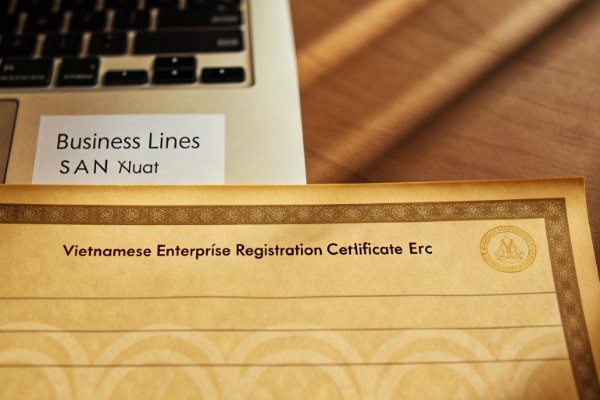
In Vietnam, the Enterprise Registration Certificate (ERC) is the definitive document for understanding a company's legal scope. When we review potential partners or competitors, we look specifically at the "Business Lines" section. A true factory will have specific industry codes related to manufacturing. For welding parts, you should look for codes related to "Machining; treatment and coating of metals" (Code 2592) or "Manufacture of structural metal products" (Code 2511).
Enterprise Registration Certificate (ERC) 1
If you see keywords like "Wholesale" (Bán buôn) or "Retail" (Bán lẻ) without any corresponding manufacturing codes, you are dealing with a trading company. These companies are legally prohibited from manufacturing goods. They exist solely to buy and sell. This distinction is critical because it determines liability. If a trading company sells you defective parts, they often lack the technical assets to fix the root cause because they do not control the machines.
Analyzing the Address
Another critical detail on the license is the registered address. We always cross-reference this with Google Maps satellite view.
- Industrial Parks (Khu Công Nghiệp): Real factories are almost always located here due to zoning laws regarding noise and waste.
- Commercial Buildings/Residential Areas: If the address points to a generic office building in District 1 of Ho Chi Minh City, it is a trading office. Heavy welding machinery cannot operate in a high-rise office.
Key Terms in Vietnamese Business Licenses
| Vietnamese Term | English Meaning | Implication for Buyer |
|---|---|---|
| Sản xuất | Manufacturing | Good. Indicates legal authority to produce goods. |
| Gia công cơ khí | Mechanical Processing | Good. Indicates capability for machining and welding. |
| Thương mại | Trading / Commercial | Warning. Indicates a focus on buying and selling. |
| Bán buôn | Wholesale | Red Flag. This is a distributor, not a maker. |
| Dịch vụ | Service | Red Flag. Usually consulting or logistics, not production. |
By demanding a scan of the ERC before you send any RFQ, you can filter out 50% of the middlemen immediately. Do not accept a "Tax ID" number alone; ask for the full certificate scan.
Can they show me their own production floor via live video?
Our engineers conduct site visits regularly, but you can achieve similar results remotely. A refusal to show the shop floor is the single biggest warning sign we encounter.
Request an immediate, unscripted video call via WhatsApp or Zoom to see the welding stations. A real factory will happily walk you to the floor, while a trading company will make excuses, need time to "prepare," or show a quiet office.

The "Live Video Test" is the most effective tool in your arsenal. When we are vetting a new sub-supplier, we often call them without prior notice. A real factory manager is usually proud of their facility. They might apologize for the noise, but they will walk you out to the floor. They can point to the CNC machines, the welding robots, and the raw material stockpiles.
CNC machines 2
Trading companies, however, will panic. They might say, "The internet connection is bad in the factory," or "We need to schedule this three days in advance for security." These are stall tactics. They need time to contact the actual factory and arrange a visit, pretending they work there. Or worse, they simply cannot show you anything because the "factory" doesn't exist.
Visual Clues to Look For
During the video call, our team looks for specific details that prove ownership:
- Uniforms: Do the workers' shirts have the same logo as the company name on your contract? Trading companies often take you to a partner factory where workers wear different logos.
- Machine Branding: Look at the heavy equipment. Is there a company asset tag?
- Inventory: A real factory has raw materials (steel tubes, sheets) and scrap metal bins. A trading company might have a showroom with finished samples but no raw stock.
The "Partner Factory" Excuse
You might hear a supplier say, "We are the sales office, and our factory is in another province." While some large conglomerates operate this way, it is a common lie for small trading firms. They claim to "own shares" in a factory to sound legitimate. To verify this, ask to see the shareholder agreement or the financial audit showing the relationship. Most cannot provide it.
If they cannot turn on a camera and show you sparks flying and metal being cut within 10 minutes, proceed with extreme caution. You are likely paying a margin for a middleman who adds no technical value.
Do they struggle to answer specific technical welding questions?
We find that true expertise cannot be faked. When we discuss welding parameters, the difference between a sales agent and a production engineer becomes immediately obvious.
Ask technical questions about welding parameters, such as shielding gas ratios or heat-affected zone controls. A factory's technical team can answer instantly with data, whereas a trading company will give vague replies or wait days to forward answers from the actual source.

Welding is a scientific process, not just a commodity. When we develop custom parts, we discuss specific details like the WPS (Welding Procedure Specification), shielding gas mixtures (e.g., 80% Argon / 20% CO2), and tolerance stacks. A real manufacturer employs engineers who live and breathe these details. If you ask a question about the tensile strength of a specific weld joint, a factory engineer can usually give you an estimate on the spot or pull up a similar past project.
Trading companies rely on sales staff who are often English majors, not engineers. They act as message carriers. If you ask a complex technical question, they will say, "Let me check with our technical team." Then, you wait two days. This delay happens because they have to translate your question, email the real factory, wait for a reply, translate it back, and send it to you. This "telephone game" is dangerous. It leads to misunderstandings, wrong specs, and ultimately, non-conforming parts.
Testing Their Knowledge
To verify their identity, we recommend asking open-ended technical questions during a call:
- "What amperage range do you use for this thickness of 304 stainless steel?"
- "How do you control distortion during the cooling process for this geometry?"
- "Can you show me your PQR (Procedure Qualification Record) for a similar joint?"
Communication Patterns: Factory vs. Trader
| Merkmal | Real Factory | Trading Company |
|---|---|---|
| Response Time | Instant or same-day for technical queries. | 24-48 hours (needs to relay info). |
| Depth of Answer | Specific numbers, standards (ISO 3834), and data. | Vague assurances ("We ensure good quality"). |
| Problem Solving | Suggests design changes to improve weldability. | Agrees to everything, even impossible requests. |
| Documentation | Can provide raw material mill certs immediately. | "We will provide certificates before shipment." |
If your contact agrees to every requirement without asking clarifying technical questions, be worried. Real manufacturers push back when a design is not feasible. Traders just want the order.
industrial electricity bill 3
Is their pricing structure transparent regarding material and labor costs?
In our experience, honest pricing is the foundation of a long-term partnership. We always break down costs for our clients, but trading companies rely on opacity to protect their margins.
Minimum Order Quantities 4
Real factories provide detailed cost breakdowns separating raw materials, labor, and overhead. Trading companies typically offer a single "black box" price to conceal their 15-30% markup, preventing you from understanding the true cost drivers of your custom welding parts.

When you receive a quote, look at the format. A trading company usually gives you a simple unit price: "$5.00 per piece." They rarely explain how they arrived at that number. They fear that if they break it down, you will see that the factory price is $3.50 and they are adding $1.50 for their service.
304 stainless steel 6
A real factory, or a transparent supply chain partner, works differently. We typically see quotes that list:
- Material Cost: Based on the weight and current market price of steel or aluminum.
- Processing Cost: Laser cutting, bending, and welding minutes.
- Finishing Cost: Powder coating or plating.
- Packaging & Logistics.
The MOQ Reality Check
Pricing also reveals identity through Minimum Order Quantities (MOQs).
- Factories: Often have higher MOQs (e.g., 1,000 units). They need to justify the setup time for CNC machines and welding jigs. They cannot profit on small runs.
- Trading Companies: Often offer lower MOQs (e.g., 100 units). They might buy standard parts from a stockist or combine orders. While this sounds attractive, it confirms they are not the primary manufacturer.
Why "Black Box" Pricing Hurts You
If you don't know the cost breakdown, you cannot negotiate effectively. If the price of steel drops by 10%, a factory with a transparent material index mechanism will lower your price. A trading company with a fixed price will simply keep the difference as extra profit. Furthermore, without a breakdown, you cannot engineer costs out of the product. You don't know if the high price is due to expensive material or slow welding processes.
Do their facility audits match their paperwork and utility usage?
When we perform on-site audits, we look beyond the machines. We check the utility bills and environmental permits. These are documents that a trading office simply cannot forge convincingly.
shielding gas mixtures 7
Cross-reference the factory's industrial electricity bill and hazardous waste permits with their corporate name. High-voltage power usage and metal scrap disposal permits are essential for welding operations; trading companies in office buildings will lack these critical utility documents.

Welding and metal fabrication are energy-intensive and dirty processes. They generate fumes, metal dust, and scrap. Therefore, a real factory leaves a massive paper trail regarding utilities and environment.
WPS (Welding Procedure Specification) 8
The Electricity Bill Test
We always ask to see the most recent electricity bill.
- Voltage: Factories require 3-phase industrial power.
- Usage: The consumption should be massive, consistent with running heavy welders and presses.
- Name: The bill must be in the company's name. If the bill is in a landlord's name or a different company's name, they are likely renting a small corner of someone else's shop or are just a tenant in an office block.
Environmental Impact Assessment (EIA)
In Vietnam, strict laws govern industrial waste. A welding factory must have an Environmental Impact Assessment (EIA) and contracts for hazardous waste disposal (for things like pickling acids or metal sludge). A trading company will not have these. They might not even know what they are. Asking for their "Hazardous Waste Generator Registration" is a quick way to stump a middleman.
Staffing Ratios via Social Insurance
Finally, look at their Social Insurance (BHXH) filings. A factory needs a high ratio of blue-collar workers to white-collar staff. If a company claims to manufacture welding parts but their insurance records show 15 employees—all sales and admin—and zero laborers, they are a trading company. A real factory will have dozens or hundreds of workers registered for labor insurance.
Document Verification Checklist
| Document to Request | What to Look For |
|---|---|
| Electricity Bill | High usage, industrial rate, company name matches ERC. |
| Waste Disposal Contract | Contract with a licensed environmental company for scrap metal/chemicals. |
| Machine Maintenance Logs | Records of service for welding machines (dates, serial numbers). |
| Raw Material Invoices | Invoices showing they buy steel/aluminum in bulk from mills. |
By digging into these operational documents, you strip away the marketing facade and see the operational reality of the business.
via WhatsApp or Zoom 9
Fazit
Distinguishing a real Vietnamese factory from a trading company requires looking past the website and checking the legal, technical, and operational evidence. By verifying business licenses, demanding live video tours, and auditing utility records, you ensure you are partnering with the source, securing better pricing, and maintaining control over your quality.
specific industry codes 10
Footnotes
1. Official Vietnamese government portal for verifying enterprise registration and legal status. ↩︎
2. General definition of Computer Numerical Control machinery. ↩︎
3. Vietnam Electricity (EVN) is the state utility provider for industrial power. ↩︎
4. Educational resource defining the business term MOQ. ↩︎
5. Official ISO standard page for quality requirements in fusion welding. ↩︎
6. Standard definition of the specific steel grade mentioned. ↩︎
7. Major industrial gas manufacturer explaining shielding gas applications in welding. ↩︎
8. Authoritative definition from The Welding Institute (TWI) regarding welding procedures. ↩︎
9. Official site of the video communication platform mentioned in the text. ↩︎
10. Official General Statistics Office of Vietnam site listing standard industrial classification codes. ↩︎

 English
 Español de México
 Deutsch
 Français
 Русский
 العربية