Our production teams in Vietnam frequently see US buyers struggling with escalating tariff costs from traditional markets. You face shrinking margins, yet you need reliable custom welding partners outside of China.
To leverage US trade Foreign Trade Zones 1 policies for Vietnam, you must utilize the new Reciprocal Trade Agreement framework, aiming for products listed in Annex III for 0% duty eligibility. By validating strict Rules of Origin compliance, you avoid the 40% transshipment penalty and bypass the 25% Section 301 tariffs applied to Chinese goods.
Let’s examine the specific strategies that help you maximize these savings while ensuring compliance.
What specific US import tariffs apply to welding parts manufactured in Vietnam?
We constantly monitor trade updates to ensure our clients' custom aluminum frames enter the US market without unexpected costs. Uncertainty regarding duty rates often stalls critical procurement decisions.
Under the October 2025 framework, a baseline 20% reciprocal tariff applies to most Vietnamese goods, replacing the threatened 46% rate. However, specific industrial items listed in Annex III of Executive Order 14346 are eligible for a 0% tariff, provided they meet strict origin criteria.

Navigating the New Reciprocal Tariff Structure
The trade landscape between the US and Vietnam changed significantly in late 2025. For years, we operated under a standard Most Favored Nation (MFN) status. Meistbegünstigte Nation (MFN) 2 Now, the new Agreement on Reciprocal, Fair, and Balanced Trade has introduced a two-tier system that every procurement manager must understand. If you simply ship welding parts without checking their classification, you might default to the baseline 20% rate. This is still better than the threatened 46%, but it is not the most optimized cost.
The real opportunity lies in Annex III. This is a specific list of products that the US government has exempted from reciprocal tariffs to support domestic industrial needs. In our experience, many custom industrial components, specifically those essential for US manufacturing supply chains, fall into this category. If your welding parts—such as the custom aluminum frames we fabricate—qualify for Annex III, your duty rate drops to 0%. This effectively restores the duty-free benefits that many importers have relied upon.
Das Transshipment-Risiko
There is a critical caveat. The US government is strictly targeting "transshipment." This occurs when goods made in China are routed through Vietnam to evade taxes. If US Customs and Border Protection (CBP) suspects your goods US Customs and Border Protection (CBP) 3 are transshipped, they will apply a punitive 40% duty. This is why we maintain strict segregation in our factories. You cannot simply label a product as "Made in Vietnam"; the manufacturing process must occur there.
Tariff Category Comparison
The table below outlines the current duty landscape for welding components based on the October 2025 updates.
| Tariff Category | Applicable Rate | Conditions for Application |
|---|---|---|
| Annex III Preferential | 0% | Goods must be listed in EO 14346 and strictly originate in Vietnam. |
| Baseline Reciprocal | 20% | Applies to Vietnamese goods not on the Annex III exemption list. |
| Transshipment Penalty | 40% | Applied if goods are suspected of originating in China and re-routed. |
| Section 301 (China) | 25% | The standard penalty tariff you pay if you source directly from China. |
Strategic Monitoring
The agreement details are still being finalized. The distinction between whether the 20% is a flat rate or added to existing HTS rates is vital. We recommend that our clients utilize a "landed cost calculator" that includes a buffer for these potential variances until the final text is signed. By assuming the baseline 20% in your budget but aiming for 0%, you protect your margins against regulatory shifts.
How much can I save on duties by shifting my welding part sourcing from China to Vietnam?
Our cost analysis for recent aluminum frame projects reveals significant gaps between Chinese and Vietnamese landed costs. Staying in China often means absorbing unrecoverable tariff expenses that eat directly into profit.
Shifting sourcing to Vietnam can yield total landed cost savings of 15% to 30%, primarily by eliminating the 25% Section 301 China tariffs. Additionally, Vietnam’s lower labor rates for skilled welding further reduce the FOB unit price, compounding your overall procurement savings.
Breaking Down the Cost Structure
When we quote projects for US clients, we look beyond the factory door price. The "Landed Cost" is the only number that matters Landed Cost 4 to your bottom line. Sourcing from China has become increasingly expensive due to the Section 301 tariffs. These are 25% taxes added on top of standard duties. For a welding assembly project worth $100,000, that is an immediate $25,000 tax bill that adds no value to the product.
By moving production to our Vietnam facility, you immediately remove that 25% penalty. Even if your product falls under the new 20% reciprocal tariff (and misses the 0% exemption), you are still saving 5% on duties alone. If you qualify for the 0% Annex III rate, your duty savings jump to the full 25%.
Labor and Manufacturing Advantages
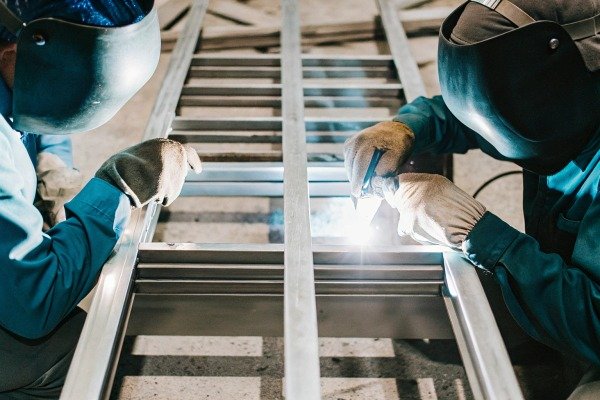
Tariffs are only half the story. The cost of skilled labor in Vietnam is currently lower than in China's established industrial zones. Welding requires skilled labor; it is not a fully automated process. The complex geometric aluminum frames we build require manual TIG or MIG welding, grinding, and finishing. TIG or MIG welding 5
- China Labor Cost: Rising wages in coastal provinces have pushed unit prices up.
- Vietnam Labor Cost: Competitive wages allow us to offer a lower FOB (Free On Board) price. FOB (Free On Board) 6
When you combine a lower starting price with a lower tax rate, the savings compound. You are paying a smaller percentage of tax on a smaller base number.
Cost Simulation: China vs. Vietnam
Let's look at a hypothetical scenario for purchasing 500 units of custom welded aluminum frames.
| Kostenkomponente | Beschaffung aus China | Sourcing from Vietnam (Baseline) | Sourcing from Vietnam (Annex III) |
|---|---|---|---|
| FOB Unit Price | $200.00 | $185.00 | $185.00 |
| Total Goods Value | $100,000 | $92,500 | $92,500 |
| Standard Duty | 3% ($3,000) | 20% ($18,500) | 0% ($0) |
| Abschnitt 301 Zoll | 25% ($25,000) | N/A | N/A |
| Freight & Logistics | $5,000 | $5,000 | $5,000 |
| Gesamte Landed Cost | $133,000 | $116,000 | $97,500 |
| Total Savings | — | $17,000 (12.7%) | $35,500 (26.6%) |
Long-Term Supply Chain Resilience
Saving money is great, but continuity is better. The "China Plus One" strategy is not just a buzzword; it is a risk mitigation tool. We have seen supply chains disrupted by geopolitical tension. Diversifying to Vietnam protects your supply line. You are not putting all your eggs in one basket. This strategic value is harder to quantify on a spreadsheet but is invaluable when trade wars escalate.
How do I determine the correct HS codes to minimize taxes on my welding component shipments?
When we export custom frames, misclassification is a risk we never take, as it leads to overpayment or penalties. Using generic codes often results in higher default duty rates.
To minimize taxes, consult a licensed customs broker to classify your welding parts under specific HS codes that align with Annex III eligibility. Avoid generic "parts of metal" classifications; instead, use precise descriptions based on material and function to secure the lowest legal duty rate.

The Importance of Precision in Classification
The Harmonized System (HS) or Harmonized Tariff Schedule (HTS) is the language Harmonized Tariff Schedule (HTS) 7 of global trade. Harmonisierte Systematik 8 In our daily operations, we see that a slight difference in description can change a duty rate from free to expensive. For welding parts, the material composition is the first major factor. Is it steel? Is it aluminum?
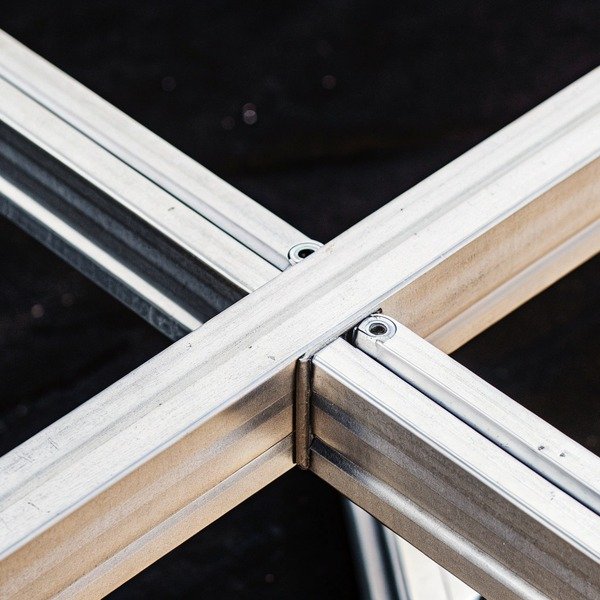
For the aluminum frames shown in the product context, classification depends on their finish and function. If they are classified simply as "Other articles of aluminum," they might attract a standard rate. However, if they are part of a specific machine or structure, they might have a specific code that is duty-free under the new trade agreement.
Strategies for Accurate Classification
You should not guess. We work with trade compliance experts to review the engineering drawings before shipping. Here is the process we recommend:
- Analyze the Material: Confirm the exact alloy. Aluminum (7600 series) is treated differently than Steel (7300 series).
- Define the Function: Is this a general-purpose part or a dedicated part for a specific machine? "Parts solely or principally used for…" often carry lower duties than generic parts.
- Check Annex III: Once you have a potential HS code, cross-reference it with the Annex III list from Executive Order 14346. If your code is on that list, you are eligible for 0% tariffs.
Common HS Codes for Welding Projects
Below are common codes we encounter. Note how the rates can vary based on the specific type of metal and usage.
| Component Type | HS Code Prefix | Beschreibung | Key Consideration |
|---|---|---|---|
| Aluminum Structures | 7610.90 | Aluminum structures and parts of structures | Often subject to different rates than raw material. |
| Steel Welding Wire | 7229.20 | Wire of other alloy steel | Check for AD/CVD duties (Anti-Dumping). |
| Custom Fasteners | 7318.15 | Threaded screws and bolts | specialized fasteners may have high duties. |
| Machine Parts | 8466.93 | Parts for laser/other welding machines | often lower duty if specific to machinery. |
Watch Out for AD/CVD
A major pitfall in sourcing welding materials is Anti-Dumping and Countervailing Duties (AD/CVD). Anti-Dumping- und Ausgleichszölle (AD/CVD) 9 Even if the general tariff is low, the US Dept of Commerce may apply massive duties (sometimes over 100%) on specific metals from specific countries if they believe the market is being flooded. While this is most common with China, some Vietnamese steel products derived from Chinese substrates can be targeted. We always ensure our raw material sourcing is clean and traceable to avoid this trap.
De Minimis Opportunities
For smaller shipments, such as initial samples or replacement sensors, you can leverage Section 321. This allows shipments valued under $800 to enter the US duty-free. When we send prototypes of a new welded frame design, we use this entry type to save our clients money and speed up customs clearance. It is a small tactic that adds up during the R&D phase.
What documentation do I need to prove country of origin for my Vietnamese welding imports?
Our logistics team prepares rigorous documentation to clear US Customs smoothly and withstand any potential audit. Missing a single paper trail can trigger the transshipment penalty.
You must provide a comprehensive documentation package including Mill Test Certificates, detailed Bills of Materials, production records, and a Certificate of Origin. These documents must verify "substantial transformation" occurred in Vietnam, proving the goods were not merely transshipped from China.

Proving Substantial Transformation
The core requirement for US Customs is "Substantial Transformation." It is not enough to import raw steel from China, paint it in Vietnam, and ship it to the US. raw steel 10 That is not a Vietnamese product. The commodity must undergo a fundamental change in name, character, or use.
In our factory, we document the entire process. We take raw aluminum ingots or extrusions and cut, bend, weld, and assemble them into a complex frame. This process clearly transforms the raw material into a new product. To prove this to a CBP officer who has never visited our factory, we need irrefutable evidence.
The Essential Document Checklist
We provide our clients with a "Defense File" for every major shipment. This file protects you if CBP issues a Request for Information (CBP Form 28).
- Mill Test Certificates (MTC): These show where the raw metal came from. If we buy aluminum from a Vietnamese smelter, this certificate proves it.
- Production Flow Charts: A visual document showing the step-by-step manufacturing process (Cutting -> Welding -> QC -> Packing).
- Employee Time Logs: Proof that labor was performed in Vietnam.
- Machine Logs: Data showing our welding robots or CNC machines were active during the production window.
- Non-Transshipment Declaration: A formal statement confirming the goods did not simply pass through the country.
Managing Transshipment Risks
The 40% penalty mentioned earlier is triggered by suspicion. If your paperwork is vague, CBP assumes the worst. We have seen competitors' shipments detained because they could not prove where the welding wire originated.
We also utilize Foreign Trade Zones (FTZs) for some clients. By storing goods in a US FTZ, you can delay duty payments until the goods actually enter US commerce. While this doesn't change the documentation requirement, it gives you cash flow flexibility. However, the origin documentation must still be perfect.
Internal Audits
We recommend that you, as the buyer, conduct an annual audit of your suppliers. Do not just trust the paperwork; visit the factory (or hire a third party). Verify that the capacity matches the output. If a factory has two welding machines but ships 10,000 frames a month, that is a red flag for transshipment. We welcome these audits because they validate our legitimate manufacturing status and give our clients peace of mind.
Fazit
Leveraging US-Vietnam trade policies offers significant cost reductions if managed correctly. By targeting Annex III products and ensuring strict origin compliance, you secure long-term savings and supply chain resilience.
Footnotes
1. Explains the legal and economic framework of FTZs in the US. ↩︎
2. Authoritative definition of MFN status from the World Trade Organization. ↩︎
3. Official homepage of the US agency responsible for enforcing import laws and tariffs. ↩︎
4. Official US government resource explaining landed cost calculations for importers. ↩︎
5. Technical definitions of welding processes from the American Welding Society. ↩︎
6. Official International Chamber of Commerce page defining Incoterms like FOB. ↩︎
7. Official US International Trade Commission search tool for tariff schedules. ↩︎
8. Provides background on the international standard for classifying traded products. ↩︎
9. Official International Trade Administration guide on AD/CVD enforcement. ↩︎
10. Industry statistics and data on global steel production and trade. ↩︎

 English
 Español de México
 Deutsch
 Français
 Русский
 العربية