We understand the anxiety that comes with outsourcing critical components. At our facilities in Vietnam and China, we have seen how a lack of proper verification tools leads to costly delays and non-conforming products. You need confidence that your parts will fit perfectly every time.
To ensure quality, require your supplier to possess Coordinate Measuring Machines (CMM) for complex 3D geometries and Optical Comparators for 2D profiles. Additionally, they must utilize Vision Measuring Systems for high-volume batches, Rockwell or Vickers hardness testers for material verification, and calibrated Go/No-Go gauges for rapid floor-level checks.
Let's examine the specific machinery and protocols that guarantee your custom parts meet every specification.
Do I need a supplier with CMM capabilities for complex stamped geometries?
When we develop complex automotive components, manual tools often fail to capture the full picture. We rely on advanced measurement systems to verify intricate details that standard calipers simply cannot reach or measure accurately.
Yes, a supplier with CMM capabilities is essential for verifying complex stamped geometries. CMMs provide micron-level accuracy for checking flatness, concentricity, and profile deviations that manual tools cannot detect. This equipment generates detailed reports comparing actual measurements against CAD data, ensuring strict adherence to GD&T tolerances.
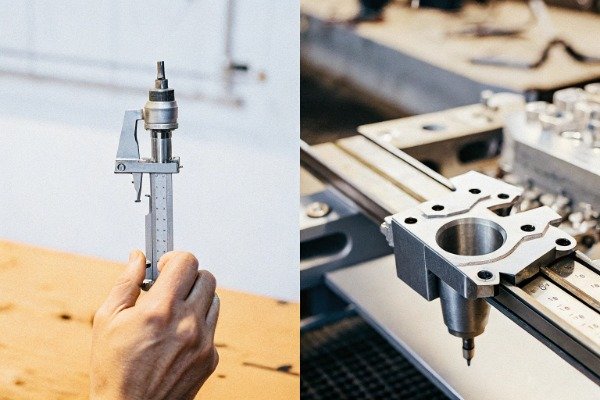
Coordinate Measuring Machines (CMMs) are the backbone of modern precision manufacturing. If your design involves tight tolerances or complex shapes, a supplier without a CMM is a significant risk. In our experience, manual tools like calipers and micrometers are excellent for basic linear dimensions. However, they cannot reliably measure geometric relationships.
Why Manual Tools Fall Short
For simple brackets, a caliper is sufficient. But precision stamping often involves Geometric Dimensioning and Tolerancing (GD&T). This includes requirements for flatness, parallelism, and true position. A human operator using a hand tool introduces variables. The angle at which they hold the tool or the pressure they apply can skew the result.
A CMM eliminates this variability. It uses a sensitive probe to touch the part at multiple points in 3D space. It creates a digital map of the physical object. This is critical for parts that must mate perfectly with other components in an assembly. If a mounting hole is slightly off-angle, a bolt might not pass through, causing assembly line stoppages at your facility.
The Role of GD&T Verification
We use CMMs to verify GD&T callouts that are impossible to check by hand. For example, "profile of a surface" controls the form of a curved shape. A CMM compares the manufactured curve directly against the 3D CAD model. It instantly identifies if the curve is too shallow or too steep.
Below is a comparison of what different tools can verify:
| Feature Type | Hand Tools (Calipers/Micrometers) | Coordinate Measuring Machine (CMM) |
|---|---|---|
| Linear Dimensions | High Accuracy | High Accuracy |
| Hole Diameter | High Accuracy | High Accuracy |
| Flatness | Low Accuracy (Gap check only) | High Accuracy (Micron level) |
| True Position | Impossible | High Accuracy |
| Surface Profile | Impossible | High Accuracy |
| Data Recording | Manual (Prone to error) | Automated (Digital Report) |
When you audit a supplier, do not just ask if they have a CMM. Ask to see a sample report. A professional report will show the nominal dimension, the tolerance range, the actual measurement, and a clear Pass/Fail indicator. This transparency is what allows us to sleep at night, knowing the parts we ship will work for you.
How can I verify if the factory uses automated vision systems for high-volume inspection?
In our mass production lines, human fatigue is a real challenge that can lead to missed defects. We implement automated optical solutions to maintain 100% consistency across thousands of units, ensuring that delicate parts remain untouched and undamaged.
You can verify the use of automated vision systems by requesting equipment lists featuring Vision Measuring Systems (VMS) or asking for video evidence of in-line inspection. These non-contact systems are crucial for high-volume orders, as they rapidly inspect delicate parts and detect surface defects without slowing down production.
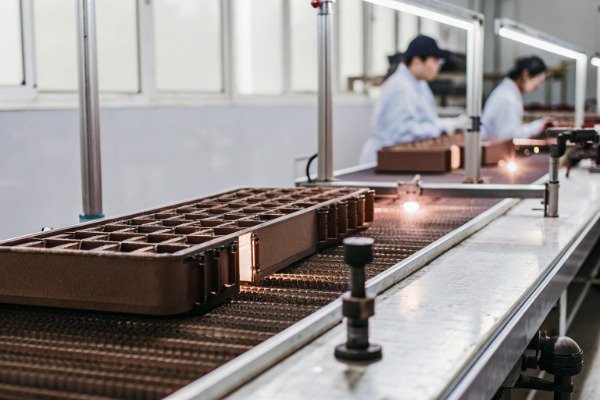
High-volume manufacturing requires a different approach to quality control. If you are ordering 500,000 stamped clips, checking every dimension on a CMM is too slow. This is where Vision Measuring Systems (VMS) and Optical Comparators become vital.
Speed Versus Accuracy
A CMM is accurate but slow. A probe must physically touch the part. A Vision System uses a camera and advanced software to "see" the part. It can measure dozens of dimensions in seconds. For flat stamping parts, this is often the most efficient method.
We place a part on the glass stage of the VMS. The camera zooms in and detects edges automatically. It measures radii, distances, and angles instantly. Because it is non-contact, there is no risk of the probe deforming a thin or flexible part. This is particularly important for electronic contacts or thin springs.
Asking the Right Questions
To verify a supplier has this capability, ask specific questions during your evaluation:
- "Do you use Keyence or similar instant measurement systems?" These are popular brands that indicate a high level of investment in QC.
- "Can you inspect 100% of the parts for critical dimensions?" Only automated vision systems make 100% inspection economically feasible for low-cost parts.
- "How do you handle edge detection on shiny parts?" Experienced suppliers will know how to adjust lighting (backlight vs. ring light) to get accurate readings on reflective metal surfaces.
Optical Comparators: The Traditional Workhorse
Before digital vision systems, we relied heavily on Optical Comparators (Profile Projectors). Many factories still use them effectively. They project a magnified shadow of the part onto a screen. An operator compares this shadow against a transparent overlay (a Mylar chart) of the correct shape.
While older technology, it is still valid for quick checks of profiles and chamfers. However, it relies on the operator's judgment. Modern VMS removes that subjectivity.
| Merkmal | Optical Comparator (Profile Projector) | Vision Measuring System (VMS) |
|---|---|---|
| Technologie | Shadow Projection | Digital Camera & Software |
| Speed | Slow (Manual alignment) | Fast (Auto-detection) |
| Data Output | Manual Recording | Digital / SPC Data |
| Am besten für | Quick profile checks, low volume | High volume, complex 2D shapes |
| Operator Skill | High dependency | Low dependency (once programmed) |
If your part has strict requirements for cleanliness or surface finish, vision systems can also be programmed to spot scratches or discoloration. This dual function—dimension and cosmetic check—adds immense value.
What hardness testing methods should I specify for heat-treated stamping parts?
We often see clients specify material grades but overlook post-treatment verification, which is a critical mistake. Our engineers always test mechanical properties after heat treatment to prevent structural failures that could compromise the entire assembly.
structural failures 1
For heat-treated stamping parts, you should specify Rockwell (HRC/HRB) or Vickers (HV) hardness testing methods. Rockwell is ideal for general hardness verification of finished parts, while Vickers is necessary for thin materials or checking case depth. These tests ensure the metal meets strength requirements and will not fail under load.

Stamping changes the grain structure of metal. Heat treatment changes it further. If you do not verify the final hardness, you are guessing at the strength of the part. We have seen cases where a spring clip snapped during assembly because it was too brittle. Proper testing prevents this.
grain structure 2
Understanding Hardness Scales
Not all hardness tests are the same. The choice depends on the material thickness and the type of heat treatment.
- Rockwell C (HRC): This is the standard for hardened steel. It uses a diamond cone indenter. It is fast and leaves a small indentation. We use this for most structural parts.
- Rockwell B (HRB): Used for softer materials like unhardened steel or brass.
- Vickers (HV): This uses a pyramid-shaped diamond. It is crucial for thin stamping parts. If a part is too thin, the Rockwell test might punch through or give a false reading because of the anvil underneath. Vickers applies a lighter load, making it safe for delicate foils or thin strips.
The Risk of Skipping Hardness Tests
If a supplier lacks internal hardness testing, they must outsource it. This adds time and cost. Often, they might skip it entirely and rely on the material certificate from the steel mill. This is dangerous. The stamping process (work hardening) and subsequent heat treatment alter the properties. The mill certificate only tells you what the raw coil was, not what your finished part is.
Case Depth Verification
For parts that are case-hardened (hard on the outside, tough on the inside), simple surface testing is not enough. We must cut the part, polish the cross-section, and use a Micro-Vickers tester to measure how deep the hardness goes. This ensures the part is wear-resistant but not brittle.
When specifying your requirements, be clear. Do not just say "Hardness check required." Say, "Hardness 40-45 HRC per ASTM E18." This removes ambiguity.
ASTM E18 3
Equipment Checklist for Material Verification
Beyond hardness, consider if you need other material checks.
- Tensile Testers: Pull the part until it breaks to measure yield strength.
- Spectrometers: Analyze the chemical composition to ensure it is the correct alloy (e.g., SS304 vs. SS316).
A supplier with a well-equipped lab demonstrates they understand metallurgy, not just metal bending.
How do I ensure the manufacturer has proper gauges for critical dimension checks?
On our shop floor, we cannot run a complex CMM program for every single part coming off the press. We use functional gauges to give operators immediate pass/fail feedback during production, ensuring defects are caught the moment they happen.
AQL Sampling 4
To ensure proper gauging, audit the manufacturer's calibration records and require a detailed control plan listing specific Go/No-Go gauges for critical features. Effective suppliers design custom fixtures and plug gauges to verify hole sizes and fits instantly on the production line, preventing defective parts from moving to the next stage.

traceable to international standards 5
The most sophisticated CMM is useless if it sits in a lab while the production line churns out bad parts. Real-time quality control happens right at the stamping press. This requires functional gauging.
Go/No-Go gauges 6
The Efficiency of Functional Gauging
"Go/No-Go" gauges are simple but powerful.
- Go Gauge: Must fit into the hole or over the feature. This confirms the hole is large enough.
- No-Go Gauge: Must NOT fit. This confirms the hole is not too big.
An operator can check a part in two seconds. If we rely only on a caliper, the operator must read the dial, interpret the number, and decide if it is in tolerance. This takes time and invites error. Gauges are binary: it fits, or it doesn't.
Vision Measuring Systems 7
Custom Fixtures for Complex Shapes
For bent parts, we often build custom "check fixtures." The operator places the stamped part into the fixture. If it seats fully, the shape is correct. If it rocks or doesn't fit, the bend angle is wrong.
These fixtures often incorporate dial indicators. As the part sits in the fixture, the indicator touches a critical surface. The operator just watches the needle. If it stays in the green zone, the part is good. This "attribute data" is fast and effective for process control.
Geometric Dimensioning and Tolerancing 8
Calibration: The Hidden Requirement
A gauge is only as good as its calibration. A worn-out plug gauge might pass a hole that is actually too small.
You must ensure your supplier has a robust calibration system.
- Labeling: Every gauge should have a sticker showing the last calibration date and the next due date.
- Master Standards: The factory must have "Master" gauge blocks (Jo blocks) to calibrate their hand tools.
- Rückverfolgbarkeit: Their masters must be traceable to international standards (like NIST).
Inspection Frequency Strategy
We do not check every part the same way. A smart quality plan balances risk and cost. We recommend a tiered approach:
| Inspection Stage | Method | Frequency | Equipment Used |
|---|---|---|---|
| First Article | Full Dimensional Layout | 1 pc per setup | CMM, Vision System |
| In-Process | Critical Dimensions | Every 30-60 mins | Go/No-Go Gauges, Calipers |
| In-Process | Visual Check | Random sampling | Magnifying Lamp, Visual |
| Final Inspection | AQL Sampling (e.g., Level II) | Based on lot size | CMM, Functional Gauges |
By defining these stages in your contract, you force the supplier to plan their equipment usage. You ensure that the high-tech CMM verifies the setup, while the robust gauges keep the production on track.
Optical Comparators 9
Fazit
Quality is not an accident; it is the result of intelligent effort and the right equipment. By requiring CMMs, vision systems, and proper gauging, you protect your supply chain. At DEWIN, we invest in these tools because we know that in precision manufacturing, close enough is never good enough.
Coordinate Measuring Machines 10
Footnotes
1. Government guidance on manufacturing responsibilities for preventing product failure. ↩︎
2. Educational resource explaining how metal microstructure changes during processing. ↩︎
3. Direct link to the standard specification for Rockwell hardness testing cited in the text. ↩︎
4. The international standard (ISO 2859) governing Acceptable Quality Limit sampling procedures. ↩︎
5. Official government explanation of measurement traceability and calibration chains. ↩︎
6. Major manufacturer of precision plug gauges used for functional inspection. ↩︎
7. Official product page for the specific automated inspection technology mentioned. ↩︎
8. The authoritative industry standard (ASME Y14.5) defining GD&T rules. ↩︎
9. General background information on the history and function of profile projectors. ↩︎
10. Leading manufacturer providing technical specifications for CMM equipment capabilities. ↩︎

 English
 Español de México
 Deutsch
 Français
 Русский
 العربية