
Every year, our sourcing team reviews dozens of overmolding suppliers across Asia statistische Prozesskontrolle 1. The gap between a great partner and a risky one is often invisible until defects show up at your door.
Evaluating overmolding services requires checking material compatibility, mold design expertise, quality certifications, production capacity, and total cost of ownership. Prioritize suppliers who demonstrate strong DFM knowledge, rigorous testing protocols, and proven track records with similar custom plastic parts projects.
The details matter more than most buyers realize. A wrong material pairing, a poorly designed gate location, or a supplier who cuts corners on tooling can cost you months and thousands of dollars molecular interaction 2. Let's walk through the critical areas you need to assess before committing to any overmolding partner.
What Material Combinations Should I Prioritize to Ensure My Overmolded Parts Bond Correctly?
When we help clients develop overmolded components, material selection is always the first conversation. Get this wrong, and no amount of process tuning will save the part.
To ensure correct bonding in overmolded parts, prioritize material combinations with proven chemical adhesion and compatible thermal properties. Common reliable pairings include TPE over ABS, TPE over polycarbonate, and TPU over nylon. Always verify melting temperature differentials and test bonding strength through prototypes before committing to production.
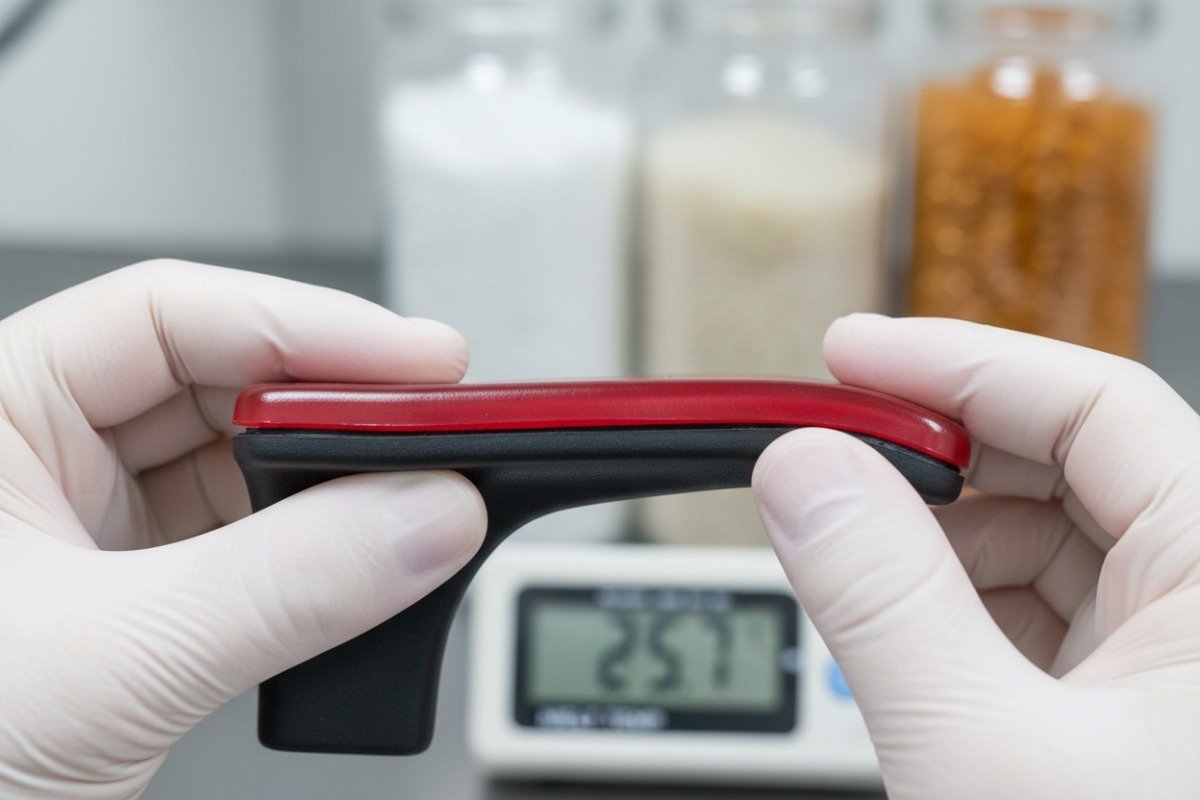
Why Chemical Adhesion Alone Is Not Enough
Many buyers assume that if two materials are listed as "compatible," they will bond automatically. That is not true. Chemical adhesion 3 depends on molecular interaction between the substrate and the overmold material. But real-world performance also depends on processing conditions, part geometry, and surface preparation.
In our experience sourcing overmolded parts from factories in Vietnam and across Asia, we have seen cases where a theoretically compatible pair failed because the substrate cooled too much before the overmold was injected. The result was delamination under normal use.
This is why mechanical interlocks 4 matter. Adding undercuts, through-holes, or textured surfaces to the substrate gives the overmold material something physical to grip. Even if chemical adhesion weakens over time, the mechanical bond holds.
Common Material Pairings and Their Properties
Here is a quick reference table for material combinations we frequently encounter:
| Substrate Material | Overmold Material | Bond Type | Typische Anwendung |
|---|---|---|---|
| ABS | TPE (Santoprene) | Chemical + Mechanical | Tool grips, consumer electronics |
| Polycarbonat (PC) | TPU | Chemical | Gehäuse für medizinische Geräte |
| Glass-filled Nylon (PA66-GF) | TPE | Mechanical preferred | Automotive connectors |
| Polypropylen (PP) | TPE (PP-based) | Chemical | Household product handles |
| PBT | TPE | Chemical + Mechanical | Electrical enclosures |
Temperature Differentials Are Critical
The overmold material must have a lower melting temperature than the substrate. If it does not, the substrate will deform or melt during the second shot. A general rule is to maintain at least a 40°F (22°C) gap between the two melting points.
For example, if your substrate is polycarbonate with a melting point around 500°F, your overmold material (say, TPE at 380°F) sits well within the safe range. But if you try to overmold a high-temp TPU over a low-temp PP, you risk warping the substrate entirely.
Prototype Testing Is Non-Negotiable
Never skip prototype validation. Even with the right material pairing on paper, real-world bonding depends on gate location, injection speed, melt temperature, and cooling time. Our team always requests rapid overmolding prototypes—typically 25 to 100 pieces—before approving full production tooling. This catches bonding failures early, when changes are cheap.
Ask your supplier to run pull tests, peel tests, and drop tests on prototype samples. If they cannot provide this data, that is a red flag.
How Can I Verify That an Overmolding Supplier Meets My Specific Quality and Tolerance Requirements?
Our quality engineers spend significant time auditing suppliers before we ever place an order. Verification is not a one-time event—it is an ongoing process.
Verify an overmolding supplier's quality by reviewing their ISO certifications, requesting PPAP documentation, auditing their inspection equipment, and evaluating prototype samples against your dimensional and cosmetic specifications. Consistent suppliers maintain full material traceability, use statistical process control, and provide detailed inspection reports with every shipment.
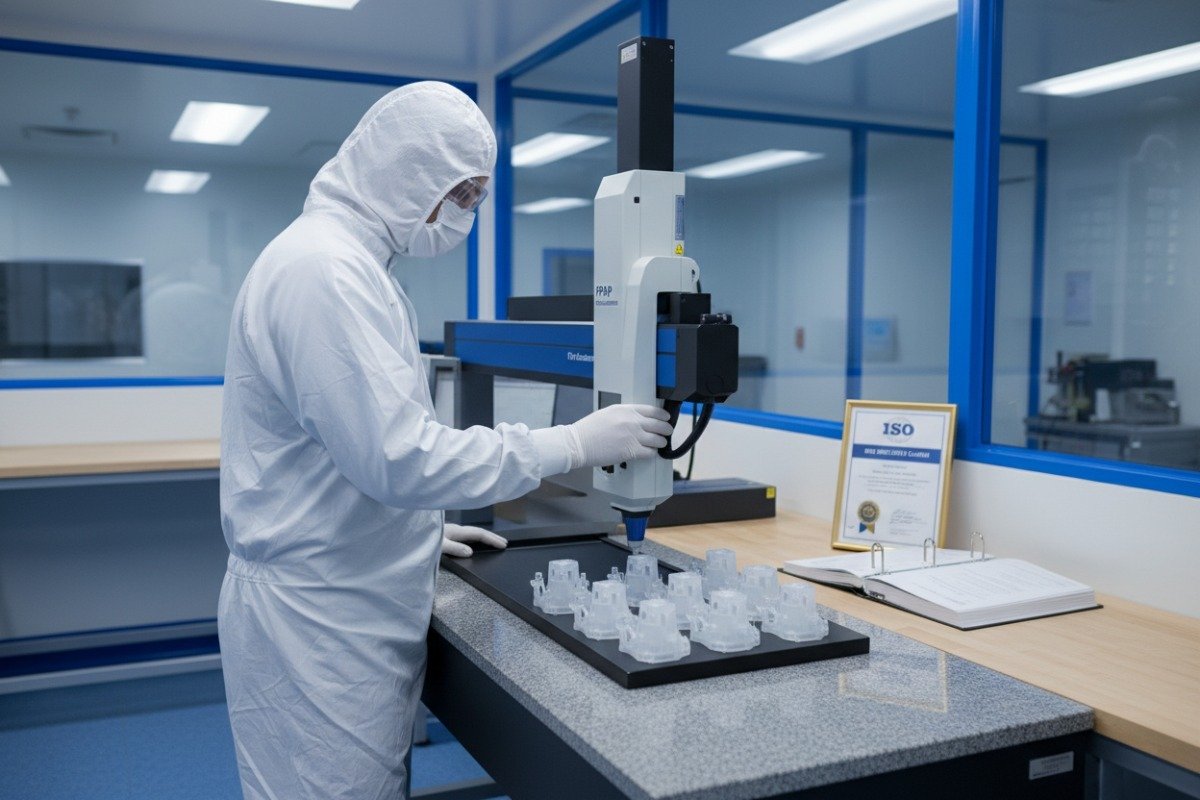
Start With Certifications—But Do Not Stop There
ISO 9001:2015 5 is the baseline. For medical parts, look for ISO 13485. For automotive, IATF 16949 6. These certifications tell you the supplier has a quality management system in place. But a certificate on the wall does not guarantee good parts in the box.
When we audit factories, we look beyond the certificate. We check calibration records for measuring equipment. We review corrective action logs. We ask to see real reject data. A supplier who claims zero defects is either lying or not measuring properly.
The PPAP Process Matters
Produktionsprozess zur Teilefreigabe (PPAP) 7 is standard in automotive but valuable for any custom part. It forces the supplier to prove they can consistently produce parts that meet your specifications before mass production begins.
A proper PPAP submission includes:
- Maßprüfberichte
- Materialzertifizierungen
- Prozessflussdiagramme
- Kontrollpläne
- Fähigkeitsstudien (Cpk-Werte)
If your overmolding supplier does not know what PPAP is, that tells you something about their quality maturity.
What to Inspect on Overmolded Prototypes
When you receive prototype samples, check these areas systematically:
| Inspektionsbereich | Worauf zu achten ist | Warum es wichtig ist |
|---|---|---|
| Abmessungen | Tolerances within ±0.05 mm or per drawing | Ensures fit with mating parts |
| Bond strength | No delamination under pull/peel test | Prevents field failures |
| Blitz | No excess material at parting lines | Indicates mold precision |
| Einfallstellen | Smooth surfaces without depressions | Shows proper cooling and wall thickness |
| Flow lines | No visible streaks on cosmetic surfaces | Reflects gate location and injection parameters |
| Color consistency | Uniform color across all samples | Confirms material and process stability |
On-Site Audits vs. Remote Verification
If you cannot visit the factory yourself, work with a sourcing partner who has local teams. Our offices in Vietnam and China conduct on-site audits that cover everything from raw material storage to final packaging. Remote verification through video calls and photo documentation helps, but it cannot replace physically checking a production floor.
Pay attention to how the supplier responds to your quality questions. A good partner welcomes scrutiny. A risky one deflects or gives vague answers.
Track Record and References
Ask for references from existing customers, especially those in your industry. A supplier who has successfully delivered overmolded parts for similar applications is far less risky than one attempting it for the first time with your project.
What Key Factors Should I Look for When Comparing the Production Capacity of Different Overmolding Partners?
When we match clients with overmolding suppliers, production capacity is one of the most misunderstood evaluation criteria. Bigger is not always better.
When comparing overmolding partners, evaluate machine tonnage range, number of presses, current utilization rates, lead times for your volume requirements, and their ability to scale up or down without sacrificing quality. The best partner matches your volume needs today and can grow with your demand over time.
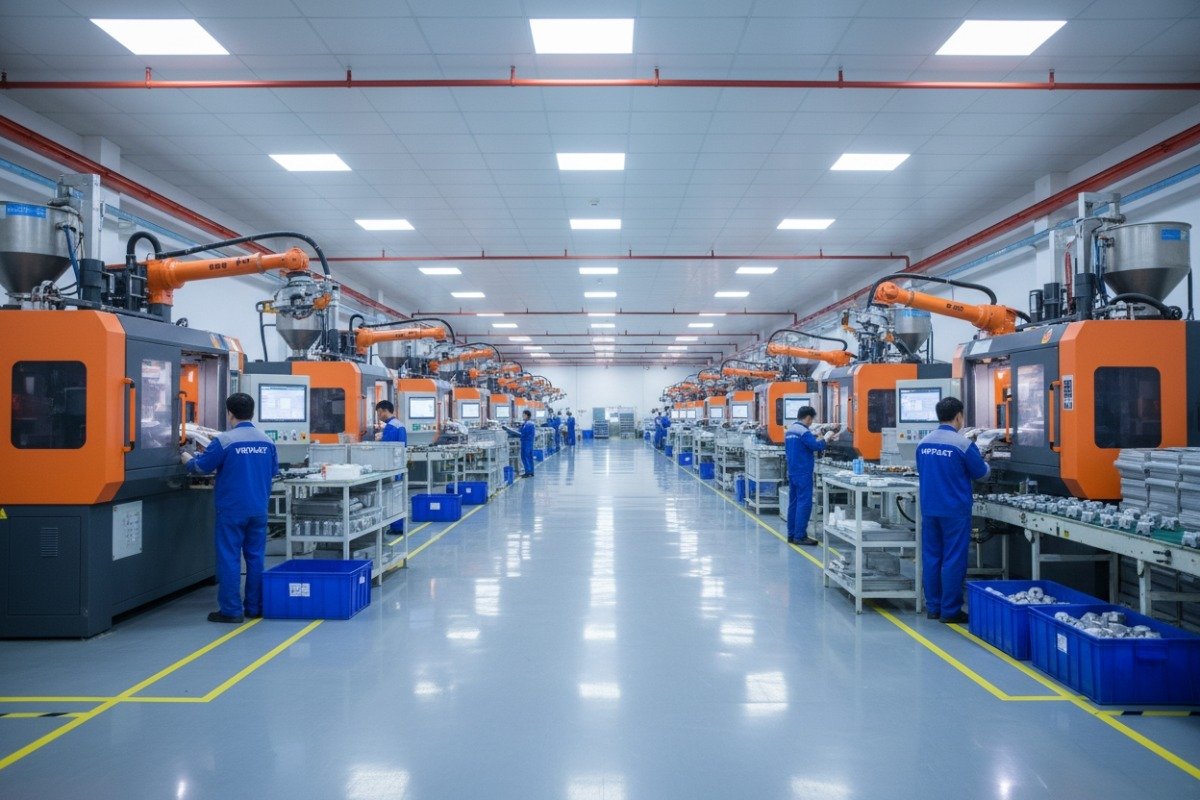
Machine Tonnage and Part Complexity
Overmolding machines range from small 50-ton presses to large 1,000+ ton machines. The tonnage you need depends on your part size, material, and complexity. A supplier with only small machines cannot handle large overmolded housings. A supplier with only large machines may not be cost-effective for small, precise components.
Ask the supplier what tonnage range they operate. Maschinen-Tonnage-Bereich 8 Then ask which specific machines they plan to use for your parts. This tells you whether they have actually thought about your project or are just quoting blindly.
Utilization Rate Is a Hidden Risk
A factory running at 95% capacity might seem impressive. But it means they have almost no room for your order if anything goes wrong. Delays from one customer cascade into delays for everyone else.
On the other hand, a factory at 40% utilization might be struggling for business—which raises questions about their financial stability and workforce retention.
The sweet spot is typically 65–80% utilization. This gives them enough business to maintain skilled operators and well-maintained equipment, while leaving room to absorb your order without rushing.
Scalability: From Prototype to Mass Production
Your needs may start at 500 pieces per month but grow to 50,000. Can the supplier handle both ends? Some factories specialize in low-volume, high-mix work. Others are set up for high-volume, low-mix runs. Few do both well.
Here is how to compare:
| Faktor | Low-Volume Specialist | High-Volume Specialist | Versatile Partner |
|---|---|---|---|
| Typical order size | 100–5,000 pcs | 50,000–500,000+ pcs | 500–200,000 pcs |
| Tooling approach | Aluminum or soft steel molds | Hardened steel molds | Both options available |
| Lead time (first parts) | 10–20 Tage | 30–60 Tage | 15–30 days |
| Cost per part at low volume | Niedriger | Higher (setup overhead) | Moderat |
| Cost per part at high volume | Höher | Niedriger | Wettbewerbsfähig |
| Ability to ramp up | Begrenzt | Stark | Gut |
Lead Times and On-Time Delivery
Ask for specific lead times: How long for tooling? How long for first article samples? How long for production runs of X quantity? Then ask for their on-time delivery rate over the past 12 months. A reliable supplier tracks this metric and shares it openly.
In our experience managing supply chains across Asia, delivery delays are the number one complaint from U.S. buyers. A supplier who quotes 4-week lead times but consistently delivers in 6 weeks is worse than one who quotes 6 weeks and hits it every time. Predictability matters more than speed.
Value-Added Services Reduce Your Total Workload
The best overmolding partners offer more than just molding. Look for insert molding, ultrasonic welding, assembly, kitting, custom packaging, and warehousing. Each additional service they handle is one less vendor you need to manage, one less handoff where quality can slip, and one less logistics step that can cause delays.
When we evaluate suppliers for our clients, we always map out the full workflow. If a supplier can mold, assemble, inspect, and pack—all under one roof—that is a significant advantage over a supplier who only molds and ships loose parts.
How Do I Determine if a Supplier's Tooling Process Will Provide the Long-Term Durability I Need for My Custom Parts?
Our engineers have reviewed hundreds of mold designs over the years. Tooling is where many sourcing decisions go wrong—because the cheapest mold is almost never the cheapest option in the long run.
Evaluate tooling durability by examining the mold steel grade, expected cycle life, maintenance schedule, and the supplier's track record with similar tools. Hardened steel molds (P20, H13, S136) last 500,000+ cycles, while aluminum molds suit prototyping at 5,000–10,000 cycles. Always request a tooling guarantee and maintenance plan in writing.
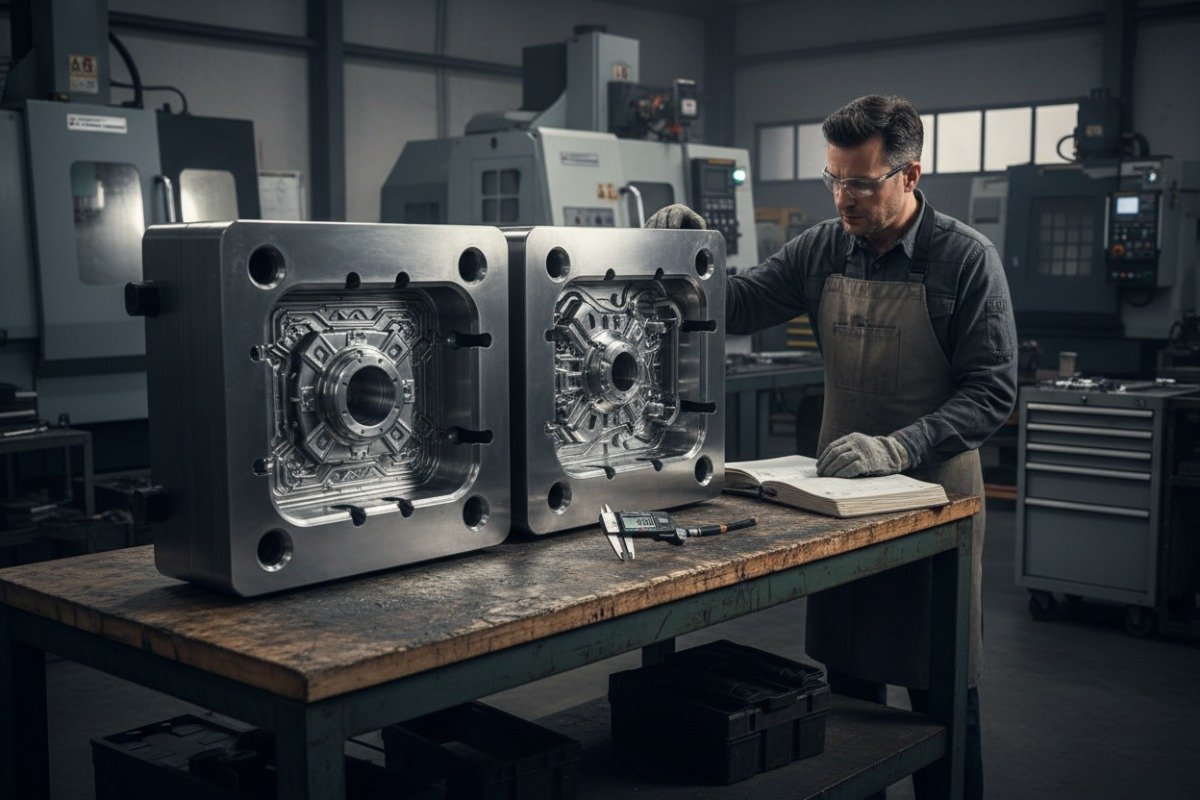
Steel Grade Determines Mold Life
The steel used in your mold directly determines how many parts it can produce before wearing out. mold steel grade 9 This is not a minor detail. It is the single biggest factor in your tooling's long-term value.
Here is a breakdown of common mold steels:
| Stahlgüte | Hardness (HRC) | Expected Cycle Life | Am besten für | Relative Kosten |
|---|---|---|---|---|
| Aluminum (7075) | N/A | 5,000–10,000 | Prototypen, geringe Stückzahlen | Niedrig |
| P20 (pre-hardened) | 28–34 | 100,000–300,000 | Mid-volume production | Mittel |
| H13 (hardened) | 48–52 | 500,000–1,000,000 | Hochvolumenproduktion | Hoch |
| S136 (stainless) | 48–52 | 500,000+ | Medical, corrosion-prone | Höchste |
| NAK80 (pre-hardened) | 38–42 | 300,000–500,000 | High-polish cosmetic parts | Mittel-Hoch |
When a supplier quotes you a very low tooling price, ask what steel they are using. If they say "standard steel" without specifying a grade, push for details. Vague answers here often mean they are using softer, cheaper steel that will wear out faster.
The True Cost of Cheap Tooling
Let's do simple math. Suppose you need 300,000 parts over three years.
- Option A: Aluminum mold at $5,000. Lasts 10,000 cycles. You need 30 molds. Total tooling cost: $150,000. Plus downtime for each mold change.
- Option B: H13 steel mold at $25,000. Lasts 500,000+ cycles. You need 1 mold. Total tooling cost: $25,000. Minimal downtime.
The "cheap" option costs six times more. This is why we always advise clients to think in terms of total cost of ownership, not just the initial quote.
Cooling System Design Affects Part Quality and Mold Life
Overmolding molds face unique thermal challenges. The substrate is already solid when the overmold material is injected. If the mold's cooling channels are poorly designed, you get hot spots. Hot spots cause:
- Uneven shrinkage
- Verzug
- Einfallstellen
- Longer cycle times
- Accelerated mold wear
A good supplier uses mold flow analysis software 10 to simulate cooling before cutting steel. They optimize channel placement to ensure uniform temperature across the cavity. Ask to see their mold flow analysis results. If they do not use simulation tools, that is a concern.
Maintenance Plans and Tooling Guarantees
Every mold needs maintenance. Ejector pins wear. Parting line surfaces degrade. Cooling channels can develop scale buildup. A responsible supplier has a preventive maintenance schedule—typically every 25,000 to 50,000 cycles—and documents every service.
Stellen Sie diese Fragen:
- What is your standard mold maintenance interval?
- Do you provide a written tooling guarantee (cycle life)?
- Who owns the mold? (It should be you, the buyer.)
- Can you ship the mold to another facility if needed?
- What happens if the mold fails prematurely?
A supplier who answers these questions clearly and confidently has a mature tooling operation. One who hesitates or avoids specifics may not have the processes to back up their promises.
Mold Ownership and Portability
This is a point many buyers overlook. You are paying for the mold. You should own it. And if the relationship with the supplier does not work out, you should be able to move that mold to another factory.
Get mold ownership in writing. Confirm the mold is designed to standard machine specifications so it can run on other presses. Some suppliers intentionally design molds that only fit their proprietary equipment—locking you in. Avoid this.
Red Flags in Tooling Proposals
Achten Sie auf diese Warnsignale:
- No steel grade specified in the quote
- No mold flow analysis offered
- No maintenance plan mentioned
- Tooling price significantly below market average
- Vague or no cycle life guarantee
- Supplier refuses to release the mold if you leave
Any of these should prompt deeper investigation before you commit.
Fazit
Evaluating overmolding services comes down to material expertise, quality systems, production fit, and tooling durability. Take the time to verify each area, and you will find a partner who delivers right the first time.
Footnotes
1. Explains SPC as a method for monitoring and controlling production process quality. ↩︎
2. Explains how molecular interactions contribute to polymer adhesion. ↩︎
3. Details how chemical adhesion works in overmolding. ↩︎
4. Explains how mechanical interlocks improve overmold bond reliability. ↩︎
5. Provides an overview of the ISO 9001:2015 quality management standard. ↩︎
6. Official information on the IATF 16949 automotive quality management system standard. ↩︎
7. Defines PPAP as a standardized quality assurance process in manufacturing. ↩︎
8. Details how to calculate and understand injection molding machine tonnage. ↩︎
9. Found a comprehensive and authoritative guide on injection mold steel performance and selection. ↩︎
10. Explains how mold flow analysis software optimizes injection molding processes. ↩︎

 English
 Español de México
 Deutsch
 Français
 Русский
 العربية