
Seeing a bulk shipment of custom welding components arrive with defects is a nightmare for our supply chain team. It halts production lines and threatens client deadlines immediately.
You must immediately notify the supplier within the contract’s inspection Inspection and Acceptance 1 period, typically 10 to 14 days. Submit a formal written claim citing the specific warranty clause, accompanied by a non-conformance report, high-resolution photos, and Material Test Reports to demand repair, replacement, or a refund.
Let’s break down the exact steps to protect your investment and ensure a quick resolution.
What specific evidence and documentation must I gather to prove welding defects in a bulk shipment?
Without solid proof, suppliers often reject claims. In our Singapore office, we have seen valid claims fail simply because the initial documentation was incomplete or vague.
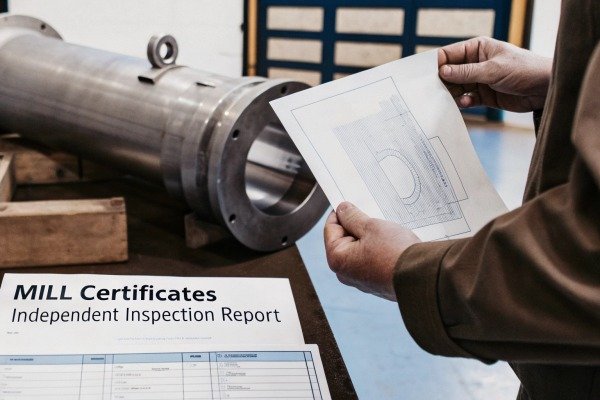
Gather high-resolution photos of the defects alongside the original technical drawings and Mill Certificates. You also need a formal independent inspection report detailing the failure against the specific acceptance criteria defined in your purchase order, proving the issue occurred pre-shipment.

When you find defects in a bulk shipment, you are building a case, not just making a complaint. The burden of proof lies with you, the buyer. You must demonstrate that the defect is a manufacturing error and not damage caused by the carrier or your own warehouse handling.
Start with a visual inspection immediately. Do not move the parts into general inventory. Take clear photographs of the defect. Use a ruler or tape measure in the photo to show scale. If the issue is porosity or cracking in the weld, zoom in. porosity or cracking in the weld 2 If the issue is dimensional, show the part next to a calibrated caliper reading.
Compare Against the "Source of Truth"
Your photos are meaningless without context. You must present the defect alongside the original approved drawing or specification sheet. If the drawing specifies a 5mm fillet weld and the part shows 3mm fillet weld 3, that is your evidence. You also need to pull the Material Test Reports (MTRs) or Mill Certificates Material Test Reports (MTRs) 4 that came with the batch. These documents claim the material has certain chemical properties. If the metal is cracking, independent testing might prove the material independent testing 5 does not match the MTR.
Third-Party Validation
For high-value disputes, internal reports might not be enough. We often recommend hiring a Certified Welding Inspector (CWI). Certified Welding Inspector (CWI) 6 A neutral third-party report carries significantly more weight than an internal email. This is crucial if the supplier argues that your standards are too high or "subjective."
Table: Essential Evidence Checklist
| Dokumententyp | Zweck | Key Details to Include |
|---|---|---|
| Nichtkonformitätsbericht (NCR) | Official record of the defect. | Batch number, quantity affected, and description of failure. |
| High-Res Photos | Visual proof of physical state. | Macro shots of welds, wide shots of packaging, scale reference. |
| Material Test Reports (MTR) | Proof of chemical/mechanical properties. | Heat numbers matching the stamped parts. |
| Bill of Lading (BOL) | Proof of receipt and condition. | Notes on external packaging condition (clean or damaged). |
| Independent Lab Report | Scientific proof of failure. | Tensile test results or chemical analysis (for metallurgical issues). |
Which contract clauses should I reference when demanding compensation for non-conforming parts?
Ignoring the fine print can cost you thousands. We always review our legal terms before shipping from Vietnam to ensure liabilities are clear if quality slips.
Reference the Express Express Warranty 7 Warranty clause regarding fitness for purpose and the Inspection and Acceptance provision. You should also cite the Non-Conforming Goods section to establish your right to reject defective items and the Indemnification clause if the defects caused downstream project delays.
Contracts are your roadmap for resolving disputes. When you file a claim, do not just say "it's broken." specific clauses give you the leverage to demand a remedy. The most powerful tool is the Express Warranty. This clause usually states that goods will be free from defects in workmanship and material for a specific period (often 12 months).
The "Right to Cure"
You must also understand the Right to Cure. Most B2B contracts allow the supplier a chance to fix the mistake before you can demand a refund. If you demand money back immediately without offering them the chance to replace or repair the parts, you might be the one breaching the contract. Read this section carefully to know how many days they have to respond.
Rejection of Goods
Look for the Inspection and Acceptance clause. It defines how long you have to inspect the goods. If you miss this window, you are legally considered to have "accepted" the goods, defects and all. However, you can sometimes reference Latent Defects. These are defects not visible during a standard inspection (like internal weld fractures). If the contract covers latent Latent Defects 8 defects, you can file a claim even after the initial inspection window closes.
Table: Key Contract Clauses for Defect Claims
| Clause Name | What It Does | When to Use It |
|---|---|---|
| Express Warranty | Guarantees quality and specs. | The primary basis for any defect claim. |
| Right to Cure | Allows supplier to fix errors. | When negotiating repair vs. refund. |
| Incidental Damages | Covers costs to handle bad parts. | To claim costs for sorting, storing, or testing defective items. |
| Force Majeure | Excludes liability for disasters. | Check this if the supplier blames delay/defects on external events. |
What are the immediate steps I need to take upon discovering quality issues to preserve my right to claim?
Waiting too long to act is the biggest mistake buyers make. Our quality engineers know that even a few days of delay can void your warranty rights completely.
Quarantine the defective stock immediately to prevent use or accidental mixing. Notify the supplier in writing within the “reasonable time” window defined in your contract, usually 5 to 10 days, and request an RMA number to formally log the dispute before returning any goods.

Speed is critical. The Uniform Commercial Code (UCC) and most international trade laws Uniform Commercial Code (UCC) 9 require buyers to notify sellers within a "reasonable time." If you wait three weeks because you are busy, you may lose your right to claim.
Quarantine the Inventory
The moment you suspect a defect, stop everything. Do not let those parts reach the assembly line. Segregate the bad parts from the good ones physically. Mark the area with "NON-CONFORMING – DO NOT USE" tape. If you accidentally mix defective parts with good inventory, the supplier can argue that you mishandled the goods or that they cannot verify which parts came from which batch. This destroys your claim.
The Formal Notice
Do not just call your sales rep. You need a paper trail. Send a formal email or certified letter. The subject line should read: "Notice of Defect – PO #[Number] – [Date]". In this notice, state clearly that you are rejecting the goods. If you sign a delivery receipt without noting damage, or if you pay the invoice without flagging the issue, it implies acceptance. If you must pay to release goods, pay "under protest."
Preserve the Packaging
Keep the boxes, pallets, and strapping. Sometimes the "defect" is actually transit transit damage 10 damage. If you throw away the packaging, you destroy the evidence needed to tell if it was a factory error or a trucking accident.
How do I negotiate a fair resolution, such as rework or replacement, with my welding supplier?
Aggressive demands often lead to a stalemate. We find that presenting data-backed solutions builds partnership and resolves issues faster than legal threats ever could.
Propose a specific remedy based on the defect severity, such as local rework at the supplier’s expense or a rapid replacement shipment. Leverage the cost of potential downtime and future business volume to negotiate waiving restocking fees or securing expedited freight for the replacement parts.

Once you have established the defect, the goal is to get your production line moving again. You usually have three options: Return for Replacement, Return for Refund, or Local Rework (with credit).
Calculating the Best Path
Returning heavy metal parts from the US to Asia is often too expensive and slow. As a supplier, we often prefer paying for Local Rework. If the welds are undersized but fixable, ask the supplier to cover the cost of a local welder to add the necessary passes. This saves on shipping and gets you parts faster. You must get this agreement in writing before starting any work.
Leveraging Future Business
If the supplier is hesitant, remind them of the "Lifetime Value" of your account. A dispute over $5,000 is not worth losing a $500,000 annual contract. Use your future orders as leverage. Ask for a credit note on the next invoice rather than a cash refund; this is easier for their accounting department to approve and keeps the cash flow smooth.
Beware of "Restocking Fees"
Suppliers might try to charge a restocking fee if they take the parts back. You must firmly reject this if the parts are defective. Restocking fees apply to "buyer's remorse," not non-conforming goods. Stand your ground here.
Table: Comparison of Resolution Options
| Remedy Option | Pros | Cons | Am besten für |
|---|---|---|---|
| Return & Replace | You get new, perfect parts. | Slow; high freight costs; customs delays. | Unusable parts that cannot be fixed. |
| Local Rework | Fastest solution; keeps project moving. | Requires finding local labor; risk of disputes on cost. | Minor weld defects (e.g., undersized welds). |
| Keep with Discount | Lowest administrative effort. | You accept lower quality; risks future failure. | Cosmetic defects that don't affect function. |
Fazit
Filing a claim requires speed, strict evidence collection, and clear contract knowledge. By following these steps immediately, you protect your bottom line and ensure your production standards remain uncompromised.
Footnotes
1. Government regulation outlining standard inspection and acceptance procedures in contracts. ↩︎
2. Technical guide from a major welding manufacturer explaining specific weld defects. ↩︎
3. General technical definition of this specific type of weld geometry. ↩︎
4. Industry association guide defining the purpose and content of mill certificates. ↩︎
5. International standards body overview of conformity assessment and third-party testing. ↩︎
6. Official certification body establishing the standards for welding inspectors. ↩︎
7. Government guidance on federal warranty laws and business obligations. ↩︎
8. General background information defining defects not discoverable by reasonable inspection. ↩︎
9. Educational legal resource providing the full text and context of the UCC. ↩︎
10. Major logistics company documentation on identifying and claiming shipping damage. ↩︎

 English
 Español de México
 Deutsch
 Français
 Русский
 العربية