
We have seen too many project timelines collapse because a supplier promised a delivery date they could never meet. Waiting for a delayed shipment stops your assembly line, damages your reputation with end-users disrupts your entire supply chain 1, and disrupts your entire supply chain. A quote that looks perfect on paper often fails on the factory floor.
To verify a welding supplier’s lead time, request a detailed production schedule that separates material procurement, fixture setup, welding cycle time, and post-weld inspection. Cross-reference their quoted dates with historical on-time delivery data and calculate their daily throughput capacity against your total order volume to expose unrealistic promises.
Let’s look at the specific data points you need to audit before signing that purchase order.
What breakdown of the production process should I request to validate the welding schedule?
When we manage projects in Vietnam or China, we never accept a single delivery date without seeing the steps behind it. A vague timeline usually hides potential delays, while a granular schedule proves the supplier has actually analyzed the work required.
You should demand a schedule that explicitly lists raw material arrival, cutting and preparation, fixture design and fabrication, actual welding hours, stress relief or heat treatment, and final non-destructive testing. This transparency reveals if the supplier has truly planned for every production phase rather than guessing a completion date.

To determine if a schedule is realistic, you must see inside the "black box" of the manufacturing process. Many suppliers provide a single date, perhaps "45 days," without explaining how they calculated it. This is dangerous. In our own operations, we know that welding is only one part of the equation. For a custom aluminum frame like the one shown in the header, the actual welding might only take 20% of the total lead time. The rest is consumed by preparation and logistics.
You need to ask for a breakdown that aligns with the reality of metal fabrication metal fabrication 2. If a supplier cannot provide this, they likely have not booked the raw materials or allocated the machine time yet. A realistic breakdown should highlight dependencies. For example, welding cannot begin until the tubes are laser-cut and deburred. Inspection cannot happen until the weldments have cooled and been cleaned.
The Critical Phases of a Welding Schedule
When you review the breakdown, look for these specific line items. If any are missing, the lead time is likely underestimated.
| Production Phase | Typical Duration Share | Key Verification Question |
|---|---|---|
| Material Procurement | 20–30% | Is the specific alloy (e.g., Al 6061-T6) in stock or coming from a mill? |
| Fabrication Prep | 15–20% | Does the timeline include laser cutting, bending, and cleaning oxides? |
| Fixture/Jig Setup | 10–15% | Is the welding jig custom-built? Has this design time been factored in? |
| Welding (Arc Time) | 20–25% | Is this based on manual labor availability or robot cycle times? |
| Post-Weld Processing | 10–15% | Does this include heat treatment, grinding, or anodizing? |
| Qualitätskontrolle | 5–10% | Is there a buffer for NDT (Non-Destructive Testing) and rework? |
Hidden Delays in Material Preparation
For the aluminum frames we handle, preparation is critical. Aluminum forms an oxide layer that must be removed immediately before welding oxide layer 3 to ensure a strong bond. oxide layer 4 If the schedule does not show a "cleaning and prep" phase, the supplier might be cutting corners, which leads to weld porosity and eventual rejection during QC. A realistic schedule acknowledges that you cannot simply pull metal off a shelf and start welding immediately.
How do I calculate if the factory's welding capacity is actually sufficient for my order?
Our team frequently visits factory floors where the equipment looks impressive, but the output numbers do not add up. Relying on visual impressions instead of math creates supply risks, as a busy shop floor does not guarantee they have space for your specific order.
Calculate sufficiency by dividing your total required welding hours by the supplier’s available daily machine hours, factoring in an 85% efficiency rate. Ask for their current WIP load to ensure your order fits into their remaining capacity without displacing other critical projects or forcing rushed, low-quality work.
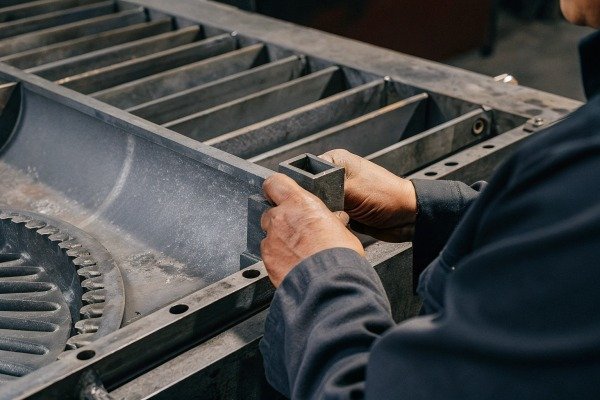
Capacity calculation is a math problem, not a guessing game. To validate the lead time, you need to calculate the "Arc Time" required for your batch and compare it to the factory's throughput. Arc time is the actual time the welding torch is active and laying down metal welding torch 5. However, no welder or robot welds 100% of the time. There is setup, part loading, cleaning, and movement.
Applying Little's Law to Welding
We use a variation of Little's Law (Lead Time = Work in Process / Throughput) to sanity-check quotes. First, determine the total weld length of your product. For a complex geometric frame, you might have 50 separate weld joints, totaling 3 meters of weld per unit. If you order 100 units, that is 300 meters of weld.
Next, ask the supplier for their deposition rate or travel speed. A manual TIG welder might travel at 100-150 mm per minute. TIG welder 6 A robot might move at 400-600 mm per minute.
The Efficiency Gap
The most common mistake suppliers make is assuming 100% efficiency. In reality, a manual welder has an "Arc On" time of only about 30-40% of their shift manual welder 7. They spend the rest of the time fitting parts, grinding tacks, changing gas cylinders, and checking drawings. Even robotic cells typically only achieve 60-70% efficiency due to loading and unloading times.
If the supplier quotes you based on ideal speeds, the lead time is fake. You must apply a realistic efficiency factor.
| Calculation Step | Manual Welding Scenario | Robotic Welding Scenario |
|---|---|---|
| Total Weld Length (Order) | 300 meters | 300 meters |
| Travel Speed (Avg) | 0.15 meters/min | 0.5 meters/min |
| Theoretical Arc Time | 2,000 mins (33 hours) | 600 mins (10 hours) |
| Efficiency Factor | 30% (Manual handling) | 70% (Robot uptime) |
| Real Production Time | 110 hours | 14.3 hours |
| Days Needed (1 Shift) | ~14 working days (1 welder) | ~2 working days (1 cell) |
By running these numbers, you can see if the "2-week" lead time is physically possible given their staff. If the math says they need 14 days of pure welding for one person, and they only have two welders who are already busy, a 2-week delivery promise is impossible.
Does the quoted lead time account for essential fixture setup and post-weld inspections?
We often find that suppliers ignore the time needed to build custom jigs or perform X-ray scans. This oversight causes weeks of delay right at the end of production, exactly when you expect the goods to ship.
Most standard quotes overlook the 2-4 weeks required for designing and validating complex welding fixtures and the subsequent non-destructive testing cycles. Verify that the timeline includes specific buffers for jig fabrication and third-party inspections, especially for safety-critical custom frames that require strict dimensional tolerances.
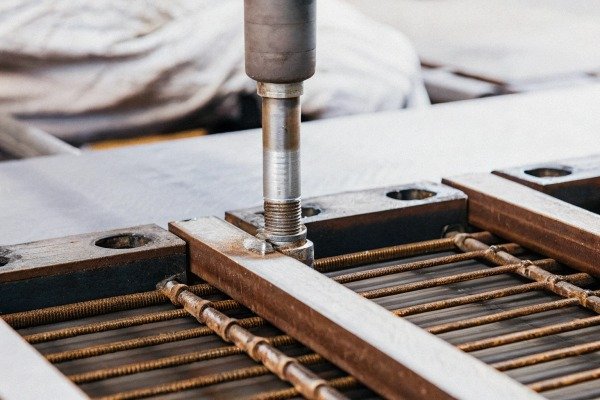
For products like the multi-tiered aluminum frame shown earlier, you cannot simply hold the parts together by hand and weld them. The heat from welding causes distortion—aluminum expands roughly twice as much as steel heat from welding causes distortion 8. Without a robust fixture (jig) to clamp the rectangular tubing in place, the final product will be warped and out of tolerance.
The Invisible "Design and Build" Phase
Suppliers often quote the production lead time (e.g., "4 weeks") but forget to mention the tooling lead time. Designing a fixture that allows for thermal expansion while holding strict geometry takes engineering time. Then, that fixture must be CNC machined and assembled CNC machined 9. We usually see a minimum of 2 to 3 weeks just to get the fixture ready before the first production part is even cut. If your quote says "Lead Time: 4 Weeks" total, ask: "Does this include the jig build?" The answer is almost always "No," which means your real lead time is 7 weeks.
Post-Weld Inspection Bottlenecks
Quality control is another major time sink that gets ignored. Visual inspection is fast, but if your drawing requires Dye Penetrant Inspection (DPI) Dye Penetrant Inspection 10 or Macro-etching to ensure penetration, this takes time.
- Cooling Time: Parts must be cool to touch before inspection.
- Batching: Inspections are usually done in batches, not one by one.
- Third-Party delays: If an external surveyor is required (common for structural parts), you are at the mercy of their schedule.
Risk of Rework
A realistic schedule includes a "Rework Buffer." In welding, defects happen. If a batch fails NDT, it needs repair. A schedule with zero margin for error is a fantasy.
| Inspection Type | Time Impact | Risk Factor |
|---|---|---|
| Visual Check | Minimal (In-process) | Niedrig |
| Dimensional Check | Moderate (Requires CMM/Jig) | Medium (Distortion issues) |
| Dye Penetrant (PT) | High (Cleaning + Dwell time) | High (Surface cracks) |
| Ultrasonic/X-Ray | Very High (Often outsourced) | High (Internal porosity) |
What are the red flags that suggest a supplier is underestimating my delivery date?
In our years of sourcing across Asia, we have learned to spot optimism bias instantly. If a supplier promises a timeline that ignores holidays or material shortages, we know trouble is coming before the project even starts.
Major red flags include quoting standard lead times for custom tooling, failing to ask for 3D files before quoting, and ignoring material market volatility. Be wary if the supplier cannot show a loaded shop schedule or claims zero buffer time for rework and maintenance, as these indicate a lack of realistic planning.

Identifying an unrealistic lead time often comes down to spotting what the supplier didn't ask. When we receive a request for a complex weldment, our engineers immediately ask about tolerances, finish requirements, and packaging. If a supplier gives you a quote and lead time within an hour without asking any technical questions, they are guessing. They are likely using a "standard" lead time (e.g., "30 days") that they apply to every customer, regardless of complexity.
The "Standard Quote" Trap
Be suspicious of round numbers. If every quote is exactly "4 weeks" or "6 weeks," it is a generic placeholder. Real manufacturing schedules land on odd dates based on machine availability. A realistic quote might say, "We can slot this in starting the 14th, finishing on the 3rd of the following month."
Material Availability Silence
In 2025, supply chains for specific aluminum grades or high-strength steel can be volatile. If your part requires a specific alloy like 7075-T6 or a specific wall thickness of rectangular tubing, the supplier must verify stock with the mill. If they quote the lead time without checking material availability first, they are gambling. We have seen projects delayed by 6 weeks simply because the supplier assumed they could buy the metal locally, only to find it was out of stock.
Ignoring the Calendar
Look at the calendar yourself. Is the Lunar New Year coming up? Is it Golden Week? Is it the rainy season in Southeast Asia which might affect logistics? Suppliers often quote "working days" but you care about "calendar days." A 30-day production run can turn into 50 days if it straddles a major holiday.
The "Yes" Man
The biggest red flag is a supplier who says "Yes" to an expedited request without checking. If you ask, "Can you do it in 3 weeks instead of 5?" and they instantly agree without checking their capacity load, they are lying to get the order. A professional factory will say, "Let me check our current backlog and overtime capacity," and come back with a calculated answer.
Fazit
Determining if a lead time is realistic requires you to look beyond the date on the quote. By demanding a process breakdown, calculating welding capacity yourself using the efficiency formulas we discussed, and ensuring fixtures and inspection times are included, you can expose hidden delays. Realistic lead times protect your cash flow and reputation. Do not settle for a guess—demand the data.
Footnotes
1. NIST authority on supply chain management and risk mitigation strategies. ↩︎
2. Bureau of Labor Statistics industry profile for fabricated metal product manufacturing. ↩︎
3. Technical explanation from The Welding Institute regarding aluminum oxide removal. ↩︎
4. Scientific explanation of aluminum oxidation and its impact on welding quality. ↩︎
5. OSHA standards and regulations regarding welding equipment and safety. ↩︎
6. General background on Gas Tungsten Arc Welding (TIG) and its operational characteristics. ↩︎
7. Official government statistics and job descriptions for welding professions. ↩︎
8. Technical guide on the causes and prevention of welding distortion. ↩︎
9. NIST overview of CNC machining technology and production systems. ↩︎
10. Official ASTM standard specification for liquid penetrant testing methods. ↩︎

 English
 Español de México
 Deutsch
 Français
 Русский
 العربية