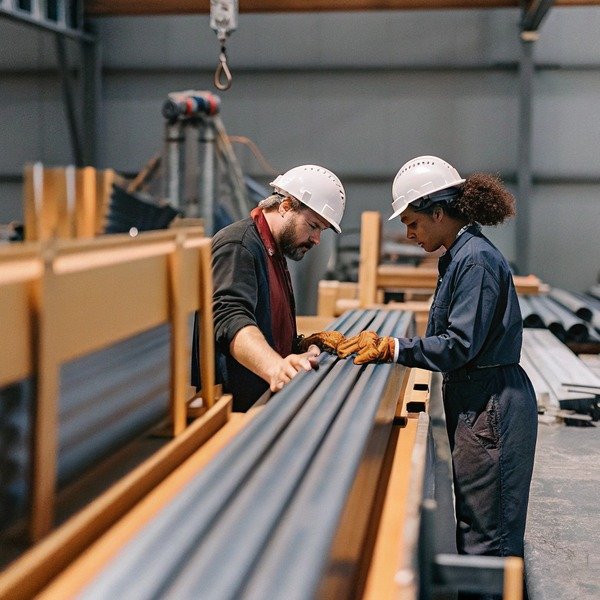
We have seen production Production Part Approval Process 1 lines halt simply because a factory could not secure standard steel. In our daily operations across Asia, verifying raw material flow is as critical as checking the welds themselves.
To evaluate supply chain stability, audit the supplier’s raw material inventory turnover rates and demand multi-tier sourcing maps. Verify they hold safety stock agreements for critical alloys and maintain digital traceability systems like ERP to monitor real-time availability from upstream mills, ensuring resilience against market fluctuations.
Let’s examine the specific mechanisms you can use to validate a manufacturing partner’s resilience.
How can I verify the reliability of the upstream steel mills used for my welding components?
In our sourcing audits, we often find that the problem isn't the welder, but the inconsistent mill supplying them. We verify the source before we ever inspect a finished weld.
You verify upstream mill reliability by demanding Mill Test Reports (MTRs) for the last three batches and conducting deep-tier mapping. Ensure the supplier sources from mills with ISO 9001 certifications and sufficient capacity to handle volume surges without compromising chemical composition consistency.

Investigating the Source of Origin
When we manage projects involving complex geometric structures, like frames made from rectangular tubes, the consistency of the base metal is non-negotiable. If the chemical composition varies even slightly between batches, the welding parameters we established during the PPAP (Production Part Approval Process) 2 PPAP (Production Part Approval Process) may no longer work, leading to defects. Therefore, you cannot simply trust that a supplier has "good sources." You must verify the specific mills they use.
The first step is to look beyond the factory you are contracting with. This is called "sub-tier visibility." Many suppliers buy from local stockists or distributors rather than directly from mills. While this is acceptable for small runs, it is a risk for continuous production. Distributors buy from the cheapest source available at the moment. This means your January shipment might be made of steel from Korea, while your March shipment comes from a different mill in India. This variance introduces unpredictability.
The Role of Mill Test Reports (MTRs)
To combat this, you must audit the Mill Test Reports (MTRs). A reliable supplier should be able to produce an MTR for every batch of raw material in their warehouse. When we audit a facility, we pick a random bundle of rectangular tubes and ask the warehouse manager to pull the corresponding MTR immediately. If they struggle to find it, or if the heat number on the document does not match the stamp on the metal, their traceability system is broken.
You should also analyze the "Heat Number" history. If the MTRs show a different mill every month, the supplier is "spot buying" based on price. If the MTRs consistently show the same two or three major mills, the supplier has established stable supply channels. Stable channels mean better leverage during shortages and more consistent material behavior during welding.
Auditing Mill Capacity and Certification
It is also vital to check the credentials of the mills themselves ISO 9001 certified 3. Are they ISO 9001 certified? ISO 9001 certified 4 Do they have environmental compliance certificates? In some regions, mills are frequently shut down for environmental environmental compliance certificates 5 inspections. If your supplier relies on a mill with poor environmental standing, your supply of raw material could vanish overnight due to government intervention.
Comparison of Sourcing Strategies
We use the following framework to grade a supplier's sourcing maturity. This helps us decide if they are fit for long-term export contracts to the U.S. or Europe.
| Sourcing Strategy | Beschreibung | Stability Rating | Risikofaktor |
|---|---|---|---|
| Spot Market Buying | Purchasing material from the cheapest available distributor at the time of order. | Niedrig | High variance in material chemistry; no priority during shortages. |
| Distributor Partnership | Long-term agreement with a specific distributor who holds stock. | Mittel | Better availability, but still subject to the distributor's upstream changes. |
| Direct Mill Sourcing | Buying directly from the steel mill with forward contracts. | Hoch | Consistent chemistry (heat lots); guaranteed allocation; lower cost volatility. |
| Consortium Purchasing | Joining with other factories to buy in bulk from mills. | Sehr hoch | Massive leverage; priority status; best pricing stability. |
What safety stock agreements should I negotiate to buffer against raw material delays?
We advise our clients that relying solely on Just-in-Time delivery is dangerous Just-in-Time delivery 6 when trans-Pacific logistics are involved. We always push for a physical buffer on the factory floor.
Negotiate a safety stock agreement that requires the supplier to hold 4 to 6 weeks of raw material inventory on-site. Define clear liability clauses for stockouts and mandate a "first-in, first-out" system to prevent material degradation while maintaining a buffer against sudden lead time extensions.
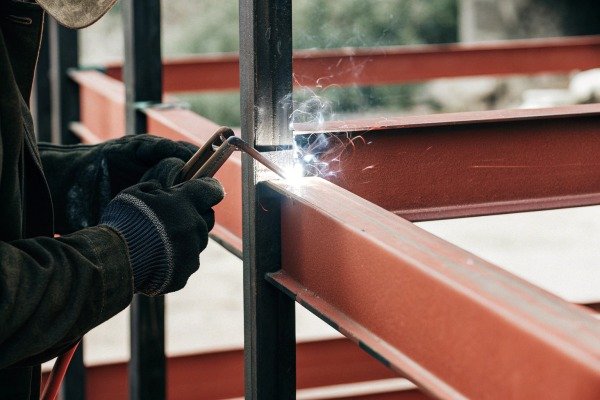
Defining the Buffer Strategy
For products like brushed silver geometric frames, the specific rectangular tubing required might not be a standard "off-the-shelf" item in every market. It may require a specific wall thickness or alloy grade to support the structure without warping during welding. If a supplier orders this material only after receiving your Purchase Order (PO), you are vulnerable to mill lead times, which can fluctuate wildly from 30 to 90 days.
To mitigate this, you need a formal Raw Material Inventory Agreement. This is not a verbal promise. It is a contractual clause where the supplier agrees to keep a minimum quantity of your specific raw material on their floor at all times. Typically, we recommend a buffer equivalent to one month of your average consumption. This creates a "decoupling point." When you place an order, production begins immediately using the stock on hand, while the supplier simultaneously reorders from the mill to replenish the pile.
Financial Responsibility and Liability
The tension in this negotiation is always about money. Inventory costs cash. Suppliers often resist holding stock because it ties up their working capital. To overcome this, you may need to offer better payment terms or a deposit structure that covers the material cost. Alternatively, for high-volume partners, you can negotiate a "liability window." This means you agree that if you stop ordering the product, you will buy back the unused raw material inventory within 6 months. This assurance usually gives the supplier the confidence to stock up for you.
Monitoring and Aging
Having stock is good, but having usable stock is better. Steel tubes can rust or oxidize if stored improperly, especially in humid climates like Vietnam or Southern China. This impacts the finishing process, particularly if you require a brushed silver finish. Rust pits require heavy grinding, which ruins the geometry and finish quality.
Therefore, your agreement must include a "First-In, First-Out" (FIFO) mandate. The supplier must use the oldest stock first. During your factory audits, check the dates on the material tags. If you find material that has been sitting for six months while newer material is being used, the supplier lacks process discipline.
Recommended Safety Stock Models
Different relationships require different inventory models. Here is how we structure these agreements based on the supplier's capability and the client's volume.
| Agreement Model | Ownership of Material | Beschreibung | Am besten für |
|---|---|---|---|
| Vendor Managed Inventory (VMI) | Lieferant | Supplier monitors your forecast and replenishes stock automatically to maintain a set level. | High-volume, steady recurring orders. |
| Bonded Buffer Stock | Lieferant | Supplier keeps a specific quantity fenced off (physically or digitally) exclusively for your use. | Critical custom profiles or alloys. |
| Consignment Inventory | Käufer | You pay for the material, but it sits at the supplier's factory. You own it until it is used. | Suppliers with weak cash flow but good technical skills. |
| Blanket Order with Releases | Lieferant | You commit to a year's worth of material; supplier buys it all at once or in large batches to lock price. | Projects sensitive to raw material price inflation. |
How do I determine if a supplier has a contingency plan for sudden metal shortages?
During recent global shortages, our teams in Vietnam survived only because we had pre-approved alternative material grades ready. Preparation is the only defense against scarcity.
Determine contingency readiness by reviewing their Business Continuity Plan (BCP) for specific raw material shortages. Check if they have pre-qualified alternative material grades and maintain active accounts with secondary distributors to ensure immediate access when primary channels fail.
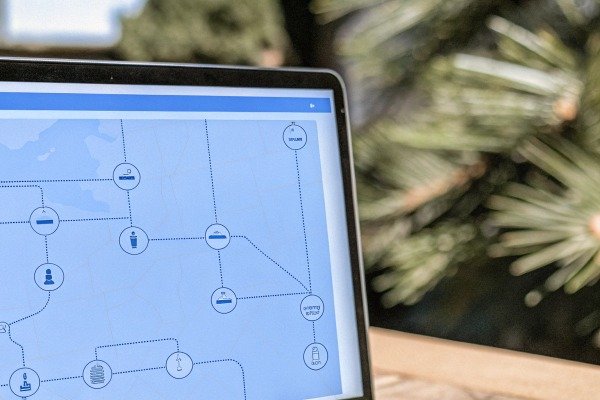
Assessing the Business Continuity Plan (BCP)
A legitimate Business Continuity Plan is not just a generic document about fire or flood safety. For a welding supplier, it must specifically address "Supply Chain Disruption." Supply Chain Disruption 7 When we evaluate a potential partner, we ask a simple scenario question: "If your primary steel mill shuts down tomorrow due to a power rationing event, how do you fulfill our order next week?"
If the answer is a vague "we will find another source," they have no plan. A robust supplier will show you a list of pre-vetted secondary suppliers. They will show you that they have active accounts with these backup vendors. If they haven't bought from the backup vendor in two years, that account might be dormant, and they won't get credit terms during a crisis.
The Importance of Alternative Material Grades
In the world of metal fabrication, flexibility saves projects. Often, a specific grade of steel (e.g., 304 Stainless 316 Stainless 8) might be in short supply 304 Stainless 9, but a higher grade (e.g., 316 Stainless) or a comparable local standard might be available. The problem is that swapping materials requires engineering approval. If you wait until the shortage happens to ask for approval, the production line stops.
We encourage checking if the supplier has a "Material Substitution Protocol." Have they already identified which alternative local standards are equivalent to the US ASTM standards you specified? For example, if you specify ASTM A500 10 ASTM A500 for the rectangular tubes, does the supplier know which GB (Chinese) or JIS (Japanese/Vietnamese) standard is the exact mechanical equivalent?
Validating the "Fire Drill"
The best way to test a contingency plan is to see if it has ever been used. Ask the supplier for a case study of a past disruption. Did they successfully switch to a backup supplier? Did they notify the customer immediately or try to hide the delay? Transparency is a key indicator of stability. A supplier who communicates a potential shortage early allows you to make decisions. A supplier who hides it until the delivery date is missed is a liability.
Critical Components of a Raw Material BCP
When reviewing their documentation, look for these specific elements. If these are missing, their supply chain is fragile.
- Multi-Regional Sourcing: Do they have suppliers in different provinces or countries? (e.g., If a lockdown affects one region, can they source from another?)
- Strategic Reserves: Do they keep "strategic stock" of universal sizes (like common tube dimensions) that apply to multiple projects?
- Logistics Redundancy: Do they have alternative trucking or shipping partners if the primary logistics route is blocked?
- Pre-Approved Deviations: A list of engineering deviations that are pre-signed by the client for emergency use (e.g., allowing a slightly thicker wall tube if the specified one is out of stock).
What signs indicate that a manufacturer has strong leverage with their own material vendors?
We know from our own procurement volumes that mills prioritize big, consistent buyers when allocation becomes tight. Financial health is the ultimate supply chain lubricant.
Strong leverage is indicated by a supplier’s consistent high-volume purchasing history and prompt payment terms with their vendors. Look for "preferred buyer" status, which grants them priority allocation during shortages, and verify if they have fixed-price contracts that shield you from short-term market volatility.
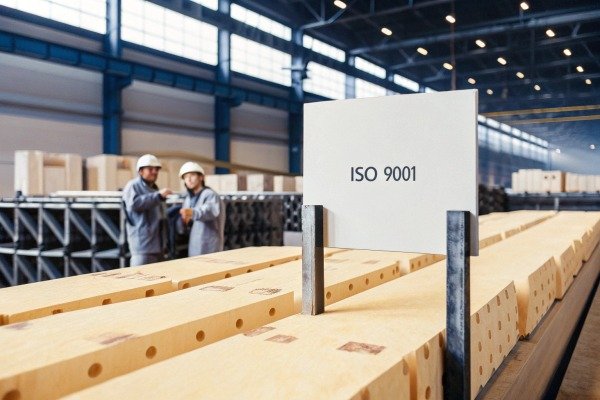
Payment Terms as a Proxy for Reliability
The most overlooked indicator of supply chain stability is the supplier's payment reputation. In the raw material market, cash is king. Steel mills and large distributors operate on thin margins and huge volumes. They have zero tolerance for late payments. If your manufacturer pays their bills late, they are the first to be cut off when material is scarce.
How do you find this out? You can ask the manufacturer for their "Bank References" or permission to contact their key material suppliers for a reference check. While this may seem intrusive, a financially healthy supplier will be proud to share this. We often ask, "What credit terms do you have with your main steel supplier?" If they are on "Cash on Delivery" (COD) status while their competitors get "Net 60" days, it is a red flag. It means the mill does not trust them, and neither should you.
Volume and "Preferred Status"
Size matters in raw material sourcing. A small fabrication shop buying 5 tons of steel a month has no leverage. If the mill is overbooked, the small shop's order is pushed to the back of the queue. A large manufacturer buying 500 tons a month is a "Key Account." Their orders get priority scheduling.
When sourcing your rectangular tube frame, assess where your supplier fits in the food chain. Are they a direct customer of the mill, or are they buying from a third-tier retailer? We always prefer suppliers who are big enough to matter to the mill. This "Preferred Status" means that even during a global supply crunch, they can still secure the material needed to keep your line running.
Fixed-Price Contracts vs. Spot Market
Another sign of leverage is the ability to lock in prices. Sophisticated manufacturers sign quarterly or annual contracts with mills to fix the price of base metals. This protects you, the buyer, from sudden price spikes. If your supplier quotes you a new price every week based on the "daily market rate," they have no leverage. They are at the mercy of the market. A supplier with strong leverage acts as a damper, absorbing minor market fluctuations so your pricing remains stable.
Indicators of Supplier Leverage
Use this checklist to gauge if your partner dominates their supply chain or is dominated by it.
| Indikator | Strong Leverage (Stable) | Weak Leverage (Unstable) |
|---|---|---|
| Zahlungsbedingungen | Net 30 to Net 90 days with high credit limits. | Cash on Delivery (COD) or Pre-payment required. |
| Relationship Length | 5+ years with the same key mills. | Frequent switching of suppliers (chasing pennies). |
| Allocation Priority | Guaranteed allocation during shortages. | Orders cancelled or delayed indefinitely during shortages. |
| Preissicherheit | Prices fixed for 3-6 months. | Prices change with every shipment/invoice. |
| Technical Support | Direct access to mill metallurgists for issues. | No access to technical support from the material source. |
Fazit
Material stability is the backbone of welding quality. You must audit upstream mills, enforce safety stock buffers, and verify your supplier's financial leverage. These steps ensure that your geometric frames are built on time, every time.
Footnotes
1. Wikipedia entry explaining the PPAP quality control process. ↩︎
2. Official definition from the Automotive Industry Action Group (AIAG). ↩︎
3. Official standard page from the International Organization for Standardization. ↩︎
4. Official ISO page for the quality management standard mentioned in the text. ↩︎
5. Official EPA page regarding environmental compliance monitoring and certification. ↩︎
6. Background on the JIT delivery concept mentioned as a risk. ↩︎
7. Research-based article from Harvard Business Review on managing supply chain risks. ↩︎
8. Technical documentation for 316 stainless steel from a major industry player. ↩︎
9. Technical specifications for 304 stainless steel from a major manufacturer. ↩︎
10. Official standard specification page from ASTM International. ↩︎

 English
 Español de México
 Deutsch
 Français
 Русский
 العربية