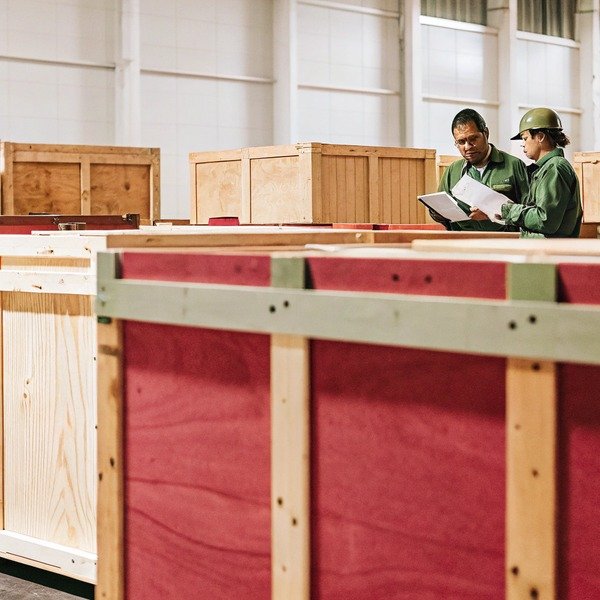
Our Vietnam facility frequently sees shipments stalled because importers overlook simple compliance steps. This disrupts your production lines and inflates landed costs with storage fees. landed costs 1
To ensure smooth US Customs clearance for welding parts from Vietnam, you must prepare a Commercial Invoice with accurate HTS codes, a detailed Packing List, the Bill of Lading, and a Country of Origin Certificate. Additionally, an Importer Security Filing (ISF) must be submitted 24 hours prior to loading.
Let’s examine the specific requirements to keep your supply chain moving efficiently.
Which essential commercial documents must I present to US Customs for welding part shipments?
We ensure every crate leaving our shipping dock has a comprehensive paper trail. Missing even one small detail in these forms can cause weeks of frustration for our partners.
The core documents required include the Commercial Invoice containing specific alloy details, a Packing List matching the physical count, and the Bill of Lading. You must also provide the Customs Entry Summary (Form 7501) and a Customs Bond to guarantee duty payments to CBP.

When we prepare shipments of custom welding frames or components, we treat the paperwork with the same precision as the manufacturing process itself. The U.S. Customs and Border Protection (CBP) requires a specific set of commercial documents US-Zoll- und Grenzschutzbehörde (CBP) 2 to assess duties, ensure safety, and verify admissibility. Based on our export history, relying on generic templates often leads to delays. You need to ensure your supplier provides data that aligns perfectly with U.S. standards.
The Commercial Invoice: Precision is Key
The Commercial Invoice (CI) is the foundation of your entry. It is not just a bill for payment; it is a declaration to the U.S. government. In our experience, vague descriptions like "metal parts" are a red flag for customs officers. For the aluminum frames we manufacture, we list the full description, including the material grade (e.g., Aluminum Alloy 6061) Aluminum Alloy 6061 3, the part number, and the intended use.
You must ensure the CI includes the Harmonized Harmonized Tariff Schedule 4 Tariff Schedule (HTS) code. For welding parts, this is critical. If your invoice lists a generic machinery code but the product is actually an aluminum structure, you could face penalties for misclassification. The invoice must also separate the value of the goods from shipping and insurance costs (CIF vs. FOB) so duties are calculated only on the product value.
The Packing List and Bill of Lading
The Packing List helps Customs officers perform physical exams efficiently. If CBP decides to inspect your container, they need to know exactly which box contains the "welding regulator" or "aluminum frame" listed on the invoice. We always include net weight, gross weight, and precise dimensions for every package.
The Bill of Lading (BOL) acts as the title to the goods Bill of Lading 5. You will need the original BOL or a "Telex Release" to claim the cargo. Without this, the steamship line will not release the container to your trucker, even if Customs has cleared the entry.
Customs Bond and Entry Summary
To verify your legal right to import, you must have a Customs Bond. This is an insurance policy ensuring the government gets paid even if you go out of business.
- Single Entry Bond: Good for one-time shipments but expensive relative to value.
- Continuous Bond: Essential for regular importers, covering all shipments for a year.
Your customs broker will file CBP Form 7501 (Entry Summary) using data from your CI and PL. This form calculates the duties owed. We recommend reviewing this document personally to ensure the HTS codes match your product engineering data.
| Dokumentenname | Primary Purpose | Common Error to Avoid |
|---|---|---|
| Commercial Invoice | Determines value and classification for duty calculation. | Vague descriptions (e.g., "Parts") instead of specific names (e.g., "Alloy 6061 Welding Frame"). |
| Packing List | Used for physical inspections and verifying quantities. | Mismatch between the weight listed on the PL and the Bill of Lading. |
| Bill of Lading | Proof of ownership and contract of carriage. | Consignee name spelling errors preventing cargo release. |
| CBP Form 7501 | Official calculation of duties and taxes. | Incorrect HTS code selection leading to overpayment or fines. |
How do I prove the Country of Origin to ensure my Vietnamese goods are taxed correctly?
Our team meticulously tracks raw material sources to protect you from China-related tariffs. Incorrect origin claims can trigger aggressive audits and severe financial penalties.
You prove origin by submitting a Certificate of Origin issued by the Vietnam Chamber of Commerce. Crucially, you must provide evidence of substantial transformation if raw materials were sourced from third countries, ensuring your welding parts are not subject to Section 301 tariffs applied to Chinese goods.

The trade landscape between the U.S. and Asia is complex. While Vietnam enjoys Normal Trade Relations (NTR) with the U.S., the proximity to China means CBP is highly vigilant about "transshipment." transshipment 6 This is where goods are made in China but shipped through Vietnam to avoid high tariffs. To clear customs smoothly, we must prove that your welding parts are legitimately Vietnamese.
The Certificate of Origin (C/O)
For every shipment leaving our facility, we can procure a Certificate of Origin (often Form B or a non-preferential C/O) from the Vietnam Chamber of Commerce and Industry (VCCI). This document acts as a "birth certificate" for the goods. While it does not always lower the MFN duty rate (which is already low for many welding parts), it is the primary defense against accusations of tariff evasion.
Understanding Substantial Transformation
This is the most critical concept for your compliance. If we import raw aluminum ingots or basic steel tubes from China and process them in our Vietnam factory, does the origin change to Vietnam? According to U.S. rules, the answer depends on "Substantial Transformation." Substantial Transformation 7
- Simple Assembly: Bolting two Chinese pieces together in Vietnam does not change the origin. The product remains "Chinese" and is subject to Section 301 tariffs (often 25%).
- Complex Processing: Cutting, welding, bending, and heat-treating raw materials into a new product with a different name, character, and use (like the aluminum frame shown above) generally confers Vietnam origin.
Documentation to Support Your Claim
CBP may ask for proof beyond the standard C/O. We maintain detailed production records to support our clients. If you are audited, you may need to present:
- Production Flowcharts: Showing exactly what work was done in Vietnam.
- Payroll Records: Proving labor was expended in Vietnam.
- Material Invoices: Showing where raw materials were purchased.
We recommend using the CBP CROSS Database to look for rulings on similar welding products. If your product is borderline, obtaining a binding ruling in advance can save you from a surprise 25% duty bill.
Table: Evidence of Origin
| Faktor | Strong Evidence of Vietnam Origin | Weak Evidence (Risk of China Tariffs) |
|---|---|---|
| Manufacturing Process | Welding, machining, heat treating, and painting. | Repackaging, simple assembly (screwing parts together), or cleaning. |
| Value Add | Significant labor and overhead cost incurred in Vietnam. | Minimal cost added; mostly value of the imported kit. |
| Change in Tariff Code | Raw material (HTS 7604) becomes a finished part (HTS 84 or 7616). | Input and output parts share the same HTS subheading. |
Do I need to include Mill Test Reports or material certifications in my entry package?
We attach chemical analysis reports to every batch because Customs often flags metal products. Proving material composition upfront prevents costly testing delays at the port.
Yes, Mill Test Reports (MTRs) are highly recommended and often required to verify HTS classifications for specific steel or aluminum alloys. These documents prove the chemical composition matches your declared tariff code and confirm compliance with any applicable Anti-Dumping or Countervailing Duty orders.
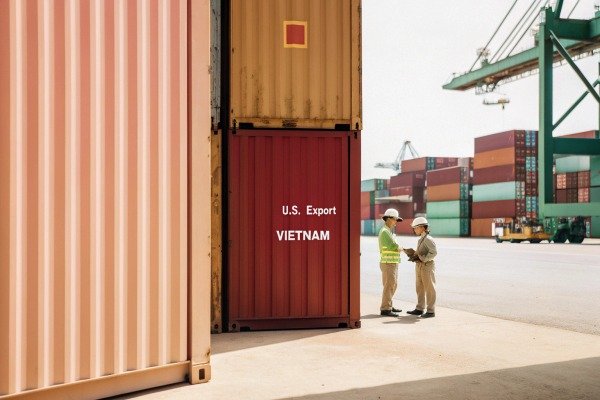
For metal products like welding frames, electrodes, or structural components, the physical appearance tells only half the story. U.S. Customs needs to know the chemical DNA of the metal. This is where Mill Test Reports (MTRs) become essential. While not always mandatory for entry filing, having them accessible can prevent a cargo hold from turning into a cargo seizure.
Verifying HTS Classification
The Harmonized Tariff Schedule is incredibly specific regarding metallurgy Harmonized Tariff Schedule 8. For example, a welding part made of "stainless steel" has a different duty rate than one made of "alloy steel" or "carbon steel."
- Aluminium: If your frame is 6061 Aluminum, the MTR proves the magnesium and silicon content.
- Stahl: If the product contains specific elements (like Boron or Chromium) above a certain percentage, it shifts the classification.
If your broker files an entry under a specific HTS code but cannot prove the material composition when asked, CBP may default to a higher duty rate. We provide MTRs generated from our raw material suppliers or our internal testing lab to ensure your broker has this data vor the ship arrives.
Anti-Dumping and Countervailing Duties (AD/CVD)
This is a major risk area. The U.S. has numerous AD/CVD orders on steel and aluminum products from various countries (including Vietnam in some specific pipe/tube cases or via circumvention).
- Scope Rulings: An AD/CVD order covers specific products (the "scope").
- Non-Scope Declaration: If your welding part looks like a pipe fitting but isn't one, you may need a "Non-Reimbursement Statement" or a declaration explaining why your product falls outside the scope of the order. The MTR supports this by proving the grade of steel does not match the dumped product's definition.
Hazardous Materials and Safety
Some welding parts, specifically consumables like flux-cored wire or coated electrodes, contain chemicals coated electrodes 9.
- MSDS (Material Safety Data Sheet): If the product contains hazardous substances, you must provide an MSDS. This is required not just for Customs, but for transport safety (hazmat rules).
- EPA/TSCA: You may need to certify that the chemicals comply with the Toxic Substances Control Act (TSCA). A "Negative Certification" or "Positive Certification" statement is often required on the invoice.
Compliance Checklist for Material Certs
| Dokumententyp | When it is Required | Who Provides It |
|---|---|---|
| Mill Test Report (MTR) | For all steel/aluminum parts to prove alloy grade. | The Manufacturer (DEWIN). |
| MSDS / SDS | For welding flux, chemicals, or coated electrodes. | The Manufacturer. |
| TSCA Certification | For chemical substances (composite welding materials). | Importer of Record (signed based on supplier data). |
| AD/CVD Statement | If the product category is subject to trade remedies. | Manufacturer (Non-reimbursement statement) & Importer. |
What is the deadline for submitting the Importer Security Filing (ISF) to avoid penalties?
We send shipping data to your broker days before the vessel arrives. Missing the specific filing window results in immediate fines regardless of the cargo's value.
The Importer Security Filing (ISF), also known as "10+2," must be submitted to US Customs and Border Protection at least 24 hours before the goods are loaded onto the vessel in Vietnam. Failure to file on time can result in penalties starting at $5,000 per shipment.

The Importer Security Filing (ISF) is strictly a security measure, not a commercial one. Importer Security Filing (ISF) 10 It was born out of anti-terrorism initiatives, which means CBP offers zero leniency for errors or delays. Many first-time importers mistakenly believe they can file paperwork when the ship arrives in Los Angeles or Long Beach. This is a costly error.
The "24-Hour Rule" Explained
The rule is simple but unforgiving: The ISF must be accepted by CBP 24 hours before the cargo is physically loaded onto the vessel at the port of origin (e.g., Ho Chi Minh City or Haiphong).
- Not 24 hours before departure.
- Not 24 hours before arrival.
- 24 hours before loading.
In practice, this means we must finalize all shipping details with your freight forwarder roughly 3 to 4 days before the ship is scheduled to sail. We provide the "ISF Sheet" to your team early so your customs broker has time to key in the data.
The Consequences of Non-Compliance
If you miss the deadline, CBP may issue a liquidated damages claim.
- Late Filing: $5,000 penalty.
- Inaccurate Filing: $5,000 penalty.
- Incomplete Filing: $5,000 penalty.
Furthermore, if the ISF is not on file, US Customs may issue a "Do Not Load" order, leaving your welding parts stranded on the dock in Vietnam while the vessel sails without them. This disrupts your entire supply chain.
The "10+2" Data Elements
The filing requires 10 data elements from the importer (you) and 2 from the carrier. As your manufacturer, we provide the majority of this data. You must ensure your broker receives the following accurately:
- Manufacturer (or Supplier) Name & Address: (That's us, DEWIN).
- Seller Name & Address: (Us again).
- Buyer Name & Address: (Your company).
- Ship-to Name & Address: (Your warehouse).
- Container Stuffing Location: (Our factory or the forwarder's warehouse).
- Consolidator (Stuffer) Name: (Who loaded the container).
- Importer of Record Number: (Your IRS/Tax ID or Customs Assigned Number).
- Consignee Number: (Your IRS/Tax ID).
- Country of Origin: (Vietnam).
- Commodity HTS Code: (The 6-digit classification).
We coordinate closely with your nominated freight forwarder to ensure the "Match" between the ISF filed by your broker and the Manifest filed by the carrier. A mismatch here is the most common cause of customs holds.
Fazit
Proper documentation prevents delays. By preparing these forms early, we ensure your custom parts move from our Vietnam factory to your warehouse without interruption, protecting your margins and production schedule.
Footnotes
1. Defines the financial term regarding total costs of shipping and importing. ↩︎
2. Official website of the agency responsible for import regulation. ↩︎
3. ISO standard for aluminum and aluminum alloys, relevant to material specs. ↩︎
4. Official USITC search tool for finding HTS codes. ↩︎
5. General background on the legal and commercial function of a Bill of Lading. ↩︎
6. Official CBP page explaining transshipment risks and enforcement. ↩︎
7. Official CBP publication defining the legal concept of substantial transformation. ↩︎
8. Official USITC database for determining tariff classifications and duty rates. ↩︎
9. Industry standards for welding consumables from the American Welding Society. ↩︎
10. Official CBP resource detailing ISF requirements and the 10+2 rule. ↩︎

 English
 Español de México
 Deutsch
 Français
 Русский
 العربية