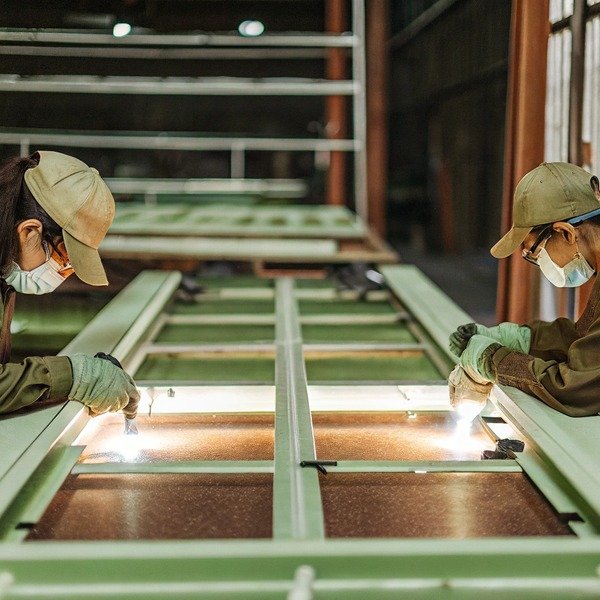
When we review technical drawings for custom aluminum frames technical drawings 1 at our facility in Vietnam, we often see clients hesitate at the volume requirements. You need high-quality welded assemblies for your project, but locking significant capital into thousands of units before testing the market feels like a dangerous financial gamble.
To negotiate MOQs effectively, offer to pay for custom welding fixtures upfront and provide a clear annual forecast to show long-term potential. You can also accept a higher unit price for the initial pilot run or consolidate your orders with other buyers to meet the factory’s material tonnage requirements.
Let’s examine specific strategies to secure smaller batches without sacrificing weld quality or stalling your supply chain.
Why do Vietnamese suppliers impose specific MOQs for my custom welding projects?
Our production managers in Ho Chi Minh City explain this daily Ho-Chi-Minh-Stadt 2 to international buyers who feel frustrated by rigid volume limits. It often feels arbitrary when a supplier rejects your order, but understanding the specific cost structures behind metal fabrication reveals why small batches often lose money for the factory.
Vietnamese suppliers set MOQs to cover high fixed costs like machine setup, jig calibration, and raw material minimums from steel mills. For complex aluminum welding, factories need volume to amortize the cost of skilled labor and ensure consistent quality, as small runs increase the risk of defects and scrap.
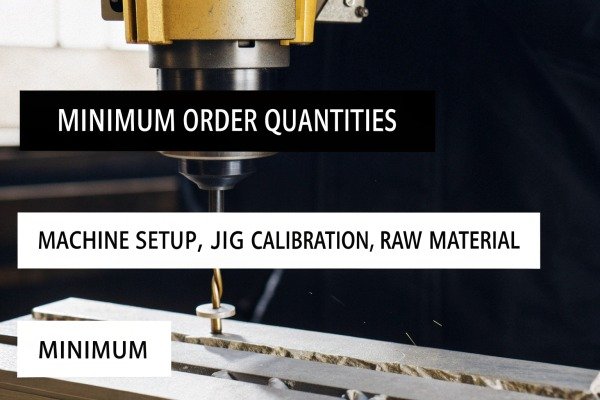
When sourcing custom parts like your fabricated aluminum frame, it is vital to look at the situation from the factory floor perspective. In Vietnam, the manufacturing sector operates on thin margins driven by volume. Unlike off-the-shelf components, a custom welded frame requires a unique production setup. Every time a new order hits the floor, the factory must halt current operations, clean the welding stations, and re-calibrate equipment for your specific aluminum grade.
The primary driver for high MOQs in welding is the "Setup Cost." This is not just about programming a machine. It involves physical labor. For a complex, multi-level shape made of rectangular tubing, workers must cut raw material to exact lengths, deburr the edges, and set up the welding station. If a factory spends four hours setting up a line to run only 50 frames, the downtime costs them more than the profit they generate from your order.
Furthermore, raw material procurement plays a massive role. Aluminum suppliers in Vietnam often sell tubing by the ton, not by the foot. If your order requires 300 kilograms of aluminum but the minimum purchase from the mill is one ton, the factory is forced to hold the remaining 700 kilograms as dead stock 3 "dead stock." They pass this risk to you in the form of an MOQ.
Material Sourcing Constraints
The type of material you specify impacts the MOQ heavily. Standard steel grades are easy to source in small quantities. However, specific aluminum alloys or custom tubing profiles often require aluminum alloys 4 a dedicated extrusion run from the material supplier.
Table 1: Breakdown of Fixed vs. Variable Costs in Welding
| Cost Component | Type | Impact on MOQ |
|---|---|---|
| Material Extrusion | Fixed | Hoch: Suppliers must buy min. tonnage from mills. |
| Jig Setup & Calibration | Fixed | Hoch: Takes hours to align complex multi-level frames. |
| Welder Labor | Variable | Niedrig: Vietnam labor ($2-4/hr) is scalable. |
| Consumables (Gas/Wire) | Variable | Niedrig: Can be purchased as needed. |
| Machine Depreciation | Fixed | Mittel: Factories prioritize machines for high-volume jobs. |
By understanding that the supplier is trying to avoid "dead stock" and "downtime," you can structure your negotiation to address these specific fears rather than just demanding a lower number.
Can I lower the MOQ if I agree to pay for the welding fixtures upfront?
In our experience developing prototypes for US clients, tooling costs are almost always the biggest friction point during the quotation phase. If you remove this financial burden from the factory, they become much more willing to interrupt their schedule to run smaller production lines for you.
Yes, paying for welding fixtures separately significantly increases your leverage to lower MOQs. This eliminates the supplier’s need to amortize tooling costs across thousands of units. It demonstrates your commitment and shifts the financial risk away from the factory, making them more open to producing smaller, trial batches.

For a product described as a "complex, multi-level shape," the welding fixture (or jig) is the most critical tool in the factory. Aluminum heats up quickly and is prone to warping during the welding process. To ensure your brushed silver frames remain square and true to the drawing, the factory must build a custom heavy-duty steel fixture to hold the tubing in place while the welder works.
Typically, a Vietnamese supplier might quote you a unit price that includes a "hidden" amortization of this fixture. If the fixture costs $2,000 to build and they expect an order of 5,000 units, they add $0.40 to every unit. If you only order 500 units, they lose money on the tool.
The Strategy of Separating NRE Costs
We recommend negotiating a Non-Recurring Engineering 5 Non-Recurring Engineering (NRE) charge. Non-Recurring Engineering 6 You explicitly ask the supplier, "What is the cost of the welding jig?" and offer to pay 100% of that cost upfront.
Once you own the tooling, the supplier no longer needs a massive order to break even. This changes the dynamic completely. You have removed their capital risk. Now, running a batch of 200 or 300 units becomes a matter of scheduling labor, not recouping an investment.
Benefits of Ownership
Paying for the fixture also grants you greater control.
- Portability: If the supplier fails to meet quality standards, you technically own the fixture and can move it to another factory (though this is logistically difficult, the leverage exists).
- Konsistenz: A dedicated fixture ensures that the 100th frame looks exactly like the first, which is crucial for parts with a brushed silver finish where visual defects are obvious.
Table 2: Impact of Upfront Tooling Payment on Negotiation
| Negotiation Scenario | Supplier Risk | Likely MOQ Result | Unit Price Impact |
|---|---|---|---|
| Amortized Tooling | High (Must sell 5k+ units to recover cost) | High (1000-2000 units) | Lower |
| Upfront Tooling Payment | Low (Tool is paid for immediately) | Low (200-500 units) | Neutral |
| Partial Tooling Payment | Medium | Medium (500-1000 units) | Slight Increase |
This approach signals to the factory that you are a professional buyer who understands manufacturing economics. It builds immediate trust.
How will the unit price of my welding parts change if I negotiate a smaller batch size?
When we quote projects for US clients, we often have to explain that flexibility comes with a price tag. You want a lower MOQ to reduce inventory risk, but the unit cost will inevitably reflect the loss of efficiency. It is crucial to understand the mathematical trade-off between volume and unit cost.
Negotiating a smaller batch size typically increases the unit price by 15% to 25%. This premium compensates the supplier for frequent machine changeovers, administrative overhead, and lost efficiency. While the individual part cost rises, your total upfront capital investment drops significantly, reducing your overall inventory risk.
If you successfully negotiate the MOQ down from 1,000 units to 300 units, do not expect the price per unit to stay the same. In the manufacturing hubs of Binh Duong or Dong Nai manufacturing hubs 7, margins are calculated based on continuous machine uptime.
The Economics of Small Batches
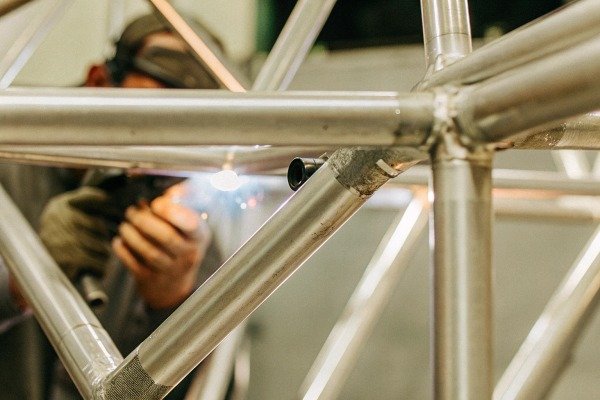
When a welder works on your aluminum frames aluminum frames 8, they develop a rhythm. The first 10 frames take longer as the welder adjusts their speed and heat settings. By the 100th frame, they are working at peak efficiency. If you order small batches, the worker never hits that peak efficiency, and the "scrap rate" (percentage of defective parts) is usually higher in the beginning of a run.
You must be prepared to pay a "Low Volume Surcharge." For a complex welded assembly, this usually falls between 15% and 25%.
Why Paying More is Actually Cheaper
It sounds counterintuitive, but paying a higher unit price saves you money in the long run during the product launch phase.
- Scenario A: Buying 2,000 units at $10.00 = $20,000 Capital Tied Up.
- Scenario B: Buying 300 units at $12.50 = $3,750 Capital Tied Up.
In Scenario B, you pay $2.50 more per part, but you risk $16,250 less capital. If the product design needs a change after the first batch (which happens often with custom frames), you aren't stuck with a warehouse of obsolete metal.
Table 3: Unit Price vs. Volume Trade-off Example
| Order Quantity | Estimated Unit Price | Setup Surcharge | Total Order Value |
|---|---|---|---|
| 200 Units | $14.00 | Included | $2,800 |
| 500 Units | $12.00 | Waived | $6,000 |
| 1000 Units | $10.50 | Waived | $10,500 |
| 5000 Units | $9.80 | Waived | $49,000 |
We advise clients to view this premium as an insurance policy. You are paying extra to insure yourself against market failure and design flaws. Once your volume stabilizes, you can renegotiate back down to the standard pricing tiers.
Will providing an annual purchase forecast help me reduce the MOQ requirements?
Our sales team in Vietnam prefers clients who plan ahead rather than those who place sporadic emergency orders. Suppliers fear “one-and-done” transactions. Showing them a roadmap for future growth changes the conversation from a single difficult order to a valuable long-term partnership.
Providing an annual forecast is highly effective for reducing immediate MOQ requirements. It proves you are a serious buyer with long-term potential. Suppliers are often willing to produce smaller initial batches to validate quality if they see a signed blanket order or a credible schedule for future volume growth.

Vietnamese manufacturers are looking for stability. They want to know that if they invest time in developing your custom frame today, there will be more orders next quarter. An "Annual Purchase Forecast" is your strongest non-monetary negotiation tool.
The "Blanket Order" Strategy
Instead of placing a single PO for 200 units, you can issue a Blanket Purchase Order 9 "Blanket Purchase Order" for 2,000 units to be delivered over 12 months.
- Release 1: 200 units (Immediate)
- Release 2: 500 units (Month 4)
- Release 3: 1300 units (Month 8)
This allows the supplier to buy the raw material in bulk (satisfying the steel mill's tonnage requirements) while only welding and finishing the parts as you need them.
Building Credibility
Your forecast must be realistic. If you promise 10,000 units and only buy 500, you will burn the relationship, and the supplier will likely refuse future orders or drastically hike prices. We often suggest signing a contract that states you are liable for the raw material costs if you fail to take delivery of the finished goods. This reassures the supplier that they won't be left holding the bag.
Transparency Wins
Share your marketing plans with the factory owner. If you explain, "We are launching in Q1 and expect conservative sales, but our Q3 marketing push will triple demand," they understand the logic behind the ramp-up.
This approach works particularly well with Tier 2 factories in Vietnam. These are often family-owned or medium-sized enterprises that are hungry for growth and more flexible than the massive Tier 1 exporters. They are willing to grow with you if they believe in your roadmap.
Fazit
Negotiating MOQs for custom welding parts in Vietnam is not about forcing a supplier to lose money; it is about creative problem-solving. By offering to pay for tooling upfront, accepting a temporary unit price premium, and providing a transparent annual forecast, you can secure smaller batch sizes that fit your budget. Start small to verify quality, build trust with your manufacturer, and scale up 10 scale up your volume as your product succeeds in the market.
Footnotes
1. ISO standards for technical drawings ensure global manufacturing consistency. ↩︎
2. General background on the major manufacturing hub in Vietnam. ↩︎
3. Defines the inventory risk factor driving minimum order requirements. ↩︎
4. Technical specifications for common aluminum alloys used in fabrication. ↩︎
5. Explains the specific one-time cost structure for custom tooling. ↩︎
6. Explains the concept of one-time costs in product development. ↩︎
7. Provides context on the major industrial zones mentioned. ↩︎
8. American Welding Society provides technical guidelines for aluminum fabrication. ↩︎
9. Defines the long-term procurement contract strategy recommended. ↩︎
10. References the business concept of increasing production volume over time. ↩︎

 English
 Español de México
 Deutsch
 Français
 Русский
 العربية