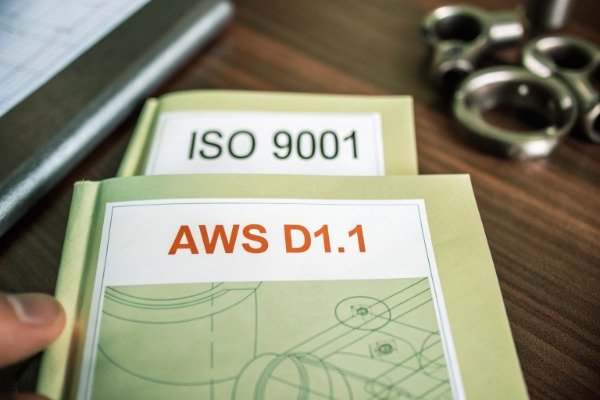
When we receive requests for quotation (RFQs) from US clients, the conversation often starts with pricing but quickly pivots to compliance. We have seen too many sourcing projects stall because the buyer assumed a "certified supplier" meant the same thing in Vietnam or China as it does in Ohio. In our production facilities, we know that a mismatch in certification expectations leads to rejected shipments, customs delays, and costly rework. It is frustrating to find a supplier who can weld but cannot prove it on paper, leaving you with liability risks you did not anticipate.
To sell welding parts in the US, suppliers generally require ISO 9001:2015 as a baseline. However, critical applications often demand ISO 3834 for fusion welding competence, IATF 16949 for automotive components, and adherence to AWS (American Welding Society) codes to ensure structural integrity and regulatory compliance.
Navigating this alphabet soup of standards is complex, so let's break down exactly what you need based on the specific application of your parts.
Is ISO 9001 sufficient for general industrial welding parts?
In our Singapore and China facilities, we treat ISO 9001 as the starting line, not the finish line. We have found that relying solely on this general standard often leads to disappointment for US buyers who expect specific technical controls that ISO 9001 simply does not cover.
ISO 9001 is rarely sufficient on its own for critical welding parts in the US market. While it ensures a consistent management system, it does not validate the specific technical quality of fusion welds, requiring additional adherence to AWS D1.1 codes or ISO 3834 standards.
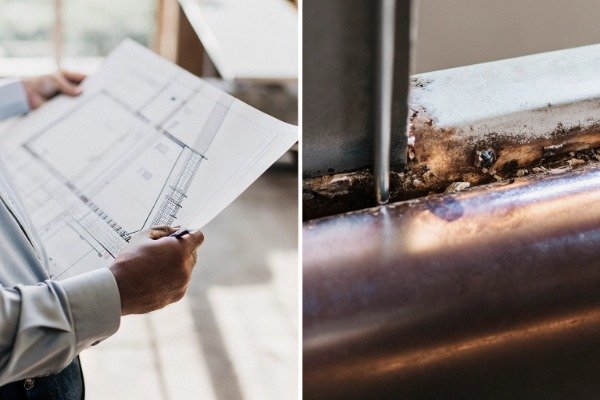
While ISO 9001:2015 is the universal passport for international trade, it is fundamentally a Quality Management System (QMS), not a technical welding standard. In our daily operations, we use ISO 9001 to ensure we have a process for ordering steel, calibrating tools, and handling customer complaints. However, it does not tell our welders how to control heat input or prevent hydrogen cracking.
ISO 9001:2015 1
The Gap Between Management and Metallurgy
For general industrial parts—like simple brackets, enclosures, or non-load-bearing frames—ISO 9001 might satisfy a US buyer, provided the physical product passes inspection. However, for anything structural, there is a massive gap. ISO 9001 certifies that we have a system to manage quality; it does not certify that the weld itself is sound.
When we export to the US, we often see buyers confusing "Process Consistency" with "Technical Competence." A factory can be ISO 9001 certified and consistently produce bad welds because their procedure was flawed from the start.
AWS Alignment is Crucial
Even if a supplier lacks specific ISO welding certifications, they must often demonstrate compliance with American Welding Society (AWS) codes. For example, when we fabricate structural steel components for US clients, our ISO 9001 system manages the paperwork, but the actual work instructions are derived from AWS D1.1 (Structural Welding Code – Steel).
AWS D1.1 2
If you are sourcing general parts, you should look for the following comparison to understand why ISO 9001 needs support:
| Merkmal | ISO 9001:2015 | ISO 3834 / AWS Codes |
|---|---|---|
| Primary Focus | Management Procedures | Technical Welding Competence |
| Scope | Entire Business Operation | Fusion Welding Processes Only |
| Personnel | Managers & Admin | Welders & Welding Coordinators |
| Output | Consistent Paperwork/Flow | Sound Metallurgical Bonds |
| US Market Acceptance | Baseline Requirement | Required for Structural/Critical |
If your supplier only has ISO 9001, you must implement a rigorous incoming inspection plan (AQL) or third-party audit, because the certificate alone does not guarantee the structural integrity of the weld.
Do I need suppliers with ISO 3834 for fusion welding quality?
We often explain to clients that while our managers follow ISO 9001, our welding engineers live by ISO 3834. When we handle projects involving pressure vessels or heavy construction equipment, relying on general quality standards is a gamble we are not willing to take.
welding engineers 3
You need suppliers with ISO 3834 certification if your parts require verified fusion welding quality. This standard specifically governs the technical capability of the welding process, personnel qualification, and procedure specifications, acting as a crucial bridge between general quality management and specific US welding codes.

ISO 3834 is the standard that actually looks at the weld. It is titled "Quality requirements for fusion welding of metallic materials," and it is the standard that validates a supplier's technical competence. In our experience, US buyers who understand welding will specifically ask if our facility complies with ISO 3834, even if they don't demand the certificate itself, because it mirrors the requirements of AWS and ASME codes.
The Three Levels of Quality
One nuance we navigate is that ISO 3834 is not a single "pass/fail" standard; it has three distinct levels. Depending on the risk associated with your part, you need to verify which level the supplier operates at. We have seen suppliers claim "ISO 3834 compliance" while only meeting the elementary requirements, which is insufficient for dynamic load-bearing parts.
- ISO 3834-2 (Comprehensive): Required for safety-critical parts (e.g., cranes, bridges, pressure vessels).
- ISO 3834-3 (Standard): Suitable for general structural parts where failure is not catastrophic.
- ISO 3834-4 (Elementary): Basic quality requirements for simple assemblies.
Personnel and Procedure Qualification
The real value of ISO 3834 for a US buyer is that it forces the supplier to validate their people and their recipes. Under this standard, we must maintain:
- WPQR (ISO 15614): Welding Procedure Qualification Records. This proves the "recipe" (voltage, speed, wire type) works.
- Welder Qualification (ISO 9606): This proves the person holding the torch has the skill to execute the recipe.
Without these, you are relying on luck. Below is a breakdown of when you should demand ISO 3834 based on your product type:
| Product Application | Recommended ISO 3834 Level | Why it Matters |
|---|---|---|
| Heavy Machinery / Lifting | Part 2 (Comprehensive) | Failure risks human life; full traceability required. |
| Architectural Steel | Part 3 (Standard) | Structural integrity is key, but fatigue stress is lower. |
| Furniture / Enclosures | Part 4 (Elementary) | Cosmetic appearance is priority; low structural risk. |
| Pressure Vessels | Part 2 (Comprehensive) | Mandatory to meet ASME Boiler & Pressure Vessel Code. |
How important is IATF 16949 if the parts are for automotive use?
Exporting automotive components to Detroit or Texas is a different ballgame compared to general manufacturing. Our team knows that a single defect can shut down a client's assembly line, triggering massive penalties, which is why the generic ISO 9001 standard is virtually useless in this sector.
IATF 16949 is absolutely critical for automotive welding parts, moving beyond general quality to strict defect prevention. US automotive buyers require suppliers to demonstrate process capability (Cpk) and maintain defect rates below 50 PPM, ensuring zero interruptions to their "just-in-time" assembly lines.

If you are sourcing parts for the automotive industry—whether for OEMs or the aftermarket—ISO 9001 is merely the price of admission. The real requirement is IATF 16949. This standard focuses intensely on defect prevention and the reduction of variation and waste in the supply chain.
IATF 16949 4
The PPM Threshold
In our discussions with Tier 1 suppliers in the US, the conversation always turns to Parts Per Million (PPM). A supplier with only ISO 9001 might accept a 1% defect rate (10,000 PPM), which is acceptable for garden furniture but disastrous for car chassis.
For automotive welding, you need to ask your potential supplier specifically about their PPM levels.
- Top Tier (<50 PPM): These suppliers have automated robotic welding cells with real-time monitoring. They are IATF 16949 certified and use statistical process control.
- Mid Tier (50 – 1000 PPM): These suppliers might rely on manual welding with strict post-weld inspection. They are risky for critical safety components but acceptable for brackets or interior mounts.
Process Capability (Cpk)
Another metric we monitor closely is Cpk (Process Capability Index). US automotive engineers will ask for a Cpk of 1.33 or higher. This statistical measure proves that our welding process is not just producing good parts by luck, but is stable and repeatable. If a supplier cannot provide Cpk data for their weld strength or dimensions, they are likely not ready for the US automotive market.
Process Capability Index 5
PPAP and Control Plans
Under IATF 16949, we must submit a PPAP (Production Part Approval Process) before shipping volume. This includes the Control Plan, which details exactly how we check the welds (e.g., destructive testing every 500 parts, 100% visual inspection).
PPAP 6
| Metrik | ISO 9001 Supplier | IATF 16949 Supplier |
|---|---|---|
| Defect Target | "Customer Satisfaction" | Zero Defects / <50 PPM |
| Process Control | Reactive (Fixing errors) | Proactive (Preventing errors via FMEA) |
| Rückverfolgbarkeit | Batch Level | Individual Part / Safety Critical Marking |
| Change Management | Internal Review | Strict Customer Approval Required |
Does the supplier need specific environmental certifications like ISO 14001?
During recent site audits, we have noticed more US procurement managers asking about our waste disposal and energy usage. While this used to be a "nice-to-have," it is rapidly becoming a gatekeeper requirement for doing business with large American corporations.
Suppliers do not legally need ISO 14001 to sell parts in the US, but it is increasingly mandated by Fortune 500 buyers. This certification validates environmental management systems, helping US companies meet their own ESG goals and reduce supply chain sustainability risks.
Strictly speaking, US Customs will not stop a shipment of welding parts because the factory lacks ISO 14001. However, the purchasing department of a major US company might stop the contract.
The "Green" Supply Chain
We are seeing a shift where US companies are auditing their Scope 3 emissions—which includes the emissions of their suppliers. Welding is an energy-intensive process that produces fumes and slag. A supplier with ISO 14001 has demonstrated that they manage these environmental impacts responsibly.
arc flash and fumes 7
For you as a buyer, this is about risk mitigation. A supplier in China or Vietnam that ignores environmental regulations is at high risk of being shut down by local government inspectors, which would sever your supply chain overnight. ISO 14001 is a signal of stability.
ISO 14001 8
ISO 45001: The Safety Companion
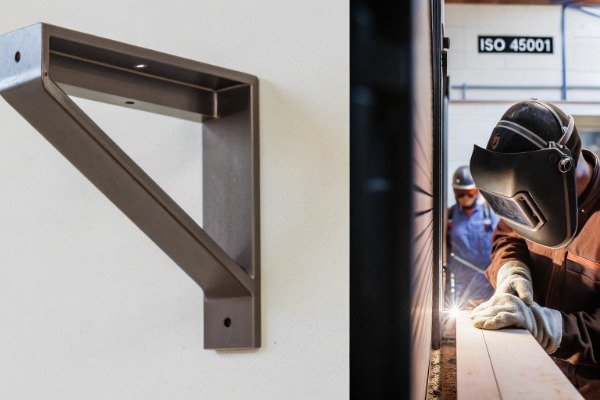
Often paired with ISO 14001 is ISO 45001 (Occupational Health and Safety). In welding, safety is paramount. We maintain this certification to ensure our welders are protected from arc flash and fumes. While not a product certification, it assures US buyers that we are not running a "sweatshop," which protects their brand reputation.
hydrogen cracking 9
If you are selling to consumers or large retailers in the US, having a supplier with ISO 14001 can be a competitive advantage. It allows you to market your products as ethically sourced and environmentally responsible.
ISO 3834 10
| Zertifizierung | Fokusbereich | Relevance to US Buyer |
|---|---|---|
| ISO 14001 | Environmental Management | ESG Compliance, Supply Chain Stability |
| ISO 45001 | Health & Safety | Brand Reputation, Ethical Sourcing |
| ISO 50001 | Energy Management | Cost Reduction (Energy efficiency) |
Fazit
Sourcing welding parts for the US market requires a "stack" of certifications rather than a single document. ISO 9001 is your non-negotiable baseline for management. For the actual welding quality, you must look for ISO 3834 or proven adherence to AWS codes. If you are entering the automotive space, IATF 16949 is mandatory to ensure low PPM and high process capability. Finally, do not overlook ISO 14001 if your clients prioritize sustainability. Verifying these upfront prevents the nightmare of receiving a container full of parts that look good but fail under stress.
Footnotes
1. Official ISO standard page defining the quality management system requirements. ↩︎
2. Official publication page for the Structural Welding Code cited in the text. ↩︎
3. Educational link to a leading welding engineering program to define the role. ↩︎
4. Official oversight body website for the automotive quality standard. ↩︎
5. Technical documentation from industry-standard software explaining Cpk calculations. ↩︎
6. Definition of the specific automotive approval process mentioned. ↩︎
7. Official US government safety regulations regarding welding hazards. ↩︎
8. US Government resource explaining Environmental Management Systems and ISO 14001. ↩︎
9. General background on the metallurgical defect mentioned. ↩︎
10. Authoritative industry guide explaining the ISO 3834 standard for fusion welding. ↩︎

 English
 Español de México
 Deutsch
 Français
 Русский
 العربية