
Stamping parts production waste piles up fast on our contract manufacturing lines waste hierarchy 1. Left unmanaged, it drains margins, risks compliance penalties, and damages the ESG story our U.S. clients now demand.
Handle stamping parts production waste in an eco-friendly way by following a waste hierarchy: prevent scrap through better nesting and die design, reuse large remnants internally, sort and recycle metal by alloy, and treat fluids and oily sludge through certified, documented disposal partners.
That hierarchy sounds simple. Putting it into practice on a real press line is harder. Below, I break down each step the way we apply it across our supplier network in Vietnam and beyond.
How can I reduce stamping scrap rates without sacrificing production speed?
Last year, one of our Vietnam partner plants was scrapping nearly one bracket in twelve on a progressive die job. Fixing it did not require slowing the press at all.
Reduce stamping scrap without losing speed by optimizing blank nesting, redesigning dies to shrink skeleton offal, using in-line sensors to catch defects early, and stabilizing coil feed. Prevention at the design and setup stage cuts scrap while keeping cycle times unchanged.

Scrap reduction is the most eco-friendly move you can make. Every kilogram of steel you never punch out is a kilogram you never have to recycle, transport, or remelt. In my experience auditing stamping suppliers across Asia, the biggest gains come before the press ever runs.
Start with nesting and strip layout
Nesting decides how much of the coil becomes parts and how much becomes skeleton scrap. Small layout changes matter. Rotating a part a few degrees, or pairing two different parts on one strip, can lift material utilization noticeably. Modern nesting software helps. Some newer AI-driven tools adjust layouts dynamically, going beyond what static CAD nesting achieves. For the Z-shaped mounting clips we source, mixed-part nesting turned an awkward geometry into a tight, efficient strip.
Fix the die, fix the waste
Die design locks in your scrap rate for the life of the tool. That is why we review offal width, carrier strips, and pilot hole placement during OEM co-development, before tooling is cut. Changing a die later is expensive. Changing a drawing early is cheap.
Catch defects before they multiply
Reject parts are the worst kind of waste. You spent material, energy, and press time to make something unusable. Here is how common tactics compare:
| Tactic | Scrap impact | Speed impact | Upfront cost |
|---|---|---|---|
| Nesting optimization | High reduction | None | Low |
| Die redesign for smaller offal | High reduction | None | Medium |
| In-line sensor monitoring | Cuts reject scrap | Slight setup time | Medium |
| Servo-driven presses | Cuts deformation scrap | Often faster | High |
| Mixed-part nesting | Medium reduction | None | Low |
Servo presses 2 deserve a mention. They control ram motion precisely, which reduces deformation waste and rework on thin-gauge parts. They cost more upfront, but on high-volume custom parts the math often works.
What are the best ways to recycle metal stamping waste responsibly?
A buyer once asked me where his skeleton scrap actually went after it left the plant. We traced it. Half was landing in a mixed-metal pile, losing most of its value.
Recycle metal stamping waste responsibly by sorting scrap by alloy at the press, baling or shredding it for efficient transport, and selling it to certified recyclers who return it to the steel or aluminum supply chain with documented chain of custody.

Recycling is where most plants think eco-friendly handling begins. In reality, it is the third step in the hierarchy, after prevention and reuse. But it still matters enormously. Recycled metal avoids most of the energy needed to extract and refine virgin ore. That energy saving is one of the strongest environmental arguments in the whole stamping industry.
Sort at the source, not at the dock
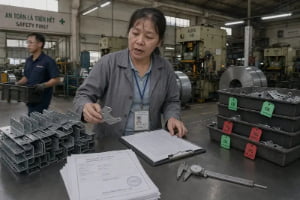
Segregation is the single most important recycling habit. Steel, aluminum, copper, and brass must never mix. Cross-contaminated scrap sells for less and complicates downstream remelting. The fix is simple: separate bins at each press, labeled by alloy and grade. At the plants we audit, we check this during walk-throughs. Bin discipline tells you a lot about a supplier's overall process control.
Prepare scrap for the recycler
Loose skeleton scrap is bulky and expensive to haul. Compacting changes the economics:
| Scrap form | Best preparation | Why it helps |
|---|---|---|
| Skeleton and trim scrap | Baling or briquetting | Denser loads, lower freight per ton |
| Punch-outs and slugs | Bin collection by alloy | Preserves alloy value |
| Machining chips | Shredding plus de-oiling | Removes fluid, improves melt quality |
| Oily light scrap | Centrifuging before baling | Recovers lubricant, cleans the stream |
Close the loop with your supplier
The most advanced option is a buy-back agreement with your coil supplier. Your scrap goes back, gets remelted, and returns as new coil stock. That turns disposal into circular procurement. Some of our clients also ask for digital chain-of-custody records on scrap shipments. It strengthens their ESG reporting 3 and proves the material was truly recycled, not landfilled.
How do I choose a supplier with truly eco-friendly stamping practices?
During supplier audits for our U.S. clients, I have learned to ignore the sustainability posters in the lobby and look at the scrap bins behind the presses instead.
Choose an eco-friendly stamping supplier by verifying documented waste tracking, alloy-sorted scrap handling, certified recycler partnerships, proper coolant and lubricant management, and environmental credentials such as ISO 14001. On-site audits reveal real practice better than marketing claims.

Greenwashing is common in this industry. A supplier can claim sustainability on their website while pouring spent coolant into an unlined pit out back. Since our team runs supplier audits as a core service, we have built a practical checklist that separates genuine practice from marketing.
What to verify on-site
Walk the floor and check these points in person or through a trusted third party:
- Scrap bins are labeled and sorted by alloy at each press.
- Fluids are collected, filtered, and either recycled or sent to licensed treatment.
- Waste manifests and disposal records exist and match actual volumes.
- The recycler or waste handler holds valid local certifications.
- Oily rags, contaminated packaging, and sludge are handled as regulated waste, not general trash.
- There is a named person responsible for environmental compliance.
Documents that matter more than promises
Ask for the paper trail. An ISO 14001 5 certificate shows a management system exists. Waste transfer notes show it is being used. Chain-of-custody records for scrap shipments show where material actually ends up. In our sourcing work for the U.S. market, buyers increasingly need this documentation for their own ESG and life-cycle reporting. A supplier who cannot produce it creates risk that flows straight up the supply chain to you. supply chain management 6
The trade-off question
Smaller stamping shops sometimes lack in-house environmental staff. That is not automatically disqualifying. Many manage compliance well by outsourcing to certified waste specialists. What matters is that the system works and is documented, not whether it is managed internally. We weigh this trade-off on every audit. A small plant with a disciplined external partner often outperforms a large plant with an ignored internal policy.
Can better process control help me cut waste and costs at the same time?
The economics here surprised me early in my career. I assumed eco-friendly handling was a cost center. Our project data across custom parts programs says the opposite.
Yes. Process control cuts waste and costs simultaneously: fewer defects mean less reject scrap, higher material utilization lowers coil purchases, fluid recovery reduces disposal fees, and documented compliance avoids fines. Waste reduction and cost reduction are the same activity.

Waste is a symptom. Poor process control is the disease. When a press runs with unstable feed, worn tooling, or no in-line inspection, it produces reject parts, excessive offal, and contaminated fluid streams all at once. Fix the process, and every waste stream shrinks together.
Where control creates savings
Each control measure hits both an environmental line and a cost line:
| Process control measure | Environmental benefit | Cost benefit |
|---|---|---|
| First-article inspection and PPAP 7 | Prevents full-run reject scrap | Avoids rework and remakes |
| In-line sensor monitoring | Stops defect streaks early | Less scrapped material and press time |
| Coolant filtration and recovery | Less hazardous fluid waste | Lower fluid purchase and disposal fees |
| Chip wringers and centrifuges | Cleaner scrap, recovered oil | Higher scrap value, reused lubricant |
| Material utilization tracking | Less coil consumed per part | Direct raw material savings |
Right first time is the greenest strategy
On our custom parts programs, we insist on PPAP and defined process controls before mass production. The reason is quality, but the side effect is sustainability. A part made right the first time consumes material once. A part reworked or remade consumes it twice or more, plus extra energy, fluids, and shipping. Frequent rework is one of the most overlooked forms of stamping parts production waste, and it never appears in the scrap bin. It hides in remake orders and return shipments.
Fluids deserve equal attention
Metal gets the headlines, but fluids drive compliance risk. Centrifuges separate cutting fluid from chips, recovering oil and cleaning the scrap. Some treatment processes convert spent coolant into nonhazardous sludge, depending on the chemistry. Bio-based lubricants can reduce the cleaning burden, though they still need proper handling and compatibility checks with your tooling. Every one of these steps trims a disposal invoice while trimming environmental impact.
Conclusion
Ignoring stamping parts production waste erodes margins and invites compliance risk. The fix is a hierarchy: prevent scrap first, reuse remnants, recycle by alloy, and treat fluids through certified partners. Done well, sustainability and profit move together. If you need audited, eco-conscious stamping suppliers in Asia, our team is ready to help.
Footnotes
1. EPA defines the waste hierarchy framework the article’s methodology is built upon. ↩︎
2. Technical background on servo-driven press technology referenced for reducing deformation waste. ↩︎
3. Background on ESG concept referenced repeatedly regarding client sustainability reporting needs. ↩︎
4. Background concept explaining documented tracking of recycled material through supply chains. ↩︎
5. Official standard reference for environmental management certification mentioned in supplier verification. ↩︎
6. WTO resource on trade facilitation relevant to global sourcing and supply chain compliance. ↩︎
7. Explains the production part approval process standard referenced for quality control. ↩︎


 English
 Español de México
 Deutsch
 Français
 Русский
 العربية
Leave a Comment
Your email address will not be published. Required fields are marked *