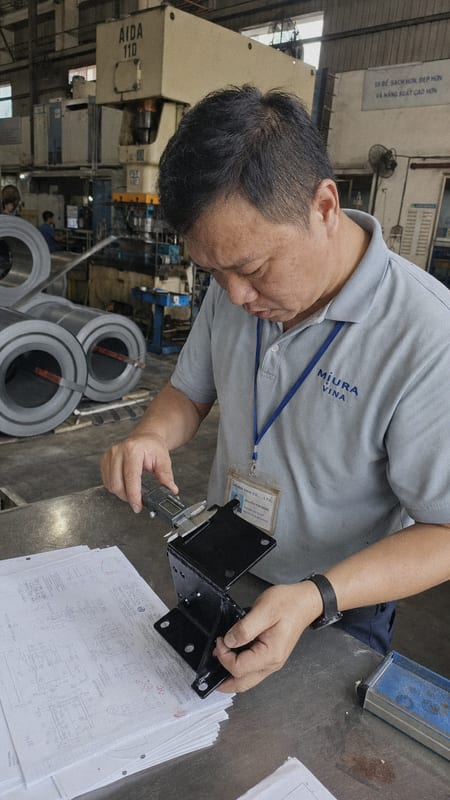
I’ve seen projects collapse because a buyer picked a stamping supplier based on price alone, ignoring the efficiency gaps that surface only after the first production run ships late and out of spec.
To assess a supplier’s progressive die stamping capability for efficiency, evaluate their CAE simulation maturity, tooling design precision, press performance metrics like OEE and stroke rates, quality management system certifications such as IATF 16949, and their predictive maintenance programs — not just quoted cycle times.
The sections below break this evaluation into four practical areas. Each one gives you specific metrics, red flags, and questions to ask before you commit tooling dollars to any supplier.
What Should I Look for in a Supplier's Progressive Die Design and Engineering Capabilities?
A few years back, our engineering team reviewed a die design from a prospective supplier in Vietnam. The strip layout had a pitch nearly double the maximum feature width, and there was no sign of FEA simulation. We knew immediately that scrap rates would be unacceptable.
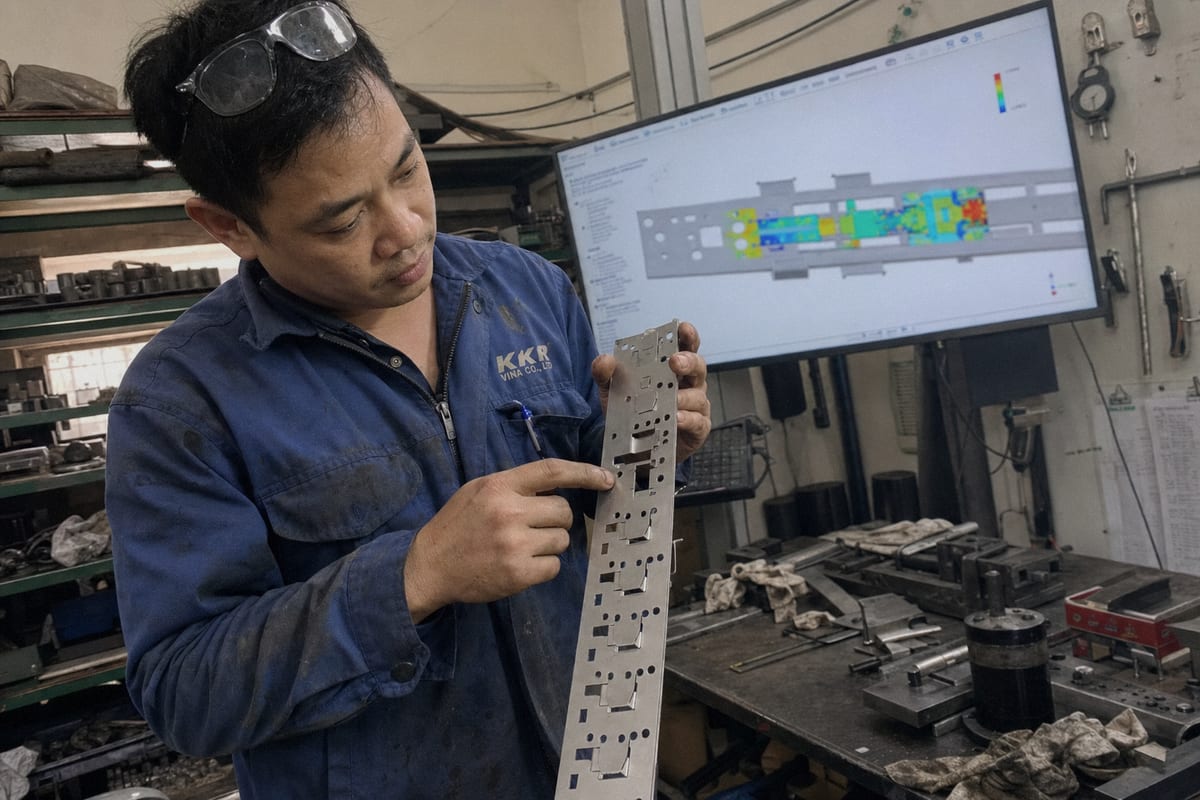
Look for suppliers who use CAE simulation tools like Autoform or Stampack for virtual tryouts, optimize strip layout to keep pitch at 1.2x the maximum feature, balance station forces within ±15% variance, and place pilots every 3–4 stations to prevent strip drift and costly rework.
Why CAE Simulation Is Non-Negotiable
The biggest efficiency lever in progressive die stamping sits at the design stage — before any steel is cut. Suppliers who run finite element analysis (FEA) 1 on material flow, springback, and forming forces achieve roughly 95% first-pass success on new dies. That means fewer debug cycles, less wasted coil stock, and a faster path to stable production.
When we audit suppliers on behalf of our U.S. clients, we always ask to see their simulation workflow. Can they show you a springback prediction report? If not, expect around 15% rework on formed features. Springback is the silent killer of metal stamping tolerances, especially on high-strength steels and stainless alloys common in structural brackets and mounting hardware.
Strip Layout and Pitch Optimization
Strip layout optimization directly controls your material utilization rate. A well-designed layout minimizes the web between features and keeps the pitch — the distance the strip advances per stroke — as short as practical. The benchmark is 1.2x the maximum feature dimension. If a supplier's pitch runs at 2x, you're burning material for no reason, and scrap can jump by 25%.
Here is a quick reference for evaluating design metrics:
| Design Metric | Efficient Benchmark | علامة حمراء | Consequence of Red Flag |
|---|---|---|---|
| Pitch-to-Feature Ratio | 1.2x max feature | 2x or higher | +25% scrap rate |
| Station Force Balance | ±15% variance | >30% variance | 2x die wear |
| Pilot Placement | Every 3–4 stations | Irregular or absent | ±0.010" strip drift |
| Clearance Setting | 1.1x material thickness | Too tight or too loose | Burrs, galling, punch breakage |
| Stripper Force | 10% of punch force | Over or under spec | Strip jamming, misfeeds |
Station Balance and Pilot Placement
Unbalanced station forces don't just wear the die unevenly — they deflect the press ram and degrade part quality across every station. When we coordinate die builds for clients, we insist on seeing the force distribution across all stations. A supplier that can't provide this data likely isn't simulating the process digitally.
Pilots are equally critical. They re-register the strip at each critical forming station. Without pilots every 3–4 stations, the strip can drift by ±0.010 inches. That drift compounds through downstream stations, pushing finished parts out of tolerance. For brackets with multiple mounting holes that must align to mating components, this is a deal-breaker.
How Can I Evaluate a Supplier's Tooling and Equipment for High-Volume Stamping Efficiency?
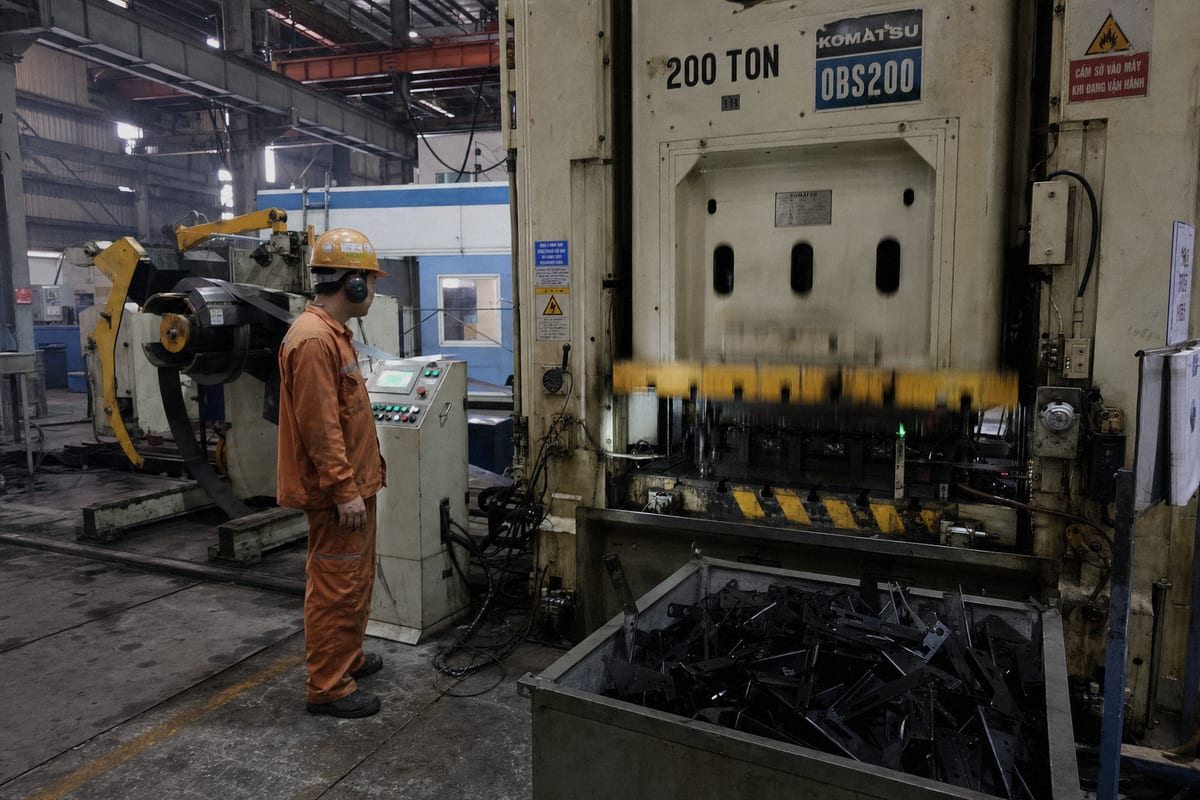
During a recent supplier audit at a facility in southern Vietnam, I watched a 200-ton press running a 10-station progressive die at 400 strokes per minute. The line had a single operator, automated coil feeding, and an in-die sensing system that stopped the press within milliseconds of detecting a short feed. That's the standard we hold suppliers to.
Evaluate a supplier's tooling and equipment by confirming press tonnage capacity matches part requirements, verifying consistent stroke rates with OEE data, checking for automated feed systems and in-die sensing technology, and assessing their Quick Die Change protocols to minimize changeover downtime.
Press Tonnage and Bed Size Matching
A press that's too small for the die creates deflection problems and premature wear. A press that's far too large wastes energy and floor space. The supplier should demonstrate that their press tonnage capacity is properly matched to the total forming, blanking, and stripping forces calculated during die design. Ask for the tonnage calculation sheet. If they can't produce one, they're guessing.
Bed size matters too. The die must sit on the bolster with adequate clearance for scrap chutes, sensors, and feed mechanisms. Cramped setups lead to maintenance headaches and slower changeovers.
Stroke Rate and OEE
High stroke rates look impressive on paper. A 12-station die at 500 strokes per minute theoretically yields 30,000 parts per hour. But that number means nothing if the press stops every 20 minutes for misfeeds or scrap jams.
Overall Equipment Effectiveness (OEE) 2 is the metric that tells the real story. OEE combines availability, performance, and quality yield into a single percentage. Ask the supplier for OEE data on comparable jobs. A world-class stamping operation runs above 85% OEE. Below 65% signals chronic downtime issues.
| Equipment Metric | ماذا تطلب | Efficient Range | علامة تحذير |
|---|---|---|---|
| قوة المكبس (Tonnage) | Tonnage calculation sheet | Matched to die force + 20% margin | No calculation available |
| Stroke Rate | SPM data on comparable jobs | 200–1,500 SPM (part dependent) | Inconsistent or unverified rates |
| OEE | Historical OEE reports | >85% | <65% |
| Coil Feed System | Automated servo feed | Servo-driven with loop control | Manual or pneumatic feed |
| Quick Die Change | SMED protocol documentation | <10 min changeover | >30 min changeover |
| مستشعرات داخل القالب | Sensor list and interlock logic | Short feed, mis-hit, part-out, scrap jam | No sensors or manual inspection only |
In-Die Sensing and Real-Time Monitoring
In-die sensing technology is what separates a modern, efficient operation from one that relies on operator vigilance. Sensors detect short feeds, slug pulling, and part ejection failures in real time. The press stops before a crash damages the die. Without these sensors, a single misfeed at 400 strokes per minute can destroy thousands of dollars in tooling within seconds.
Some advanced suppliers are now adopting acoustic emission monitoring systems 3 that detect micro-fractures in punches by analyzing high-frequency sound. This is still emerging, but it signals a supplier that invests in staying ahead of tooling failures rather than reacting to them.
Quick Die Change and SMED
Production cycle time includes changeover time. If a supplier takes 90 minutes to swap dies, that's 90 minutes of zero output. Suppliers practicing SMED (Single-Minute Exchange of Die) 4 target changeovers under 10 minutes using standardized bolster plates, pre-staged dies, and pre-set shut heights. This discipline directly impacts how efficiently they can serve you across multiple part numbers.
Tool Steel and Coatings
Tooling longevity matters for high-volume manufacturing. Ask what tool steels they use for punches and die inserts. Powder metallurgy (PM) tool steels 5 like CPM-10V offer superior wear resistance for long runs. PVD or CVD coatings like TiCN or AlCrN extend punch life further, reducing the frequency of sharpening and replacement. A mature supplier maintains a punch matrix index — a document listing every punch by ID, function, hardness, and clearance — so that replacements are fast and accurate.
What Quality Control Processes Should I Verify to Avoid Costly Production Delays?
One lesson we learned early in our supply chain work was this: a supplier can have the best press in the building and still ship bad parts if their quality management system is weak. We've seen containers of brackets rejected at U.S. ports because in-process checks were skipped during a night shift.
Verify that the supplier holds IATF 16949 or ISO 9001 certification, conducts PPAP submissions with full dimensional reports, uses SPC for in-process monitoring, performs first-article and last-article inspections, and maintains documented corrective action procedures to prevent recurring defects.

الشهادات التي تهم
IATF 16949 6 certification is the gold standard for stamping suppliers, especially those serving automotive or safety-critical applications. It requires documented process controls, traceability, and a structured approach to continuous improvement. ISO 9001 7 is a minimum. If a supplier holds neither, proceed with extreme caution.
But certifications alone don't guarantee quality. We always go beyond the certificate and ask for evidence of how the system is implemented day-to-day. Do operators know their control plans? Are gauges calibrated? Is there a real corrective action loop, or do they just file 8D reports that no one reads?
The PPAP Process
For our clients sourcing custom brackets and mounting hardware from Asia, the عملية الموافقة على أجزاء الإنتاج (PPAP) 8 is essential. It's the formal handshake between supplier and buyer that says, "This is the part we agreed on, and here's the proof." A complete PPAP submission includes:
- Design records and engineering change documents
- مخططات تدفق العمليات
- خطط التحكم
- Measurement system analysis (gauge R&R)
- Dimensional results on initial samples
- Material and performance test results
- Appearance approval (if applicable)
- Sample parts from the production run
If a supplier pushes back on PPAP or delivers incomplete submissions, that's a red flag. It means their process discipline is weak, and you'll likely face surprises during production.
In-Process Controls and SPC
التحكم الإحصائي في العمليات (SPC) 9 charts on critical dimensions tell you whether the process is stable or drifting. Ask to see live or recent SPC data from a comparable progressive die job. Key things to look for:
- Cpk values above 1.33 on critical features
- No out-of-control points or unexplained patterns
- Documented reaction plans when a point goes out of spec
Some advanced suppliers now use automated closed-loop thickness compensation systems. These systems measure incoming coil thickness in real time and adjust press parameters automatically. This is particularly valuable when coil material varies between heats or suppliers. It keeps metal stamping tolerances tight without manual intervention.
Spare Parts and Die Maintenance Readiness
A die that breaks mid-run needs fast repair. Suppliers with comprehensive spare parts management — pre-made backup punches, die inserts, and springs — can resume production in hours instead of days. This is part of an effective preventive maintenance program. Ask how they track die hit counts, sharpening schedules, and component replacement intervals. A supplier with a structured tool and die maintenance program will have answers. One without will give you vague reassurances.
| Quality System Element | ماذا تطلب | Acceptable Evidence | علامة حمراء |
|---|---|---|---|
| الشهادة | IATF 16949 or ISO 9001 certificate | Current, audited certificate | No certification or expired |
| PPAP | Full Level 3 submission | Complete package with samples | Incomplete or refused |
| SPC | Control charts on critical dims | Cpk > 1.33, stable trends | No SPC data available |
| Gauge Calibration | Calibration records | Current calibration stickers and logs | Overdue or missing records |
| إجراء تصحيحي | 8D or CAPA procedures | Completed examples with root cause | No formal CAPA system |
| قطع الغيار | Spare parts inventory list | Pre-made backup punches and inserts | No spares on hand |
How Do I Confirm a Supplier's Track Record for On-Time Delivery on Progressive Die Projects?
A client once told me, "I can forgive a quality escape if the supplier reacts fast. But I can't forgive a pattern of late deliveries." That statement stuck with me. On-time delivery is the metric that purchasing managers weigh most heavily after quality, and for good reason — a late bracket shipment can shut down a customer's assembly line.
Confirm a supplier's on-time delivery track record by requesting their OTD percentage over the past 12 months, checking references from existing customers on similar high-volume projects, reviewing their production planning and capacity loading methods, and verifying they have contingency plans for tooling failures and material shortages.
Asking for the Data
The most direct way to evaluate delivery reliability is to ask for the supplier's on-time delivery (OTD) percentage. A strong supplier tracks this metric monthly and can show you a rolling 12-month trend. Look for OTD above 95%. Below 90% suggests systemic issues — either in planning, capacity, or supply chain management.
But numbers can be manipulated. A supplier might report 98% OTD by excluding expedited orders or renegotiated dates. Ask how they define "on-time." Is it the original committed date, or the last revised date? The answer tells you a lot about their honesty and discipline.
Capacity Planning and Loading
Efficient suppliers don't just react to orders. They plan capacity weeks or months ahead. Ask how they load their presses. Do they use an نظام تخطيط موارد المؤسسات 10 with finite capacity scheduling? Or do they rely on spreadsheets and tribal knowledge?
For high-volume manufacturing of parts like structural brackets and post base mounts, a supplier needs enough press capacity — and enough backup capacity — to absorb demand spikes without pushing your order to the back of the line. Ask what happens if a press goes down. Do they have redundant presses with compatible tonnage and bed sizes? Can they shift your die to another press within the same shift?
Reference Checks and Site Visits
Nothing replaces talking to other buyers. Ask the supplier for two or three customer references, ideally companies with similar part complexity and volume requirements. Ask those references specific questions:
- Has the supplier ever missed a delivery date? How did they handle it?
- How responsive are they when problems arise?
- Would you give them a new project today?
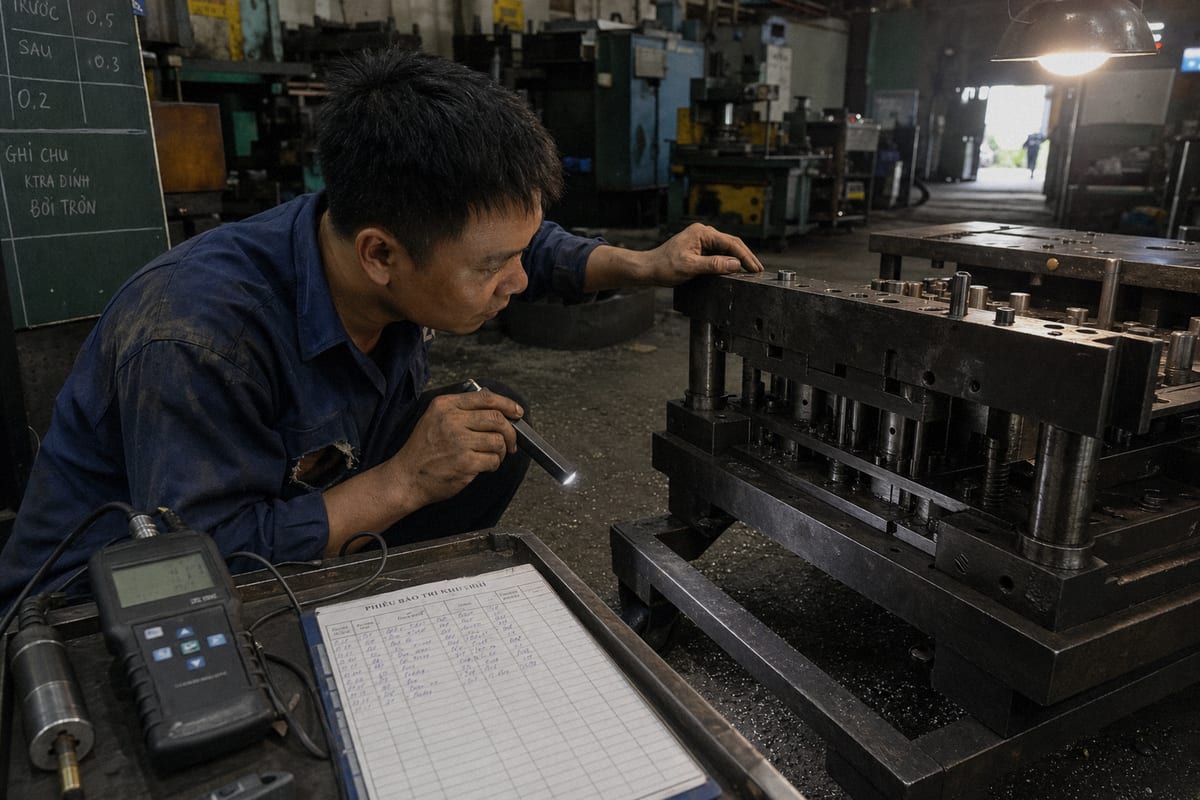
When we manage supplier relationships for our clients, we conduct on-site audits that go beyond the quality system. We walk the production floor, check die storage areas, observe changeovers, and review maintenance logs. These visits reveal things that questionnaires and certificates never will. A clean, organized tool room with labeled die racks and visible maintenance schedules tells you the supplier takes their craft seriously.
التخطيط للطوارئ
Every production line will face disruptions — a die component breaks, a coil shipment arrives late, a press needs emergency repair. The question is whether the supplier has a plan. Key contingency elements include:
- Backup tooling components (spare punches, inserts, springs)
- Secondary press availability
- Alternative material sources pre-qualified and approved
- Clear escalation procedures with defined timelines
A supplier that can articulate their contingency plan in concrete terms — not just "we'll figure it out" — is one that has been tested and survived. That's the kind of partner you want for progressive die stamping projects where downtime costs multiply fast. If you're new to this process, learning how to find the right stamping parts suppliers for OEM sourcing can help you build a strong foundation before diving into detailed capability assessments.
خاتمة
Assessing a supplier's progressive die stamping capability requires evaluating their simulation tools, press performance data, quality management system, and delivery discipline — not just their quoted price or cycle time. For a deeper look at how to verify a supplier’s high-precision stamping parts capability, we recommend reviewing their measurement systems and tolerancing practices alongside the efficiency metrics covered here.
ملاحظات سفلية
1. Explains the simulation technique used to predict material flow and springback in die design. ↩︎
2. Background on the standard manufacturing metric combining availability, performance, and quality. ↩︎
3. ASTM sets standards for acoustic emission testing used to detect micro-fractures in tooling. ↩︎
4. Comprehensive Wikipedia overview of the SMED lean manufacturing methodology for reducing changeover times. ↩︎
5. Industry federation covering powder metallurgy materials used for wear-resistant die components. ↩︎
6. Authoritative Wikipedia entry explaining the international automotive quality management standard. ↩︎
7. Official ISO page describing the quality management standard mentioned as a minimum requirement. ↩︎
8. AIAG is the source organization for the PPAP framework used in supplier part approval. ↩︎
9. Background on the control chart methodology used to monitor in-process dimensional stability. ↩︎
10. Official ERP product documentation explaining capacity scheduling software referenced for production planning. ↩︎



 English
  Español de México
  Deutsch
  Français
  Русский
  العربية
اترك تعليقًا
لن يتم نشر عنوان بريدك الإلكتروني. الحقول المطلوبة معلمة *